
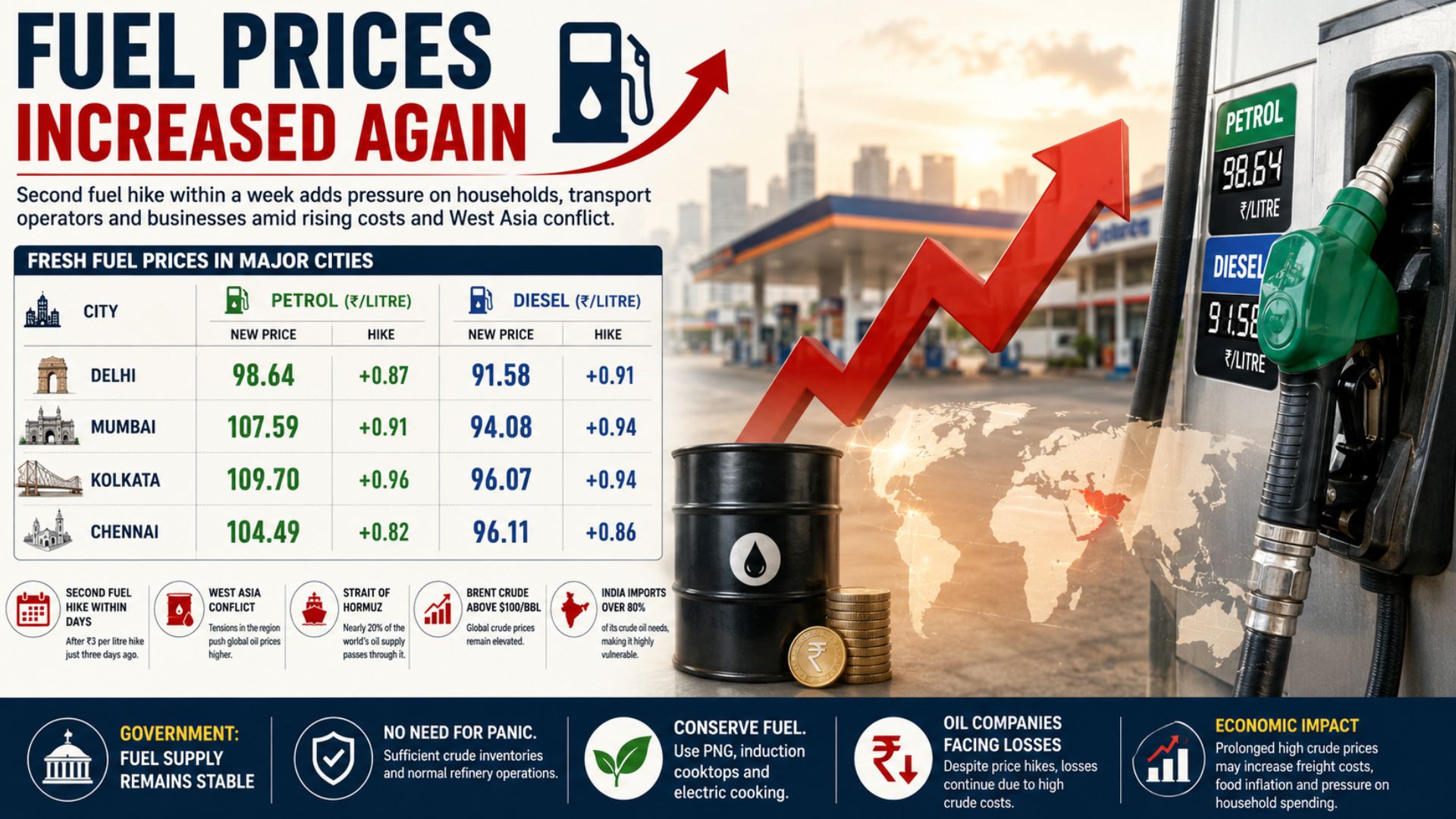

Fuel prices increased once again across India on Tuesday, adding more pressure on households, transport operators and businesses already struggling with rising logistics and transportation costs due to the ongoing conflict in West Asia.
State-run oil companies raised diesel prices by up to 91 paise per litre and petrol prices by as much as 96 paise in major cities, marking the second fuel hike within a week.
Fresh Fuel Prices in Major Cities
In Delhi, petrol prices rose by 87 paise to Rs 98.64 per litre, while diesel increased by 91 paise to Rs 91.58 per litre.
Mumbai recorded a 91-paise increase in petrol prices, taking the rate to Rs 107.59 per litre. Diesel prices climbed by 94 paise to Rs 94.08 per litre.
In Kolkata, petrol saw the sharpest rise among metro cities. Prices jumped by 96 paise to Rs 109.70 per litre, while diesel rose by 94 paise to Rs 96.07 per litre.
Meanwhile, Chennai saw petrol prices increase by 82 paise to Rs 104.49 per litre and diesel prices rise by 86 paise to Rs 96.11 per litre.
Second Fuel Hike Within Days
The latest revision came only three days after the Centre increased petrol and diesel prices by Rs 3 per litre nationwide, one of the sharpest increases seen in recent years.
After Friday’s hike, petrol prices in Delhi had already climbed from Rs 94.77 to Rs 97.77 per litre, while diesel prices increased from Rs 87.67 to Rs 90.67 per litre.
Oil marketing companies are reportedly struggling with mounting losses caused by rising global crude prices and disruptions in energy supply routes.
West Asia Conflict Driving Global Oil Prices Higher
The back-to-back hikes come as tensions involving Iran, Israel and the United States continue to affect fuel markets and shipping routes across West Asia.
The Strait of Hormuz, through which nearly 20% of the world’s oil supply passes, remains under pressure. The situation has increased freight costs, insurance rates and global crude prices.
Brent crude prices have stayed above $100 per barrel in recent weeks as fears over supply disruptions continue despite diplomatic efforts to secure a ceasefire.
India imports more than 80% of its crude oil needs, making the country highly vulnerable to prolonged global supply disruptions and higher energy prices.
Government Says Fuel Supply Remains Stable
On Monday, the Centre said it could not predict whether more fuel price hikes would follow. Officials admitted that state-run oil companies remain under significant financial pressure.
Speaking during an inter-ministerial briefing, Sujata Sharma said the government is closely monitoring the situation.
“There is no need for panic among LPG distributors, retail outlets or consumers, as the supply of all essential fuels continues normally,” Sharma said.
“It has been more than two-and-a-half months since the West Asia crisis began, and the situation in the Strait of Hormuz is still not normal. However, our refineries are operating normally, and we have sufficient crude inventories,” she added.
The government has also asked people to conserve fuel and use alternative cooking options such as piped natural gas, induction cooktops and electric cooking systems whenever possible.
Oil Companies Continue Facing Losses
Despite repeated fuel price increases, analysts believe oil marketing companies are still facing heavy financial losses. Earlier this month, Hardeep Singh Puri said India had successfully maintained uninterrupted fuel supplies despite severe global disruptions.
Speaking at the CII Annual Business Summit 2026 on May 12, Puri said the country managed to avoid shortages even as crude prices surged and geopolitical tensions worsened.
“At a time of global supply shocks and rising crude prices, India ensured seamless availability of petrol, diesel, and LPG across the country, with no reports of shortages,” the minister said.
Economists have warned that if crude oil prices remain high for a longer period, the impact could spread through the wider economy by increasing freight costs, food inflation and pressure on household spending.