
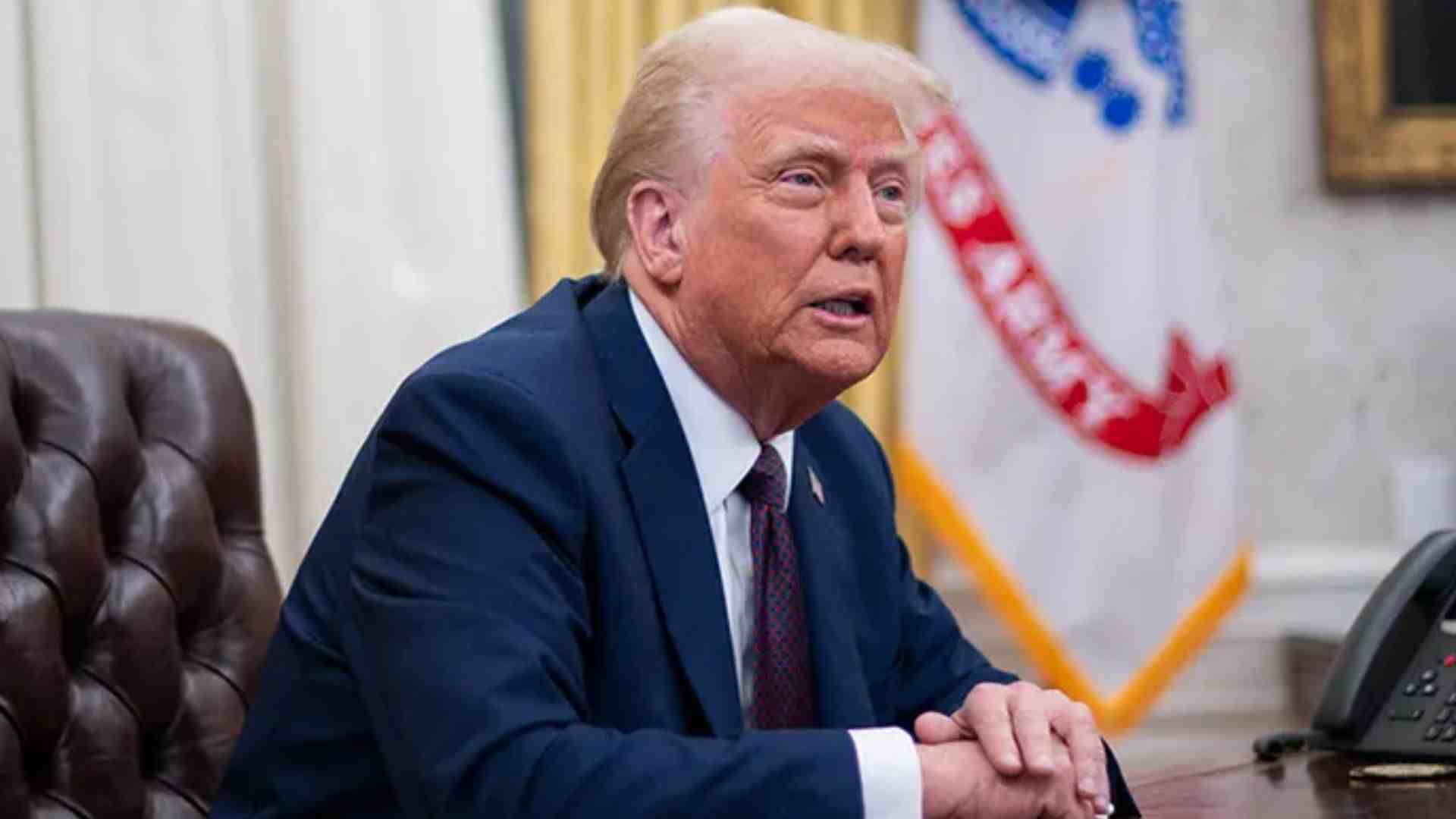

US President Donald Trump signed an executive order on Tuesday directing banks and financial regulators to closely examine the citizenship status of customers as part of his administration’s broader crackdown on illegal immigration.
The new order instructs banks, regulators and government departments to look for signs that undocumented immigrants may be opening bank accounts or receiving loans and credit cards in the United States.
However, the final order stopped short of forcing banks to collect citizenship data from every customer. Earlier reports had suggested the White House was considering a much stricter rule that would make such checks mandatory.
White House cites financial risks
The White House said undocumented immigrants could pose financial risks if they were deported before repaying loans or other debts. According to the administration, banks could face losses if customers without legal status suddenly leave the country.
The order stated that the government would not “permit risks to our financial system posed by the extension of credit or financial services to the inadmissible and removable alien population.”
Banks in the United States currently do not collect information about the citizenship or immigration status of customers. Because of this, there is little public data showing how much financial risk undocumented immigrants actually pose.
Study shows limited mortgage access for undocumented immigrants
A report from the Urban Institute estimated that between 5,000 and 6,000 mortgages were issued to people using Individual Taxpayer Identification Numbers, commonly known as ITINs. Undocumented workers often use ITINs instead of Social Security Numbers to file taxes.
The study found that banks already hesitate to lend money to ITIN holders. Mortgage giants Fannie Mae and Freddie Mac also rarely insure mortgages linked to ITIN borrowers, making home loans difficult to obtain.
Treasury secretary pushes for stricter rules
The White House had signaled for weeks that it planned to tighten banking rules involving undocumented immigrants. Last month, Treasury Secretary Scott Bessent said banks should follow stricter procedures when opening accounts.
“Why can the unknown foreign nationals come and open a bank account?” Bessent said. Claiming banks were required to “know your customer,” he added, “So how do you know your customer if you don’t know if they have legal or illegal status, whether a U.S. citizen or green card holder?”
Banks lobby against mandatory citizenship checks
The banking industry strongly opposed earlier proposals that would have forced banks to gather citizenship information from customers. Bank executives argued that such a system would create large amounts of paperwork and increase operational costs.
Because the executive order only provides guidance instead of strict requirements, many analysts believe the banking industry successfully pushed back against the White House’s tougher plans.
Immigration advocates warn of consequences
Immigration rights groups warned that mandatory citizenship checks could push undocumented immigrants out of the formal banking system. Advocates said this could increase the number of “unbanked” people who keep cash outside financial institutions instead of using bank accounts. The Trump administration has already introduced other measures aimed at limiting undocumented immigrants’ access to government financial benefits.
Last November, the Treasury Department announced plans to classify certain refundable tax credits as “federal public benefits.” The move would prevent some immigrants from receiving those credits even if they paid taxes and otherwise qualified.
DACA and TPS recipients could be affected
Tax experts said the proposed changes could significantly impact immigrants protected under programs such as Deferred Action for Childhood Arrivals, commonly called DACA. People with Temporary Protected Status could also face difficulties under the new policies.
Many of these immigrants legally work and pay taxes in the United States but still rely on temporary immigration protections.