
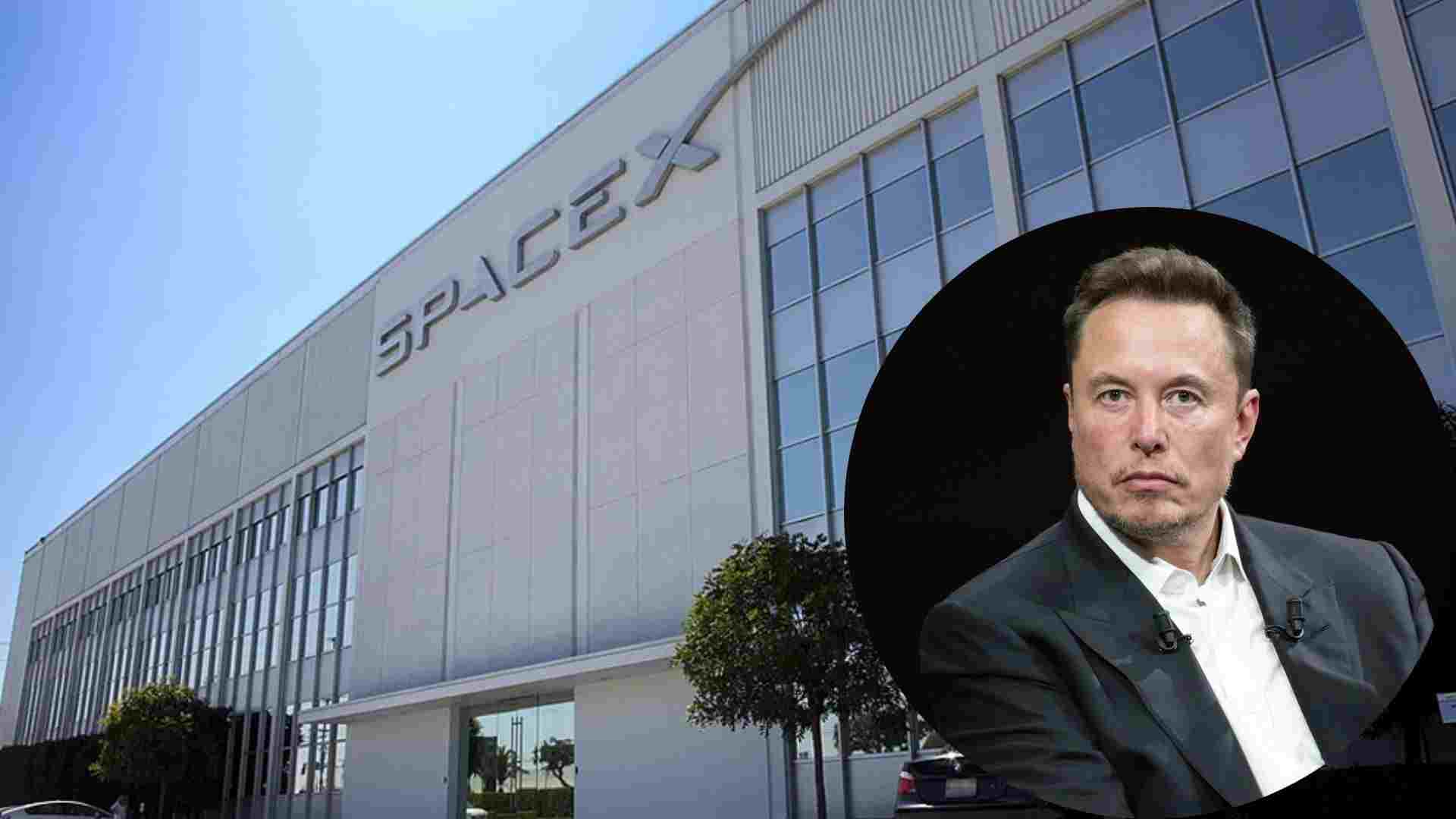

Elon Musk’s SpaceX has officially taken a major step toward becoming a publicly traded company after filing paperwork to launch what could become the biggest stock market debut in history. The aerospace giant submitted documents on Wednesday to list its shares on the Nasdaq exchange under the ticker symbol “SPCX”.
The filing gave investors a detailed look into SpaceX’s financial position, growth strategy and artificial intelligence ambitions. Analysts believe the company’s public offering could surpass the record-breaking 2019 listing of Saudi Aramco and become the largest IPO Wall Street has ever seen.
Musk could become the world’s first trillionaire
Although SpaceX has not confirmed its final valuation target, market experts estimate the company could be valued between $1.75 trillion and $2 trillion after the listing.
If the valuation reaches those levels, SpaceX would instantly become one of the most valuable companies in the world. Elon Musk, who owns around 43 per cent of the company, could see his stake valued at more than $750 billion.
Musk is also expected to retain nearly 85 per cent voting power after the IPO. That structure would allow him to maintain strong control over company decisions even after public investors enter the business.
Combined with his holdings in Tesla and other ventures, the IPO could push Musk’s total personal wealth beyond $1 trillion. Such a rise would make him the world’s first trillionaire.
The projected valuation represents a massive jump from earlier private market estimates that valued SpaceX between $180 billion and $210 billion. A successful IPO near $2 trillion would create one of the biggest wealth increases ever recorded.
Recent estimates of Musk’s wealth have varied sharply. Forbes recently placed his fortune between $807 billion and $839 billion, while Bloomberg estimated it at roughly $667 billion earlier this week. However, the new SpaceX valuation would significantly widen his lead over other billionaires.
The company is expected to raise between $75 billion and $80 billion through the offering. That would make it not only the biggest technology IPO ever attempted, but possibly the largest stock market listing in financial history.
Goldman Sachs is leading the offering, while Morgan Stanley is playing a major role in organising the deal. More than 20 global banks are reportedly involved.
Morgan Stanley has worked closely with Musk before and also helped manage Tesla’s stock market debut in 2010.
SpaceX also plans to open the IPO to retail investors through platforms such as Charles Schwab, Fidelity, Robinhood, SoFi and E*TRADE.
From rocket launches to a massive tech empire
SpaceX remains one of the world’s leading rocket companies. It launches satellites, astronauts and cargo missions for commercial customers and government agencies including NASA and the US Department of Defense.
The company said its fully reusable Starship rocket system will drive future growth. SpaceX believes Starship can drastically reduce launch costs and unlock larger opportunities in communication systems, orbital infrastructure and global logistics.
According to the filing, the Starship programme has already cost around $15 billion in development expenses. An upgraded version of the giant rocket is expected to launch later this week.
Musk has long argued that reusable spacecraft will transform the space industry by making launches cheaper and more frequent.
SpaceX also continues to promote Starship as a critical system for future Moon missions and long-term plans for Mars colonisation, although Musk has recently toned down some of his earlier claims about Mars timelines.
Starlink drives huge business growth
Beyond rockets, SpaceX’s biggest commercial success is now Starlink, its rapidly growing satellite internet service.
Starlink has become one of the largest satellite broadband providers in the world, especially in rural and underserved areas where traditional internet infrastructure remains weak.
The filing revealed enormous growth in Starlink’s subscriber base. Company figures showed users increasing from 2.3 million in 2023 to nearly 8.9 million in early 2026.
Another section of the filing stated that Starlink had already crossed 10.3 million subscribers globally, more than double the previous year’s figure.
The rapid expansion has generated massive revenue growth. Starlink earned around $11.4 billion in revenue during 2025 and produced approximately $4.4 billion in operating income.
In the first quarter of 2026 alone, the service generated another $3.2 billion in revenue.
However, the filing also noted that average revenue per subscriber has declined as SpaceX expands into international markets and introduces cheaper plans in developing countries.
Starlink’s overseas growth accelerated while Musk served in the US government last year. During that period, the company signed agreements with multiple foreign governments and telecom firms.
SpaceX pushes deeper into artificial intelligence
Earlier this year, SpaceX absorbed xAI, Musk’s artificial intelligence company behind the Grok chatbot. Musk later announced plans to fully merge all AI operations into SpaceX.
According to the filing, SpaceX internally valued its aerospace operations at about $1 trillion, while assigning a separate $250 billion valuation to its AI business.
The company also explained plans to combine Starlink’s satellite network with future AI infrastructure.
SpaceX wants to build data-processing systems in low Earth orbit. The company believes space-based systems could reduce energy and cooling challenges faced by traditional AI data centres on Earth.
SpaceX said orbital facilities could benefit from constant solar energy and naturally cold temperatures in space.
The filing also revealed a major agreement with AI company Anthropic, creator of Claude. Under the deal, Anthropic will reportedly pay $15 billion annually for access to data centre capacity connected to Musk’s growing AI network.
Despite these plans, the company admitted that xAI remains smaller than rivals such as OpenAI, Anthropic and Google.
The disclosure came shortly after Musk lost a major legal case against OpenAI and CEO Sam Altman. Musk had accused OpenAI of abandoning its original non-profit mission. However, a jury rejected his claims.
During the trial, Musk reportedly acknowledged that xAI still trails several competitors in the AI race.
Massive revenue growth but deep losses continue
SpaceX generated around $18.6 billion in revenue during 2025, marking annual growth of roughly 33 per cent.
Despite the strong revenue numbers, the company remains heavily unprofitable. The filing showed SpaceX posted a net loss of nearly $4.9 billion in 2025.
Losses continued during the first quarter of 2026, when the company reported another $4.3 billion net loss despite generating about $4.7 billion in sales.
The losses mainly reflect SpaceX’s aggressive spending on Starship, satellite launches, AI systems and large-scale infrastructure projects.
The company’s balance sheet showed about $102 billion in assets, including rockets, satellites and launch facilities. However, it also revealed debt obligations of approximately $60.5 billion.
SpaceX warned investors that heavy capital spending remains one of the biggest risks facing the business.
Still, the company believes its operations in satellite connectivity, AI infrastructure and space logistics represent a combined market opportunity worth nearly $28.5 trillion.
Investigations and controversies create risks
The filing also highlighted several legal and reputational risks facing the company.
One major issue involves investigations linked to Grok, xAI’s chatbot. Authorities are reportedly examining allegations involving nonconsensual sexualised deepfakes of real women and girls.
SpaceX warned investors that the investigations could result in financial penalties, legal liabilities and reputational damage.
The company also expects more than half a billion dollars in legal expenses from ongoing lawsuits and investigations.
Other legal disputes mentioned in the filing include patent infringement cases, data breach allegations, music copyright claims and accusations of violating European Union content moderation rules.
Musk’s social media platform X also forms part of the broader SpaceX ecosystem. According to the filing, products such as X Premium and SuperGrok had around 6.3 million paying subscribers as of March 2026.
The filing repeated Musk’s vision of turning X into an “Everything App” that combines social media, banking, commerce, payments and communication services in one platform.
Musk has also faced criticism over his political views, support for far-right causes and close relationship with US President Donald Trump.
Last year, protests broke out at Tesla dealerships because of Musk’s leadership role in Trump’s Department of Government Efficiency (Doge). Critics also accused him of promoting conspiracy theories online.
SpaceX additionally faces scrutiny over workplace safety. Reports said a worker recently died after falling from scaffolding at a Texas facility.
Previous investigations also documented hundreds of worker injuries at SpaceX sites that allegedly went unreported publicly.
Despite the controversies, SpaceX remains far ahead of most competitors in the commercial launch industry. The company dominates the global heavy-launch market and continues to secure massive government contracts linked to defence and national security.
Its leadership in reusable rockets and satellite deployment has given it a major advantage in the rapidly expanding space economy.