
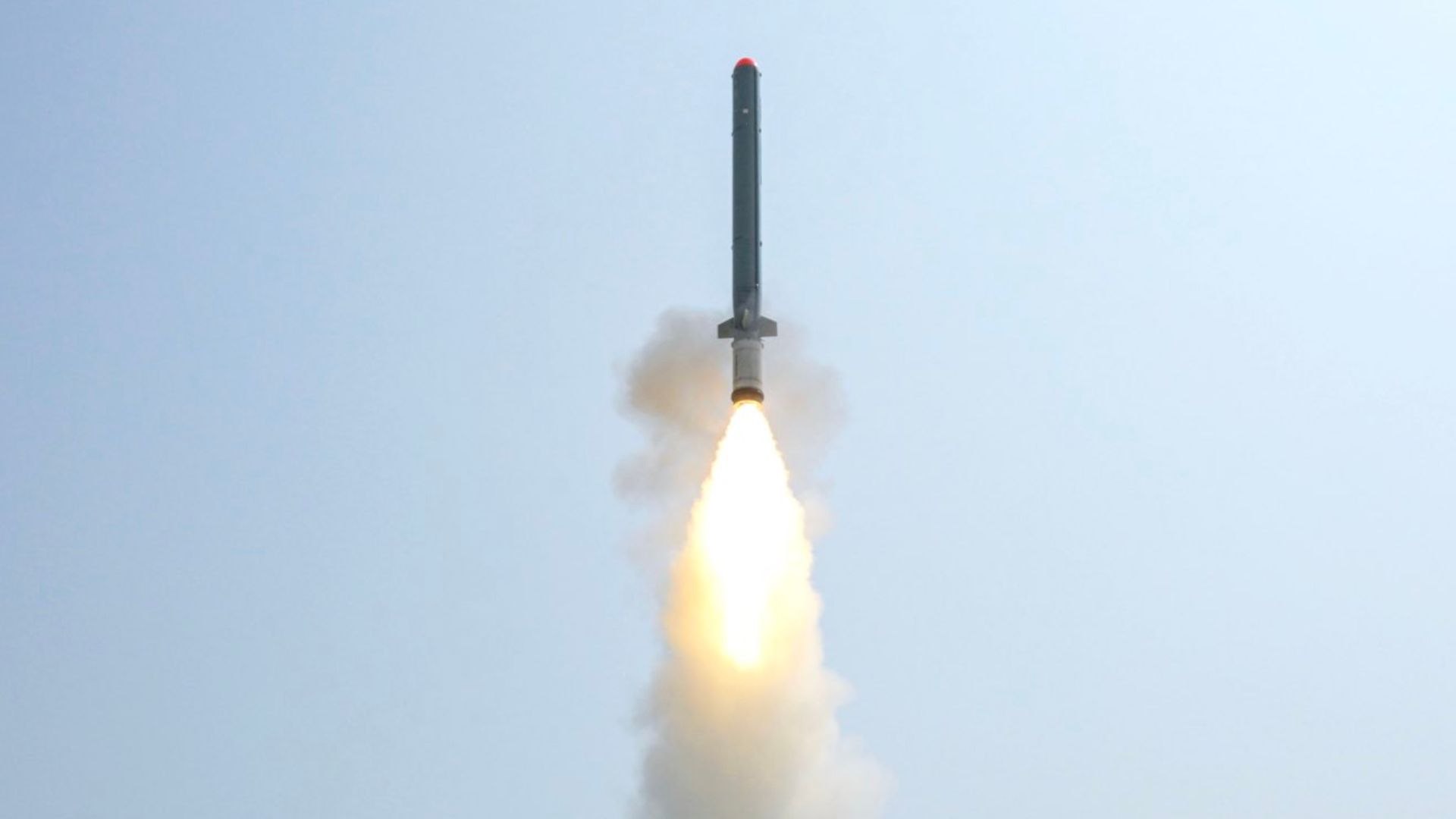

India achieved a major defence milestone on Monday after the Defence Research and Development Organisation (DRDO) successfully conducted a flight test of its Long Range Land Attack Cruise Missile (LRLACM) from Dr APJ Abdul Kalam Island off the Odisha coast.
The test marked a significant step forward for India's indigenous missile programme. According to the Ministry of Defence, the missile successfully hit its target at a distance of 1,000 kilometres, meeting all mission objectives and overcoming technical issues that had surfaced during earlier development stages.
Missile Hits Target With Precision
The Ministry of Defence said the trial achieved all planned goals. The missile accurately struck its designated target after travelling 1,000 km. Officials confirmed that engineers had resolved issues identified during previous tests, making the latest trial a major success for the programme.
The successful launch strengthens India's long-range precision strike capabilities and highlights the progress made in indigenous defence technology.
Developed Entirely in India
The Long Range Land Attack Cruise Missile has been developed using indigenous technology. “The LRLACM is an indigenously developed missile with all sub-systems developed by various DRDO laboratories and Indian Industry partners. Aeronautical Development Establishment, Bengaluru is the Nodal Laboratory", the ministry said in a statement.
Several DRDO laboratories and Indian industry partners contributed to the project, reflecting India's push for self-reliance in defence manufacturing.
Success Comes After Nirbhay Programme Challenges
The LRLACM programme builds upon lessons learned from the development of the indigenous Nirbhay cruise missile. The Nirbhay project faced several setbacks during its development phase, including unsuccessful flight tests in 2013, 2015, 2016 and 2020.
Officials said the new missile incorporates major improvements over Nirbhay, including greater range and enhanced technical capabilities. The successful trial demonstrates how the programme has evolved from earlier challenges into a more advanced and reliable system.
Missile Can Launch From Multiple Platforms
Officials said the missile offers flexibility because it can be launched from multiple platforms. The weapon is designed to carry out long-range precision strikes against strategic targets. Its versatility will allow India's armed forces to deploy it in different operational environments.
Before entering service, the missile will undergo two more developmental trials followed by two user trials over the next two years. After completing those tests successfully, the missile is expected to be inducted into the Indian Army.
Why the Missile Is Important
The successful test comes at a time when India continues to strengthen its defence preparedness amid evolving regional security challenges. The missile is designed to strike targets deep inside enemy territory with high accuracy.
Its low-altitude flight profile makes detection difficult for enemy radar systems, increasing its effectiveness during combat operations. The missile can carry a 500-kg warhead and has the capability to destroy high-value targets with precision.
Compared With America's Tomahawk Missile
Defence experts often compare the LRLACM with the United States' Tomahawk cruise missile because of its long-range strike capability. The missile can fly at different altitudes and speeds while manoeuvring around obstacles and air defence systems.
These features improve survivability and make interception more difficult. Its ability to adapt its flight path during a mission adds another layer of operational effectiveness.
Senior Defence Officials Attend Launch
Several top defence officials witnessed the successful test. Senior representatives from DRDO, the Indian Navy and the Indian Air Force attended the launch event.
Defence Secretary and DRDO Chairman Rajesh Kumar Singh monitored the activities during the missile test. The successful trial is expected to boost India's indigenous missile programme and strengthen the country's long-range strike capabilities in the coming years.