
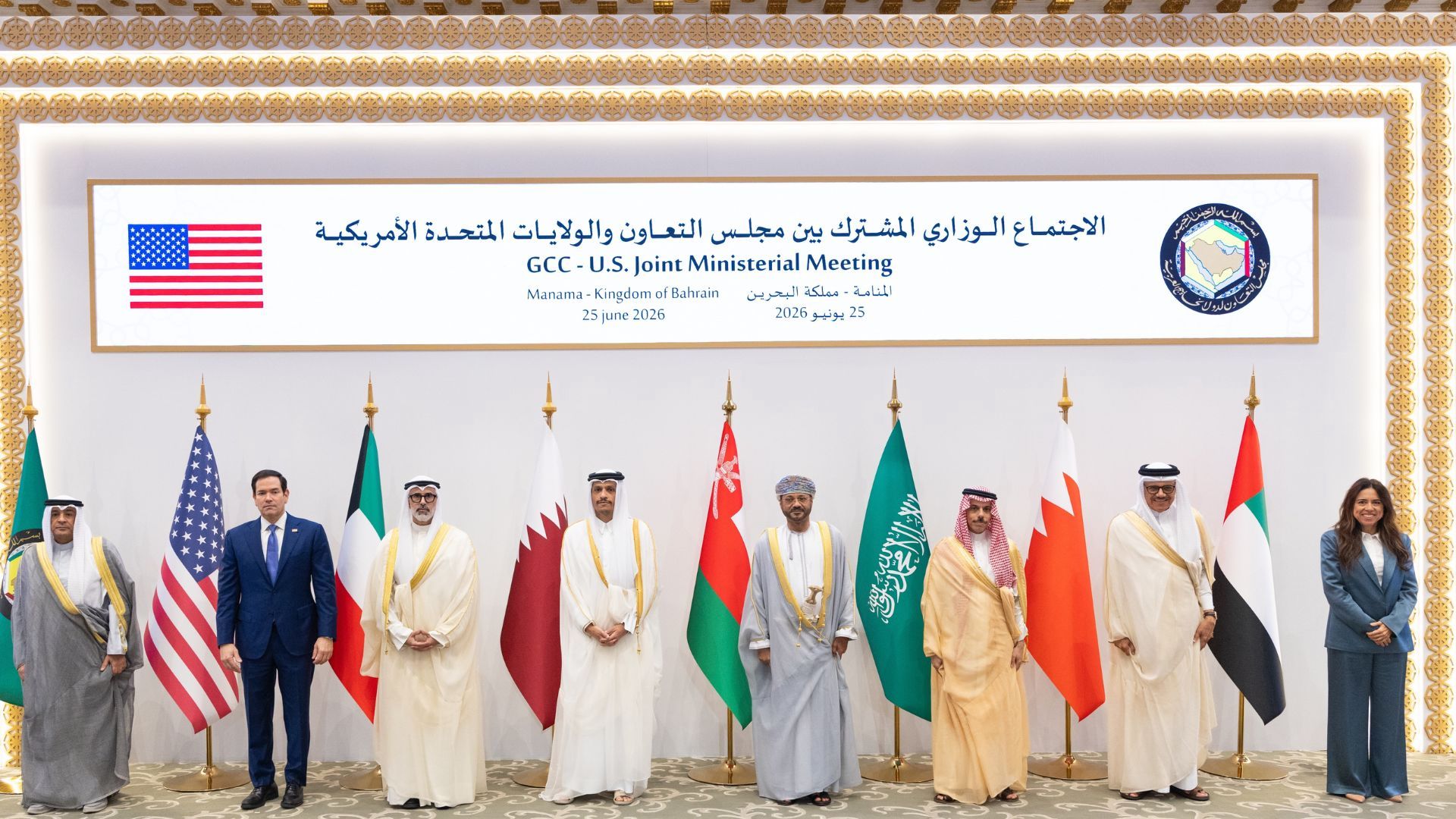

Gulf foreign ministers have said that lasting peace in the Middle East depends on Iran addressing concerns over its missile programme, drone capabilities and support for regional proxy groups. They also made it clear that any future trade or investment with Iran will depend on Tehran meeting strict security conditions.
The ministers issued the joint statement after a meeting co-chaired by US Secretary of State Marco Rubio. They said the region can achieve long-term peace only if Iran addresses what they described as the "full spectrum" of security threats.
Gulf States Set Conditions for Economic Engagement
The ministers stressed that economic ties with Iran would not be unconditional. They said any future trade or investment could move forward only if Iran complies with the memorandum of understanding (MOU), follows the final agreement and changes its regional behaviour.
“Any trade and investment with Iran is conditional and reversible, contingent on Iran’s compliance with the MOU and the final agreement, cessation of its destabilising behavior, and creation of the conditions necessary for economic engagement,” they added.
The statement also made it clear that Gulf countries could reverse economic cooperation if Iran fails to meet these commitments.
Diplomacy Continues Between Washington and Tehran
The announcement came as the United States and Iran continued diplomatic efforts to reduce tensions after months of conflict in the region.
Gulf nations have supported these talks while seeking stronger security guarantees. At the same time, they have kept open the possibility of expanding economic ties with Iran if the security situation improves.
Shipping Activity Through Strait of Hormuz Begins to Recover
Maritime traffic through the Strait of Hormuz has started recovering after months of disruption. However, shipping volumes have not yet returned to normal levels.
According to maritime analytics firm Kpler, 70 vessels passed through the strategic waterway on Wednesday. This marked the highest daily traffic since Iran closed the strait on March 1 following US-Israeli strikes.
The crossings included at least 56 commodity vessels carrying oil, natural gas and dry bulk cargo.
Commodity Ship Movements Increase
Shipping activity continued to improve on Thursday. By the afternoon, 15 commodity vessels had crossed the Strait of Hormuz. That figure exceeded the average daily traffic recorded between March 1 and June 14, when Iran and the United States agreed to a memorandum of understanding to begin discussions aimed at ending the conflict.
Kpler also reported that the 15 crossings by midday were well above the earlier daily average of 10 commodity vessels during that period.
Dry Bulk Shipping Returns to Earlier Levels
Dry bulk shipping also showed strong signs of recovery. According to maritime tracking company AXSMarine, 22 dry bulk vessels passed through the Strait of Hormuz on Wednesday. It marked the first time since March 1 that dry bulk traffic returned to its 2025 level.
The increase in shipping suggests that confidence is gradually returning to one of the world's most important trade routes. However, vessel movements remain below normal levels as regional tensions continue to influence global maritime trade.