
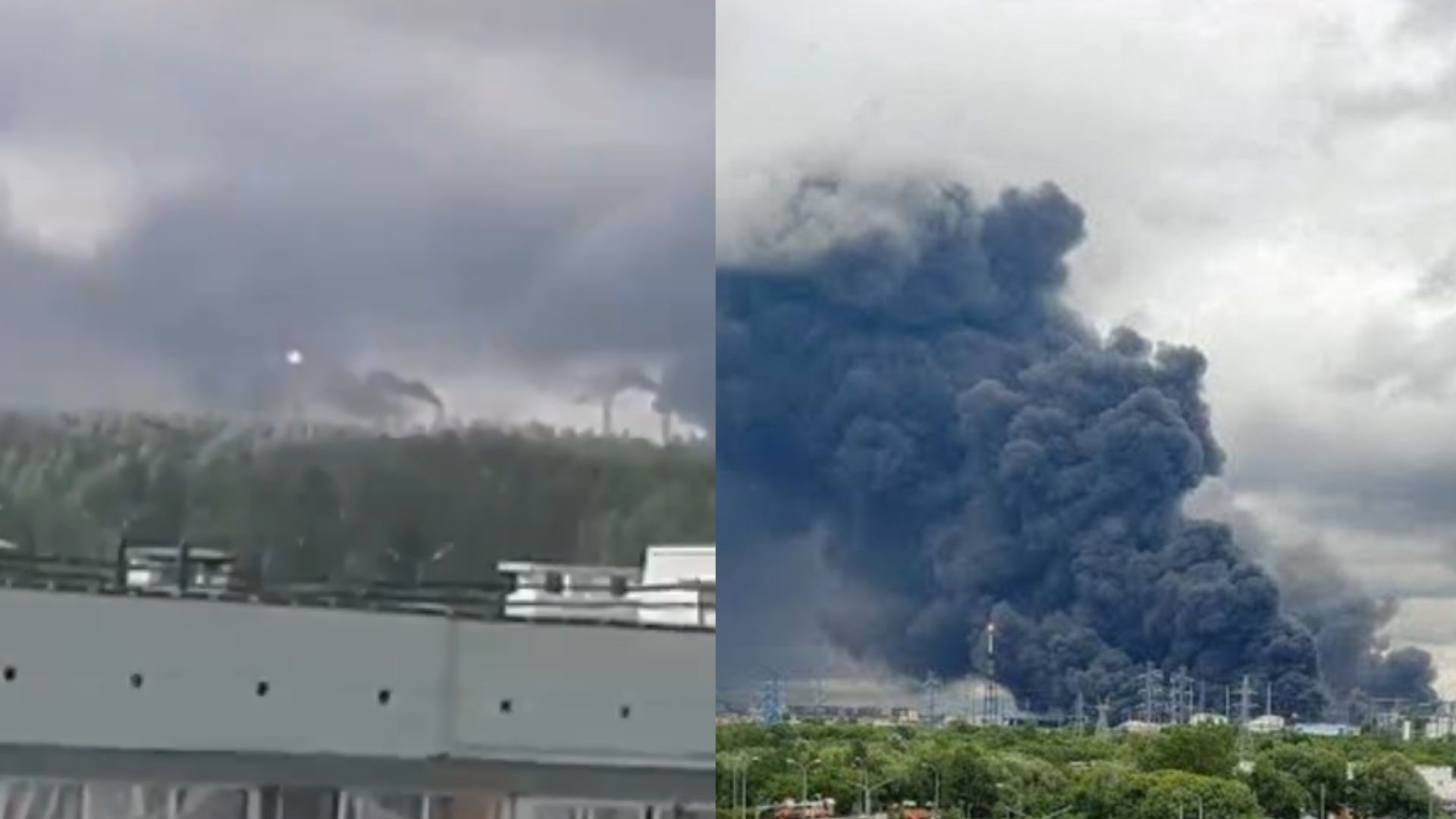

Ukraine carried out a major drone attack on Nizhnekamsk, a key petroleum and industrial centre in Russia’s Tatarstan region, on Monday. Local authorities said the attack killed 13 people and injured 75 others, making it one of the deadliest Ukrainian strikes inside Russia since the war began.
The Ukrainian military said its forces hit an oil refinery in Nizhnekamsk, located around 1,200 kilometres (750 miles) east of Ukraine’s border. The city has a population of about 240,000 and is an important centre for Russia’s oil and petrochemical industries.
Russian officials did not specify exactly what the drones targeted. However, Nizhnekamsk is home to two oil refineries and a major petrochemical plant, making it a strategically important energy hub.
Ukrainian Military Claims Refinery Strike
Ukraine’s General Staff said its forces struck the Taneco oil refinery in Nizhnekamsk. The attack reportedly triggered a fire at the facility. The press service of Tatarstan’s leader, Rustam Minnikhanov, described the incident as a “massive” drone attack. It said both industrial and civilian sites came under attack.
One of the drones struck a hostel in the city. Officials said the impact killed nine of the 13 people who died in the attack. Foreign nationals were among the victims. Officials said citizens of Uzbekistan and Kyrgyzstan were killed.
Uzbekistan’s consular office in Tatarstan said seven Uzbek nationals were among those killed. A child was also reported to be among the dead. Authorities said 75 people suffered injuries. Tatarstan declared Monday a day of mourning following the attack. The claims made by Russia and Ukraine could not be independently verified.
Ukraine Steps Up Attacks on Russian Oil Facilities
Ukraine has increasingly used long-range drones to strike Russia’s oil and energy infrastructure. Ukrainian forces have targeted Russian refineries and petroleum facilities almost daily in recent months. Kyiv says these operations are aimed at weakening Russia’s ability to finance and support its war effort.
The attacks have disrupted fuel supplies inside Russia and reduced some of the country’s refining capacity. They have also created concern among Russian residents over fuel availability and the security of industrial facilities.
Repairing damaged refineries has become another challenge for Moscow. Many Russian oil facilities use specialised equipment that is imported from abroad. Western sanctions have made it more difficult for Russia to obtain some of these components. As a result, replacing damaged equipment or finding alternative suppliers can take considerable time and increase repair costs.
Drones Reach Deep Into Siberia
The latest attack also highlighted how far Ukraine’s domestically developed drones can travel. Ukraine has developed long-range unmanned aircraft capable of striking targets hundreds and, in some cases, thousands of kilometres inside Russia. Some Ukrainian drones have now reached Siberia, with targets located around 2,000 kilometres from Ukraine’s border.
Another drone attack was reported Monday in the Tyumen region of western Siberia. Regional Governor Alexander Moor said several Ukrainian drones started a fire at an industrial facility. He did not provide further details about the site or the extent of the damage.
Ukrainian drones also struck a refinery in Tyumen last month. The region lies more than 2,400 kilometres, or around 1,500 miles, east of Ukraine’s border.
Zelenskyy Says Attacks Aim to Pressure Putin
Ukrainian President Volodymyr Zelenskyy has repeatedly said that Kyiv's military operations inside Russia are intended to pressure Russian President Vladimir Putin to negotiate. Zelenskyy said Ukraine wants to force Russia to end its full-scale invasion, which began in 2022.
“We do deliver entirely justified responses, and every Russian strike will be met with our response. Russia’s war will be felt more and more at their own home -– in Russia,” Zelenskyy said late Sunday on social media. He added, “The only reason this is still continuing is Russia’s unwillingness to end this war.”
Russia remains one of the world's largest energy producers. Therefore, repeated attacks on its oil infrastructure could have wider consequences for fuel supplies and the country's wartime economy.
Russia Continues Airstrikes on Ukraine
While Ukraine has expanded its attacks deep inside Russia, Moscow continues to launch regular missile, drone and glide-bomb attacks against Ukraine. The United Nations has reported thousands of civilian casualties from Russian airstrikes during the war.
According to the U.N. office in Kyiv, 1,396 civilians were killed and 7,978 injured in Ukraine during the first six months of this year. The figures represented a 37% increase compared with the same period last year.
On Monday, a Russian glide bomb struck Zaporizhzhia in southern Ukraine. Local authorities said 24 people were injured. Zaporizhzhia is the administrative centre of the region with the same name. Russian forces currently control parts of the region.
WHO Warehouse Damaged in Ukraine
The conflict also damaged humanitarian supplies. The World Health Organization’s European office said one of its warehouses in Ukraine’s central Dnipro region was attacked twice within less than 24 hours.
The strikes destroyed emergency medical supplies valued at around $500,000. The supplies had been intended for healthcare facilities operating near the front line. The WHO said there were no casualties in the attacks.
Ukraine Targets Russian Military Supply Routes
Ukraine has also launched a parallel campaign against Russia’s military logistics. The Ukrainian Defense Ministry said Kyiv’s forces struck road, railway and pontoon bridges in six Russian regions last month.
The aim is to disrupt routes used to transport fuel, ammunition and military reinforcements toward the battlefield in eastern and southern Ukraine. Ukrainian commanders say these repeated attacks have made Russian military logistics slower and more expensive. They also claim the strikes have made it harder for Russian forces to organize supplies and maintain their advances.
According to Ukrainian officials, disrupting these supply routes has helped slow Russian offensives and created opportunities for Ukrainian counterattacks.
The latest attack on Nizhnekamsk shows that Ukraine is continuing to expand the range and scale of its drone campaign, while Russia continues its own extensive air campaign against Ukrainian cities and infrastructure.