
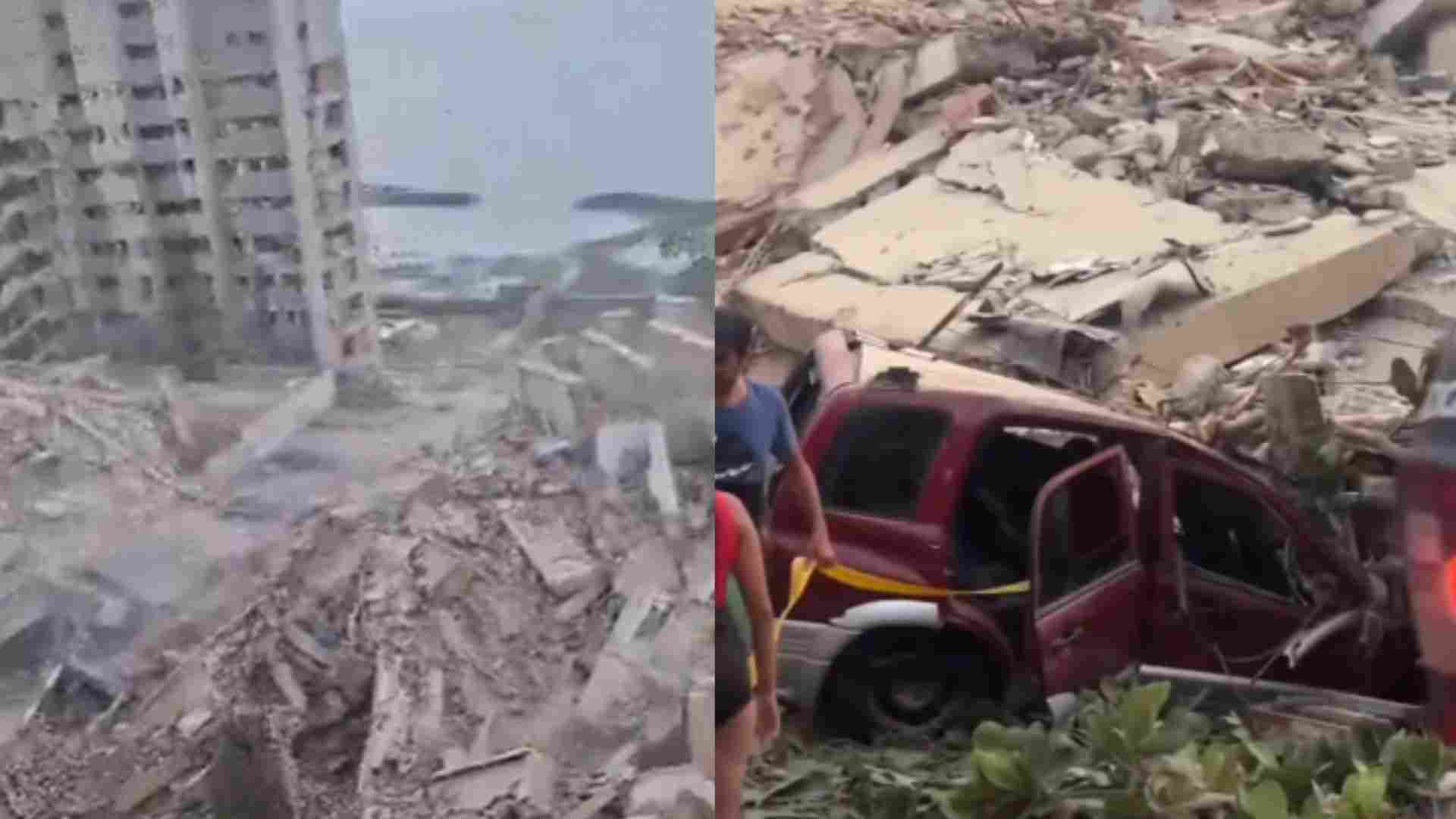

Five days after two powerful earthquakes devastated Venezuela's coastal state of La Guaira, rescue operations have largely shifted from searching for survivors to recovering bodies. As time passes, officials believe the chances of finding more people alive under the rubble are becoming increasingly slim.
Authorities continue recovery efforts across the disaster zone, while thousands of families wait for news of missing loved ones.
Temporary Morgue Receives Hundreds of Victims
Officials set up a temporary mortuary inside a warehouse at the Port of La Guaira to handle the growing number of victims. According to AFP, hundreds of bodies were placed in white and black body bags and coffins as forensic experts worked to identify them.
Outside the facility, grieving families gathered, hoping to receive information about their relatives. “There were 11 people in my household; only two of us survived because we were at work,” Wilker Molalla told AFP. “My family is there – I’m told my sister and her children are there, as well as the children of my brother.”
US Military Restores Critical Transport Routes
The United States military said its Marines repaired one of Venezuela's two main ports, allowing humanitarian aid and heavy equipment to reach the earthquake-hit region.
According to the US military, the Port of La Guaira is now fully operational. The USS Fort Lauderdale has already begun delivering emergency supplies and relief equipment to affected communities.
US Air Force personnel are also helping restore operations at Simon Bolivar International Airport near Caracas, which suffered damage during the earthquakes. The airport partially resumed cargo and humanitarian aid flights on Saturday, improving the flow of international assistance.
Rescue Teams Save One Survivor
Although the critical 72-hour rescue period has already passed, emergency workers achieved a rare breakthrough on Monday.
Rescuers pulled 21-year-old Aaron Levi alive from beneath the rubble in the nearby town of Tanaguarena. Video footage showed teams carrying out the difficult rescue operation after days of searching.
The successful rescue offered a brief moment of hope amid the widespread devastation.
Death Toll Climbs Past 1,700
National Assembly President Jorge Rodriguez said the official death toll has risen to at least 1,719.
Meanwhile, the United Nations announced additional humanitarian support.
UN country coordinator Gianluca Rampolla del Tindaro said the organisation will provide Venezuela with 10,000 body bags to assist recovery operations.
“It’s very sad, and we truly hope that actually the number is going to be smaller than that,” Gianluca Rampolla del Tindaro told a virtual news conference.
Thousands Injured as Aftershocks Continue
Officials said at least 3,150 people suffered injuries in Wednesday's 7.2- and 7.5-magnitude earthquakes. The tremors also shook neighbouring Colombia and became Venezuela's deadliest earthquakes in more than 100 years.
A magnitude-4.6 aftershock struck on Monday morning, according to the US Geological Survey. The latest tremor increased fears that weakened buildings could collapse.
International Aid Continues to Grow
The international community has expanded its support for Venezuela. Rampolla del Tindaro said 27 countries have sent more than 40 search-and-rescue teams to assist local authorities. He also revealed that at least 2,500 buildings suffered damage, with most collapsing completely.
The United States doubled its financial assistance from $150 million to $300 million on Monday. Washington has played a leading role in Venezuela since the removal of former president Nicolas Maduro earlier this year.
Rescuers Describe Heartbreaking Scenes
Despite a few successful rescues, volunteers said many operations ended in tragedy. Luis Salas, a 27-year-old rescue volunteer, described the emotional toll of searching through collapsed buildings.
“the hardest part was when we felt hope in the tunnels we went into – crawling, clearing debris, working with all our heart, with great faith – and when we reached our targets, we found them lifeless.”
Public Anger Grows Over Slow Response
Frustration is rising among survivors who believe authorities responded too slowly. Eduardo Cardozo, a volunteer in Tucacas, said many lives might have been saved if rescue teams had arrived earlier. “It was frustrating” to know that some victims could have been saved “if they’d been searched for in time.”
On Sunday, angry residents confronted soldiers and demanded that they help with rescue operations. “The country needs you. Put down your weapon,” one man ordered them.
Looting Adds to the Crisis
The disaster has also triggered widespread looting in La Guaira city. Residents reported that people ransacked pharmacies, supermarkets and other businesses as shortages worsened.
Many survivors criticised the slow arrival of government aid and said emergency assistance remains insufficient. Authorities said they are establishing temporary camps for people who lost their homes.
Millions May Need Humanitarian Assistance
The UN migration agency warned that the humanitarian crisis could continue to grow. Based on population figures and the scale of destruction, the agency estimated that up to 6.76 million people could require assistance.
Many survivors will need emergency shelter, clean water, sanitation facilities, healthcare and other essential relief supplies as Venezuela faces one of the worst natural disasters in its modern history.