
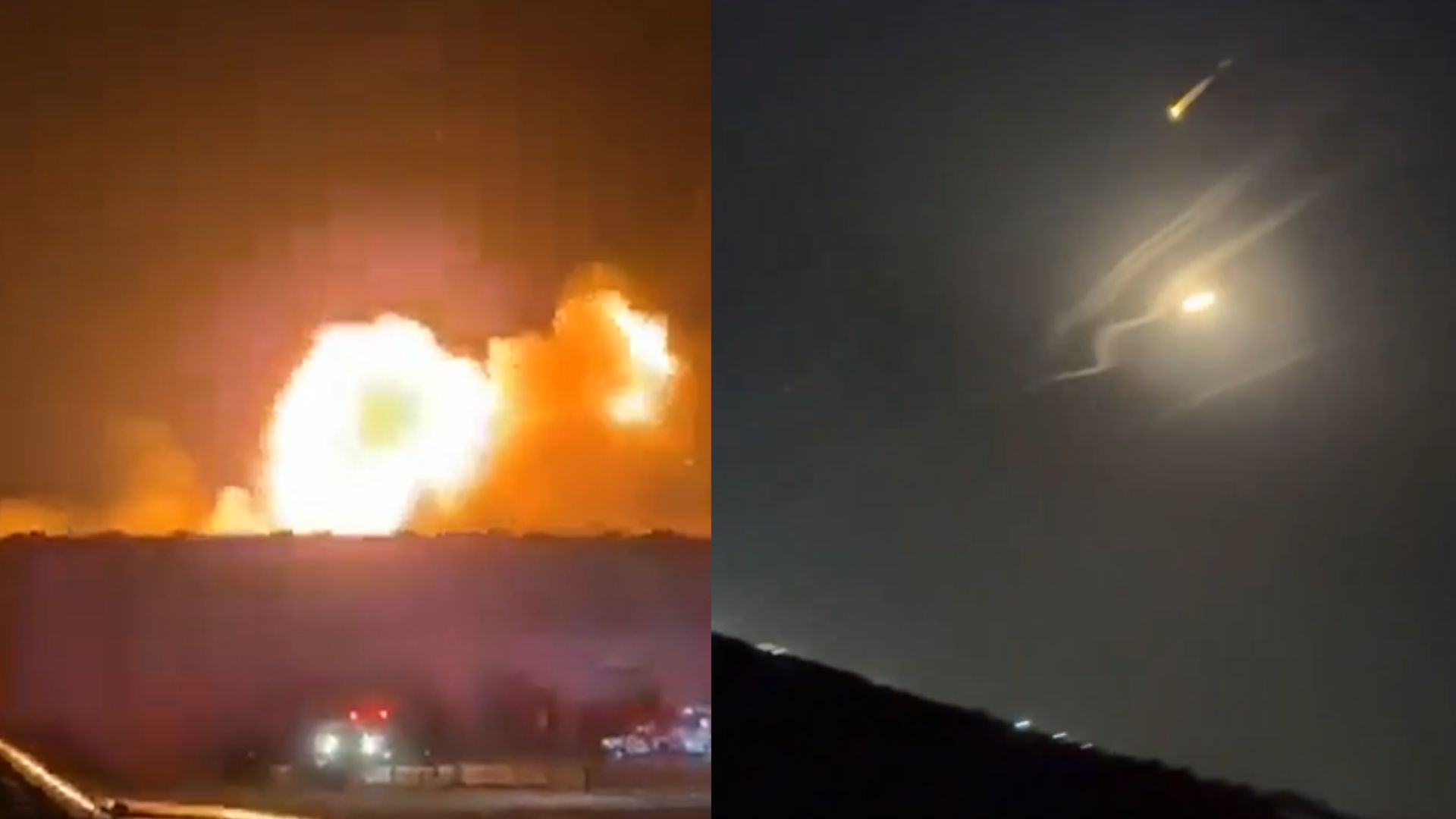

The United States Central Command (Centcom) has completed its latest wave of airstrikes on Iran. The attacks targeted military sites across the country as tensions between Washington and Tehran continued to rise. Iran responded with fresh strikes on military facilities linked to the United States in the region.
The conflict has now entered its fifth straight day, while the Strait of Hormuz remains at the centre of the dispute.
Centcom Announces End of Latest Strike Operation
Centcom said it ended its latest evening operation at 9 pm ET on Wednesday. The US military said it attacked Iranian command centres, air defence systems, missile and drone facilities, and coastal surveillance sites. It said the strikes aimed to weaken Iran’s ability to threaten shipping through the Strait of Hormuz.
The military also confirmed that it used precision-guided munitions to hit targets at several locations, including the Bandar Abbas port. Earlier in the day, US forces carried out another operation on Greater Tunb Island. They struck coastal defence positions and cruise missile sites during a 90-minute mission.
“Earlier this morning, American forces struck coastal defense and cruise missile sites on Greater Tunb Island during a 90-minute wave. The U.S. military is holding Iran accountable at the Commander in Chief’s direction,” the Centcom further said. The command also released video footage showing some of the strikes.
— U.S. Central Command (@CENTCOM) July 16, 2026
Iranian Media Reports More Areas Hit
Centcom did not release a full list of the targets. However, Iranian state media reported that Semnan Airport, east of Tehran, came under attack. It also said Khondab, Qeshm Island, and the Sirik area in Hormozgan province were hit.
US Continues Fifth Day of Military Action
Wednesday marked the fifth consecutive day of US strikes on Iran. The latest attacks followed the collapse of the temporary ceasefire that had reduced tensions for several weeks. Since then, both countries have continued to exchange military attacks across West Asia.
The fighting has increased fears of a wider regional conflict.
Iran Launches Fresh Retaliatory Attacks
Iran responded with new attacks that continued into Thursday. Iranian state media said the military struck Al-Azraq Air Base in Jordan. It claimed the attack targeted radar systems, communications equipment, and fuel storage used by US forces.
The reports also said Iran attacked Ali Al Salem Air Base in Kuwait. According to Iranian media, the strike destroyed an early-warning radar used by a short-range air defence system. Kuwait and Jordan both reported attacks inside their territories.
Conflict Spreads Across West Asia
The conflict has now continued for five straight days. During this period, the United States has carried out repeated airstrikes on Iran. Iran has responded by targeting American bases and troops in Jordan, Bahrain, and Kuwait.
The exchange of attacks has ended the fragile ceasefire that had briefly lowered tensions.
Strait of Hormuz Becomes Main Flashpoint
The immediate dispute has shifted from Iran's nuclear programme to control of the Strait of Hormuz. The United States says international shipping must continue without disruption.
Iran argues that the US-Iran memorandum of understanding (MoU) allows it to manage the waterway as it sees fit. It has also said ships must follow designated routes and may have to pay a transit toll.
Iran Points to the MoU
Iran says the agreement supports its position on the Strait of Hormuz. “The Islamic Republic of Iran will conduct dialogue with the Sultanate of Oman to define the future administration and maritime services in the Strait of Hormuz, in discussion with other Persian Gulf littoral states in line with the applicable international law and the sovereign rights of coastal states of the Strait of Hormuz,” Paragraph 5 of the US-Iran MoU says.
Iran maintains that the agreement gives it the right to regulate traffic through the strategic waterway.
Energy Security Concerns Grow
Iran has declared the Strait of Hormuz closed, bringing shipping through the route to a halt. Iran has attacked ships that used routes it considered unauthorised. The United States answered with more airstrikes on Iranian positions.
The repeated retaliation has created a cycle of conflict that has lasted five days. The collapse of the ceasefire has raised fresh concerns over global energy supplies, as the Strait of Hormuz remains one of the world's most important routes for oil and gas exports.