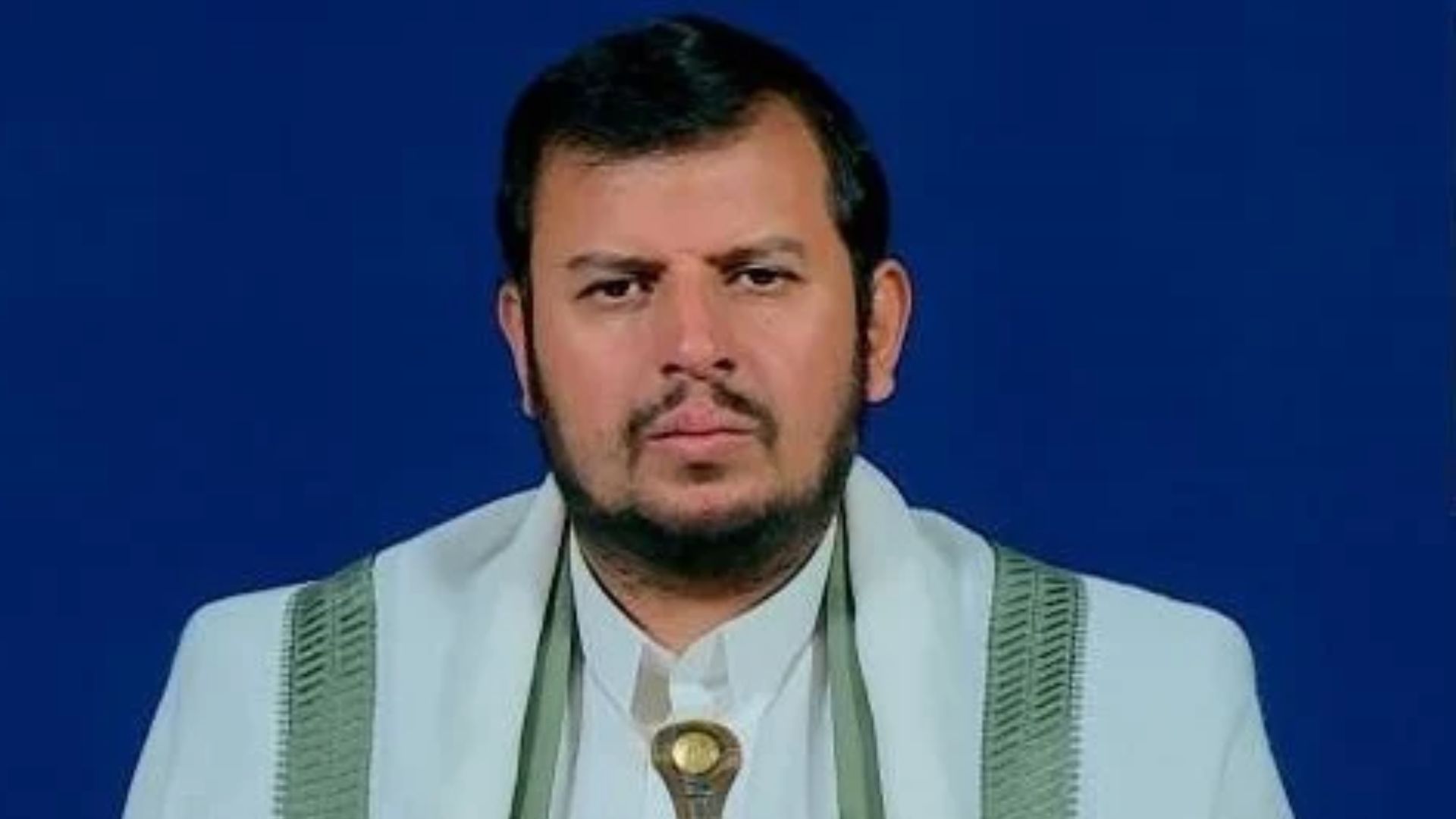
Abdul Malik al-Houthi, the secretive leader of Yemen’s Ansar Allah movement, commonly known as the Houthis, rarely appears in public. Instead, he usually communicates with his supporters through televised speeches.
However, his movement has become a major focus of regional security concerns as attacks on Saudi Arabian airports, renewed fighting in Yemen and threats to international shipping raise fears of a wider conflict.
On Monday, India, Turkey, Pakistan, Egypt and
Saudi Arabia condemned Houthi attacks on Riyadh’s international airport. Saudi authorities reported that an attack on Saturday killed 13 people and injured more than 300. Another attack on Sunday reportedly killed one person and wounded nearly a dozen others.
The latest violence follows a renewed military campaign that has intensified Yemen’s long-running conflict. On October 7, attacks targeted King Khalid International Airport in Riyadh and Abha airport. In response, the Saudi-led coalition said it had struck more than 80 Houthi military sites. The Houthis also launched missiles and drones towards Aden’s international airport.
Meanwhile, the United Nations has warned that Yemen risks sliding back into full-scale war.
During a briefing to the UN Security Council on October 9, UN Special Envoy for Yemen Hans Grundberg reported fighting along several front lines, including the highlands west and south of Taiz, as well as areas in Lahj, Marib, al-Jawf and Hajjah.
Houthi authorities have also accused Saudi Arabia of carrying out late-night airstrikes in the Hamdan and Thourah districts of Sanaa. Saudi Arabia had not responded to those specific allegations at the time.
Who Is Abdul Malik al-Houthi?
Abdul Malik al-Houthi was born in Yemen’s northern Saada governorate in the late 1970s or early 1980s, although the movement has kept many details of his early life private. He belongs to the Al-Houthi clan, a prominent family associated with Yemen’s Zaydi Shia Muslim tradition.
His father, Badreddin al-Houthi, was reportedly a Zaydi religious scholar whose teachings influenced religious life in northern Yemen.
For centuries, Zaydism played an important role in Yemeni society and politics. However, towards the end of the twentieth century, some Zaydi leaders became concerned about the spread of Saudi-funded Salafism and Wahhabism in their traditional strongholds.
In response, Abdul Malik’s elder brother, Hussein Badreddin al-Houthi, established the
Shabab al-Muminin, or Believing Youth, movement in the early 1990s.
The organisation initially focused on religious education, summer camps and the revival of Zaydi cultural traditions. Over time, however, it developed into a political movement that challenged Yemen’s established leadership.
Hussein al-Houthi openly criticised the government of then-President Ali Abdullah Saleh. He accused the government of serving American and Israeli interests, drawing opposition from both Sanaa and Washington, particularly after the September 11 attacks in the United States.
The Death of Hussein al-Houthi and Abdul Malik’s Rise
In 2004, Saleh launched a military campaign to suppress the growing movement. Yemeni security forces killed Hussein al-Houthi in September that year.
His death strengthened the movement rather than ending the rebellion. After a brief period under their father’s leadership, the movement passed to Abdul Malik by the mid-2000s.
Although he was relatively young and lacked the advanced theological background of his father and elder brother, Abdul Malik demonstrated strong organisational and military abilities. He also used local grievances to expand the movement’s support.
Between 2004 and 2010, the Houthis fought several rounds of conflict against Saleh’s government, known collectively as the Saada Wars. These battles helped Abdul Malik develop a disciplined fighting force experienced in guerrilla warfare and operating in Yemen’s mountainous terrain.
He also capitalised on public anger over government corruption, economic neglect and civilian casualties during military operations. These grievances helped the Houthis attract recruits and strengthen their position among northern tribes.
By the time the Arab Spring uprisings shook Yemen in 2011, the Houthis had evolved from a regional insurgency into a powerful political and military force capable of challenging the central government.
What Is Abdul Malik al-Houthi’s Role in Yemen?
The Ansar Allah movement’s ideology centres on a slogan known as the
Sarkha, or the Scream:
"God is the greatest, Death to America, Death to Israel, A curse upon the Jews, Victory to Islam."
The slogan reflects the movement’s opposition to the United States and Israel and its religious and political worldview. While some early Western observers dismissed the rhetoric as political posturing, the movement has continued to use it as a central part of its identity.
Under Abdul Malik’s leadership, the Houthis have transformed from an insurgent group into the de facto authority across large parts of Yemen, including the capital, Sanaa. They seized the capital in late 2014 and early 2015, dramatically changing the country’s political landscape.
The movement operates through institutions that include the Supreme Political Council. However, its rule has drawn criticism over restrictions on political opposition and civil liberties.
Houthi Rule and Restrictions on Civil Liberties
In areas under Houthi control, the authorities have reshaped public institutions around their political and religious ideology. They have changed educational curricula, religious endowments and judicial structures to reflect the movement’s interpretation of Zaydi principles and its loyalty to the leadership.
The Houthis also organise large public rallies, ideological programmes and youth summer camps. Critics argue that these activities promote the movement’s political beliefs and help it recruit fighters.
Human rights organisations have raised concerns about the treatment of political opponents, journalists, civil society activists and religious minorities in Houthi-controlled territories. Reports have also highlighted restrictions on freedom of expression and the use of surveillance against perceived opponents.
Economic Hardship in Houthi-Controlled Areas
Yemen’s population has endured severe economic hardship during years of conflict. The Houthi leadership often blames the war, foreign blockades and international sanctions for the humanitarian crisis.
However, critics also accuse the movement of corruption, diverting public revenue towards military operations, imposing heavy taxes on businesses and allowing Houthi-linked elites to dominate fuel and food imports.
These competing explanations reflect the wider struggle over responsibility for Yemen’s prolonged economic and humanitarian crisis.
How Did Abdul Malik al-Houthi Turn the Houthis Into a Regional Power?
For several years after the Saudi-led military intervention began in March 2015, Abdul Malik focused primarily on protecting the movement’s territory and ensuring its survival. The coalition intervened to restore Yemen’s internationally recognised government after the Houthis seized control of the capital.
The conflict eventually settled into a devastating stalemate. Saudi-led airstrikes continued to hit targets in Yemen, while Houthi forces launched ballistic missiles and drones across the border into Saudi Arabia. The war also deepened Yemen’s humanitarian emergency.
However, the Houthis later expanded their military ambitions beyond Yemen, particularly after the outbreak of the Israel-Hamas war following the October 7, 2023 attacks.
Houthi Attacks Expand Into the Red Sea
Abdul Malik declared that his movement would take military action in support of the Palestinian people. The Houthis initially launched drones and missiles towards southern Israel before expanding their operations to commercial shipping in the Red Sea, the Bab al-Mandab Strait and the Gulf of Aden.
The campaign brought the movement into direct confrontation with international maritime interests.
The Houthis used anti-ship ballistic missiles, cruise missiles and explosive-laden uncrewed surface vessels. Many of their weapons and military capabilities have been linked to Iranian technology, although the precise origin and supply chain of individual systems vary.
Their attacks disrupted one of the world’s most important maritime trade routes. Several major container shipping companies rerouted vessels around Africa to avoid the danger, increasing journey times and shipping costs. The disruption also raised concerns about energy supplies and global trade.
In response, the United States and European partners launched naval operations to protect commercial shipping. Western forces also carried out retaliatory airstrikes against Houthi military installations in Yemen.
Despite these operations, the Houthis continued to pose a threat to regional shipping, demonstrating their ability to influence security far beyond Yemen’s borders.
Why Are the Houthis Attacking Saudi Arabia?
Relations between Saudi Arabia and the Houthis have remained tense despite efforts to reduce hostilities. A fragile UN-brokered truce that largely halted major ground offensives between the two sides from April 2022 had reduced large-scale fighting and allowed some commercial flights and imports to resume.
However, the truce did not resolve the fundamental political disputes dividing Yemen. The country remained fragmented, with the Houthis controlling much of the northern and western highlands while the internationally recognised Presidential Leadership Council (PLC) administered other areas in the south and east.
Sanaa Airport Strike Deepens Regional Tensions
According to the account, the fragile peace suffered a major setback on July 13, when an Iranian civilian aircraft attempted to land at Sanaa International Airport.
The aircraft reportedly carried a senior Houthi political and military delegation returning from Tehran after attending the state funeral of Iran’s assassinated Supreme Leader, Ayatollah Ali Khamenei.
Forces aligned with Yemen’s internationally recognised government and the PLC reportedly carried out an airstrike that severely damaged the airport runway. The aircraft was forced to divert to the Houthi-controlled Red Sea port city of Hodeidah.
The strike further strained an already fragile political situation and raised questions about the future of diplomatic efforts to reduce the conflict.
In a televised address following the incident, Abdul Malik al-Houthi portrayed the bombing as an attack on critical infrastructure and accused Saudi Arabia and its local allies of attempting to undermine Yemen’s resistance movement.
He accused Riyadh of acting as an American and Israeli proxy and warned that Saudi Arabia would face economic and military consequences for what he described as a breach of the peace.
The episode illustrates how attacks on strategic infrastructure can intensify existing rivalries and undermine efforts to prevent a wider regional confrontation.