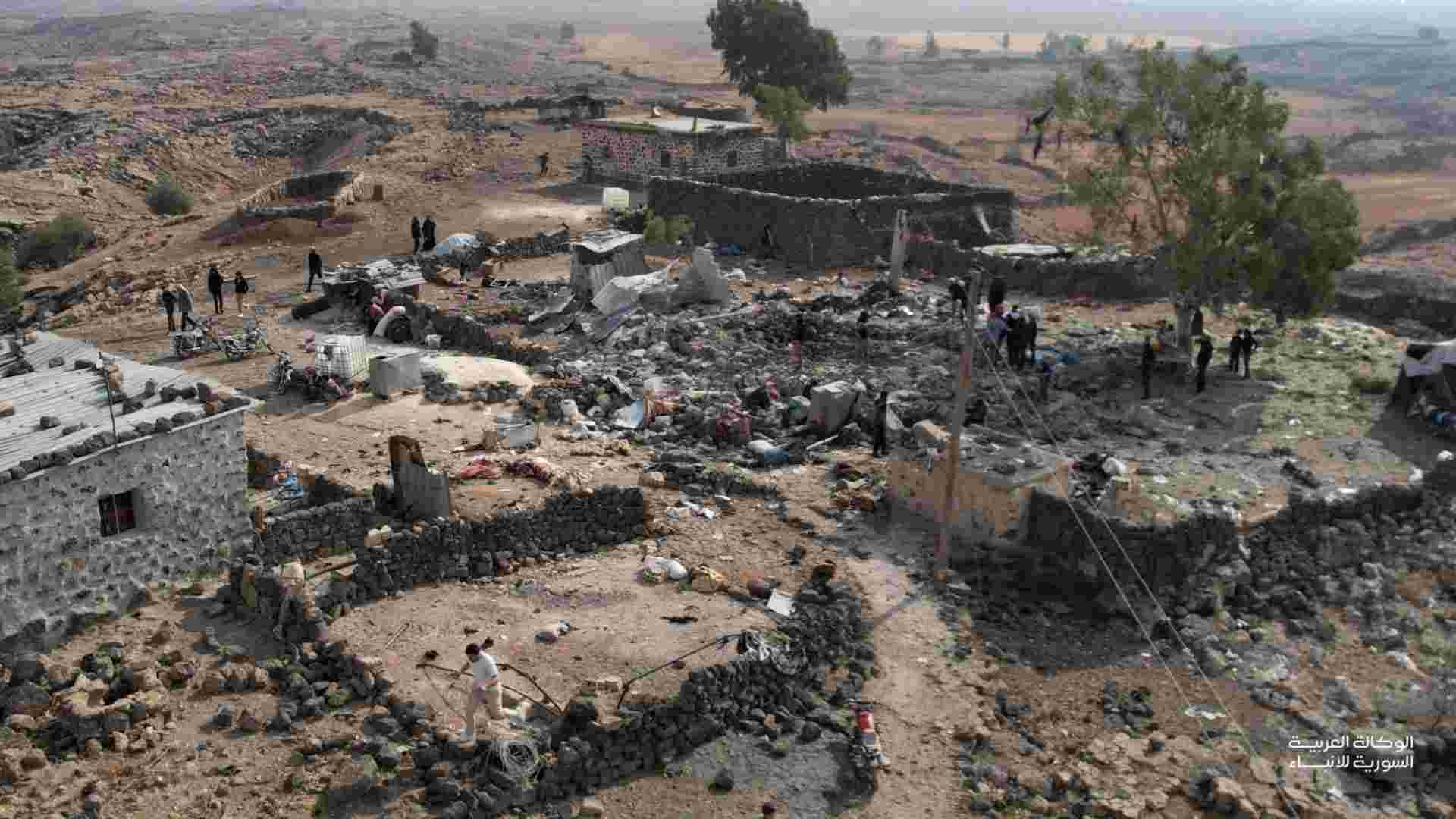
Jordan carried out airstrikes against targets in southern Syria on Monday without prior coordination with the Syrian government. Amman said the operation was retaliation for a
deadly attack on a church in Jordan last week that killed nine people. The strikes came hours after Jordanian authorities arrested three suspects in connection with the killings.
Jordan’s military said its fighter jets targeted “terrorist organisations” in Syria following Friday’s attack. The shooting marked the first attack on a place of worship in Jordan in years.
The military said its air force had "destroyed several terrorist positions" and killed and wounded "numerous members" of groups linked to the people responsible for the church attack.
Damascus Objects to Jordan’s Airstrikes
The Syrian government criticised Jordan for carrying out the operation without consulting Damascus beforehand. In a statement published by state news agency SANA, Syrian authorities said “no prior coordination with the Syrian side was carried out” before the strikes. The government said it was investigating the incident and discussing the matter with Jordan. Damascus also stressed the importance of cooperation between the two countries to maintain security along their shared border.
Syria’s Foreign Ministry said it had informed Jordan of its “complete reservation” about military operations on Syrian territory without prior coordination. It added that officials were communicating with Amman to address the consequences “in a manner that preserves security and the sovereignty of Syrian territory”.
The diplomatic dispute highlights the challenges both countries face in managing border security while respecting each other’s territorial sovereignty.
Airstrikes Kill Civilians in Daraa and Sweida
The strikes caused casualties in southern Syria, according to local authorities.
Health officials in Daraa province reported six deaths, including three children and a woman. Syria’s civil defence agency reported seven deaths in total, with six in Daraa and one in neighbouring Sweida province.
Jordan’s military maintained that it had targeted positions belonging to groups connected to the church attack. It said the operation killed and injured several members of those groups but did not provide a detailed casualty breakdown.
The reported civilian deaths could further complicate relations between Amman and Damascus as both governments address security concerns following the attack.
Jordan Arrests Three Suspects in Church Killings
Jordanian authorities arrested three men accused of carrying out the deadly attack just hours before the airstrikes.
Public Security Director Major General Abdullah al-Maaytah identified the suspects as Hazza Zaidan Mohammed, Meshal Zaidan Mohammed and Ahmad Sami Hussein. Two of the men are brothers, while the third is related to them by marriage.
Security forces located the suspects inside an abandoned house, where they had barricaded themselves. The men opened fire when officers approached, Maaytah said.
All three suspects sustained injuries and were taken to hospital for treatment. One remained in critical condition, according to state broadcaster Al-Mamlaka. No security personnel were injured during the operation.
Authorities also seized weapons and a large quantity of ammunition from the location.
Under Jordanian law, murder carries the death penalty by hanging.
Jordanian Leaders Promise a Firm Security Response
Jordanian officials vowed to take strong action against anyone threatening the country's security and stability.
“This country must remain an oasis of security and stability,” Maaytah said. He added that Jordan would remain “impervious to anyone who dares to challenge it”.
King Abdullah II also addressed the arrests in a post on X. He said security forces had “chased them to the very end" and declared that Jordan would not tolerate supporters of “dark ideologies that divide Jordanians”.
The king had earlier visited injured victims in hospital. He wore military fatigues and carried a pistol during the visit. “We will show them,” he vowed.
Interior Minister Mazen al-Faraya said all three suspects were Jordanian citizens. He added that they had taken shelter in a building in a village near the attack site.
“There is no indication of any external contacts or collaboration with foreign parties,” he said.
Communications Minister Mohammad al-Momani also promised a forceful response. He said the state would act “with an iron fist, without mercy or leniency” against anyone attempting to undermine national security.
Gunmen Attack Greek Orthodox Church During Funeral
The attack took place on Friday during a funeral service at the Greek Orthodox St George’s Church in the village of Hammoud, in southern Jordan’s Karak governorate. Gunmen opened fire during the service, killing nine people.
Karak has a significant Christian community, although Jordan has a predominantly Muslim population. Christians account for an estimated 2% to 3% of the country's population.
Attacks on places of worship are rare in Jordan. However, the country experienced a deadly attack in Karak in 2016, when gunmen targeted a security centre and police patrols, killing 10 people.
The latest shooting has prompted heightened security measures and widespread mourning across the country.
Jordan Observes Three Days of National Mourning
Prime Minister Jafar Hassan announced three days of national mourning on Friday following the killings. Government buildings and public institutions lowered their flags to half-mast in honour of the victims.
Eight of the nine victims were buried beside the church on Sunday. A large crowd attended the funeral, while security forces maintained a heavy presence in the area.
The ninth victim, Mohammed al-Qasous, was buried in southern Amman on Monday.
The church attack and Jordan’s subsequent airstrikes in Syria have placed renewed focus on regional security and cross-border cooperation. While Amman says it acted against groups linked to the killings, Damascus has objected to the operation because Jordan did not coordinate with Syrian authorities beforehand.