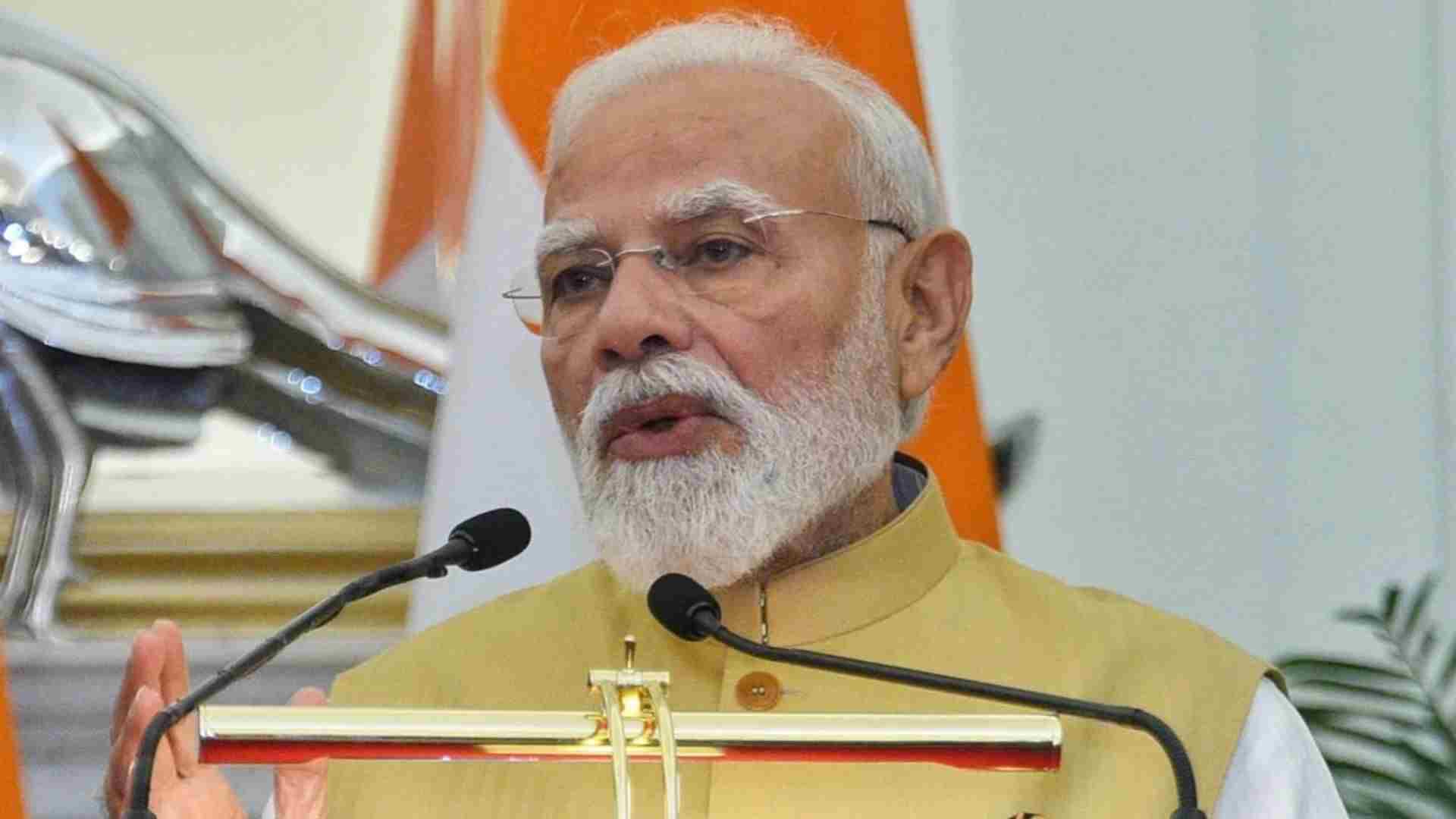
Prime Minister Narendra Modi on Wednesday criticised the Congress after the party failed to win a single seat in the biennial Legislative Council elections held across four states using ballot papers. The results have drawn attention because several opposition parties have been demanding a return to paper ballots instead of electronic voting machines (EVMs).
The elections covered 28 Legislative Council seats across Uttar Pradesh, Maharashtra, Bihar and Karnataka. The Congress contested 12 seats, including four it had won in the previous elections, but failed to secure a victory. Its performance in Karnataka proved particularly disappointing, as the party could not win any of the four seats in the state.
The Congress had renewed its demand for ballot paper voting following an
Indian Express report that examined the internal functioning of the Election Commission of India (ECI). The report said Election Commissioners Sukhbir Singh Sandhu and Vivek Joshi had formally recorded their objections to decisions and orders related to the Special Intensive Revision (SIR) of electoral rolls on 14 occasions over 10 months under Chief Election Commissioner Gyanesh Kumar.
PM Modi Targets Congress Over Ballot Paper Results
Modi used the election results to question the Congress's performance, pointing out that voters had cast their ballots using paper instead of EVMs. The Congress has repeatedly raised concerns about the reliability of electronic voting machines and called for the restoration of paper ballot voting.
"MLC elections in 28 seats across 4 big states - Uttar Pradesh, Maharashtra, Bihar and Karnataka. Elections held using ballot papers. Guess how many seats Congress won?" Modi said in a post on X.
The Prime Minister's remarks came as the Congress and other opposition parties continued their campaign against EVMs. The results gave the BJP and its allies an opportunity to challenge the Congress's arguments for returning to paper ballots.
What Are Legislative Council Elections?
Legislative Council elections determine membership of the Vidhan Parishad, the upper house of the state legislature in states that have a bicameral legislative system.
Article 169 of the Constitution of India provides for the creation or abolition of a state Legislative Council through the prescribed constitutional process. Each Member of the Legislative Council (MLC) serves a six-year term, with one-third of the members retiring every two years.
The biennial elections were held to fill vacancies across the four states. Polling took place on October 23, while vote counting began on Tuesday and remained underway in some constituencies.
Opposition Renews Demand for Ballot Paper Voting
Opposition parties have stepped up their demand to replace EVMs with paper ballots. They have also announced a six-point programme that includes public rallies and a petition to the President, targeting Chief Election Commissioner Gyanesh Kumar and Prime Minister Narendra Modi.
The Indian National Developmental Inclusive Alliance (INDIA) has been preparing for the next stage of its political campaign against the Special Intensive Revision of electoral rolls. Opposition leaders have accused the Election Commission and the government of manipulating voter lists during the exercise, alleging that the process could weaken the integrity of elections.
The opposition has also accused Modi and Union Home Minister Amit Shah of exerting undue influence over the Election Commission. The government and the poll panel have faced repeated criticism from opposition parties over the SIR exercise and the use of EVMs.
The controversy has added to the political dispute over electoral transparency, voter registration and the independence of the Election Commission.
State-Wise Results of the MLC Elections
The elections covered 28 constituencies across Uttar Pradesh, Bihar, Karnataka and Maharashtra. The seats included constituencies representing teachers and graduates, which elect members to the respective state Legislative Councils.
Polling took place in 11 constituencies in Uttar Pradesh, eight in Bihar, four in Karnataka and five in Maharashtra. The constituencies included six teachers' and five graduates' seats in Uttar Pradesh. Bihar had four constituencies of each category, while Karnataka had two of each. Maharashtra's seats comprised three graduates' constituencies and two teachers' constituencies.
Maharashtra
In Maharashtra, the BJP-led Mahayuti alliance was leading in three seats. The opposition Nationalist Congress Party (Sharadchandra Pawar) was ahead in the remaining two constituencies.
Bihar
The Jan Suraaj Party secured its first seat in the Legislative Council elections. The BJP, Janata Dal (United), Rashtriya Janata Dal and an Independent candidate also won one seat each.
Karnataka
The Congress suffered a major setback in Karnataka, losing all four seats it contested. The opposition Janata Dal (Secular) took one constituency away from the ruling party, while its ally, the BJP, retained three seats.
The results marked a disappointing performance for the Congress, which had entered the elections seeking to defend seats it had previously held.
Electoral Reforms Remain a Major Political Flashpoint
The MLC election results have intensified the political debate over EVMs and paper ballots. The Congress and several other opposition parties have argued that future elections should use ballot papers instead of electronic voting machines.
Modi's remarks have turned the Congress's performance in the ballot paper elections into a fresh point of political criticism. At the same time, the opposition's campaign continues to focus on the SIR exercise, voter roll accuracy and the Election Commission's role in ensuring free and fair elections.