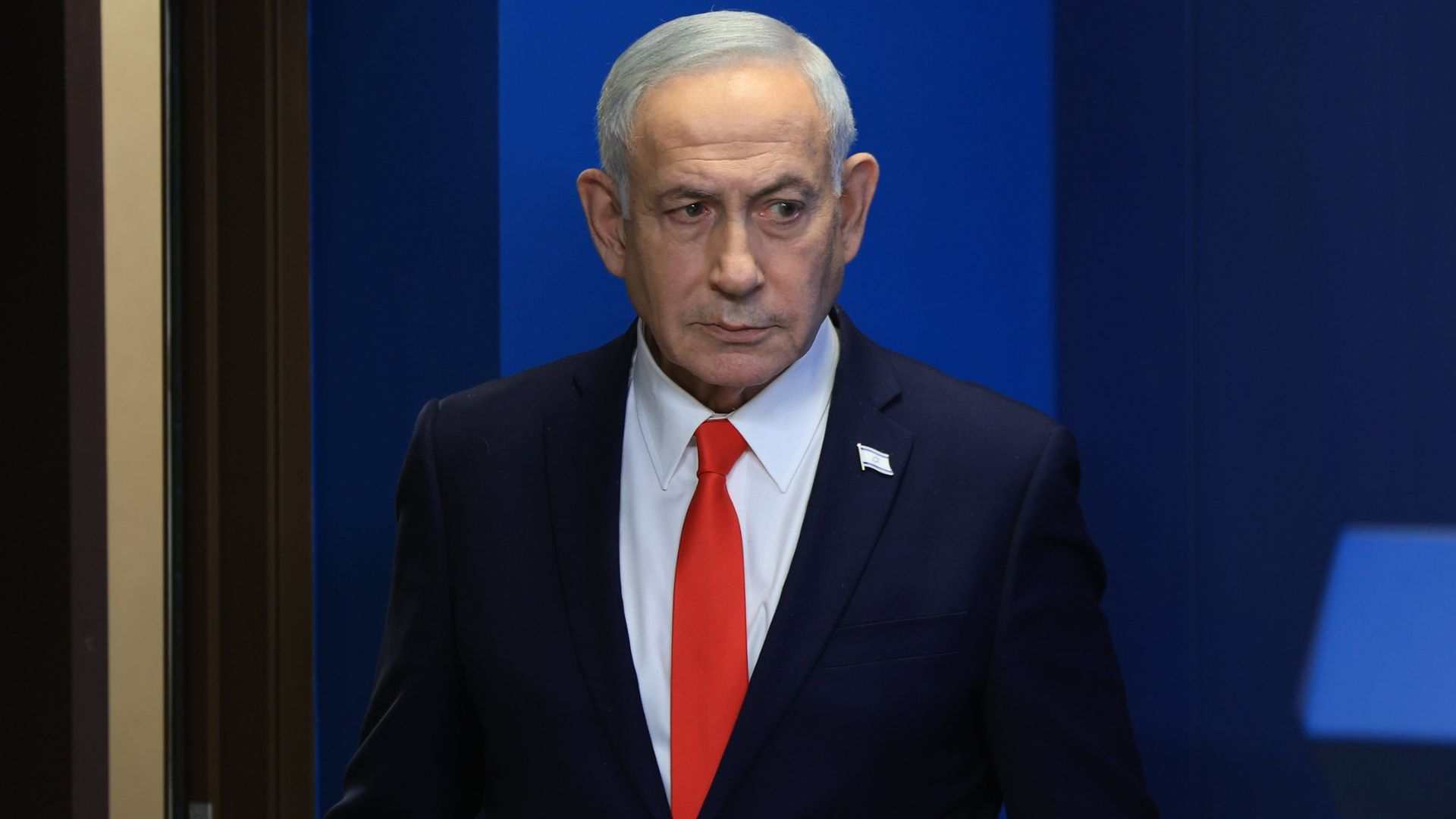
Israeli President Isaac Herzog has urged political parties to work together to form the next government and prevent another election. His appeal came after an inconclusive vote on Wednesday left both major political blocs short of the seats needed to secure a parliamentary majority.
“We need to do everything, certainly after yesterday, so as not to hold another election. So I expect everyone who comes here to come here with an open mind,” Herzog said during a gathering at his residence, according to Al Jazeera.
Israeli Prime Minister Benjamin Netanyahu’s political bloc has won 53 seats, while the opposition alliance led by former military chief Gadi Eisenkot has secured 48 seats. Arab-led parties have won 19 seats, according to the latest figures reported by Israel’s Ynet news.
Neither of the two main blocs has reached the 61-seat threshold required to form a majority government in the 120-member Knesset, Israel’s parliament.
However, the vote count remains incomplete. Authorities are still counting special double-envelope ballots, which include votes cast by soldiers and other eligible voters who voted outside their designated polling stations. More than 480,000 such ballots are expected to be counted, and the results could alter the current distribution of seats.
According to Israel’s Central
Elections Committee, the counting process could continue until Friday. Herzog said he would receive the official election results next week. He would then begin a “consultation process” with political parties to determine who should receive the first opportunity to form the next government, Al Jazeera reported.
How Israel Will Choose Its Next Prime Minister
Once the official election results are available, Herzog will meet representatives of the political parties to discuss possible government arrangements.
Following these consultations, the president will nominate the lawmaker he believes has the strongest chance of securing enough parliamentary support to form a government.
The nominated candidate will initially receive 28 days to negotiate with other parties and assemble a governing coalition. Herzog can grant an additional 14 days if the candidate needs more time.
If the first nominee fails to form a government, another lawmaker may receive an opportunity to try. However, if no candidate can gather sufficient support, Israel could be forced to hold another election.
Arab-Led Parties Could Play a Decisive Role
Arab-led political parties could become crucial to determining who forms the next government. Their combined 19 seats could influence whether Netanyahu or Eisenkot can secure sufficient parliamentary support.
These parties include the Joint List and Ra’am, led by Mansour Abbas. Both have indicated that they could support an Eisenkot-led government in some capacity, although neither has committed to joining a governing coalition, Hindustan Times previously reported.
The Joint List has proposed providing a “safety net” for a government that replaces Netanyahu. This arrangement would allow the party to support the administration on important parliamentary votes without formally joining the coalition.
Ra’am has also indicated that it is open to cooperating with Eisenkot’s opposition alliance. Netanyahu, however, has ruled out depending on Arab-led parties to secure support for his government.
One possible outcome is a minority government led by Eisenkot. Under this arrangement, Arab-led parties could support the government from outside the coalition or abstain during parliamentary votes, helping it survive without holding a formal majority of coalition seats.
Whether such an arrangement would work would depend on the willingness of the parties involved to cooperate on key legislative and confidence votes.
Could Netanyahu and Eisenkot Form a National Unity Government?
Another possible outcome is a national unity government that brings together Netanyahu’s Likud party and Eisenkot’s opposition alliance. Such a government would require the two rival camps to reach a political agreement despite their competing claims to lead Israel. It could offer an alternative to another election if neither side can build a coalition independently.
However, a unity arrangement could create serious political difficulties for Netanyahu. He might have to abandon his current far-right and ultra-Orthodox partners, who have played an important role in supporting his previous governments. These allies include parties associated with far-right politicians Itamar Ben-Gvir and Bezalel Smotrich.
Ultra-Orthodox parties could also complicate negotiations because they oppose ending military-service exemptions available to many men in their communities. A partnership with Eisenkot’s opposition alliance would therefore require Netanyahu to make significant political compromises and potentially break with long-standing coalition partners.
The proposal could also face opposition from leaders who campaigned to remove Netanyahu from office. For them, joining a government led or shared by the incumbent prime minister could undermine their election promises.
What Happens If No Party Can Form a Government?
If political leaders fail to reach an agreement, Netanyahu would remain caretaker prime minister while coalition negotiations continue. He would stay in that role until a new government takes office or Israel holds another election and the political process produces a viable administration.
Israel has experienced repeated elections in recent years because rival parties have struggled to secure a stable parliamentary majority. The latest results have again left the country facing uncertainty over its political leadership.
The final outcome will depend on the remaining ballot count, Herzog’s consultations with party representatives and the ability of political leaders to negotiate a workable coalition.
For now, Herzog has made clear that his priority is to encourage cooperation and prevent another election. However, the competing interests of the major blocs and the position of the Arab-led parties could determine whether Israel can form a government without returning to the polls.