
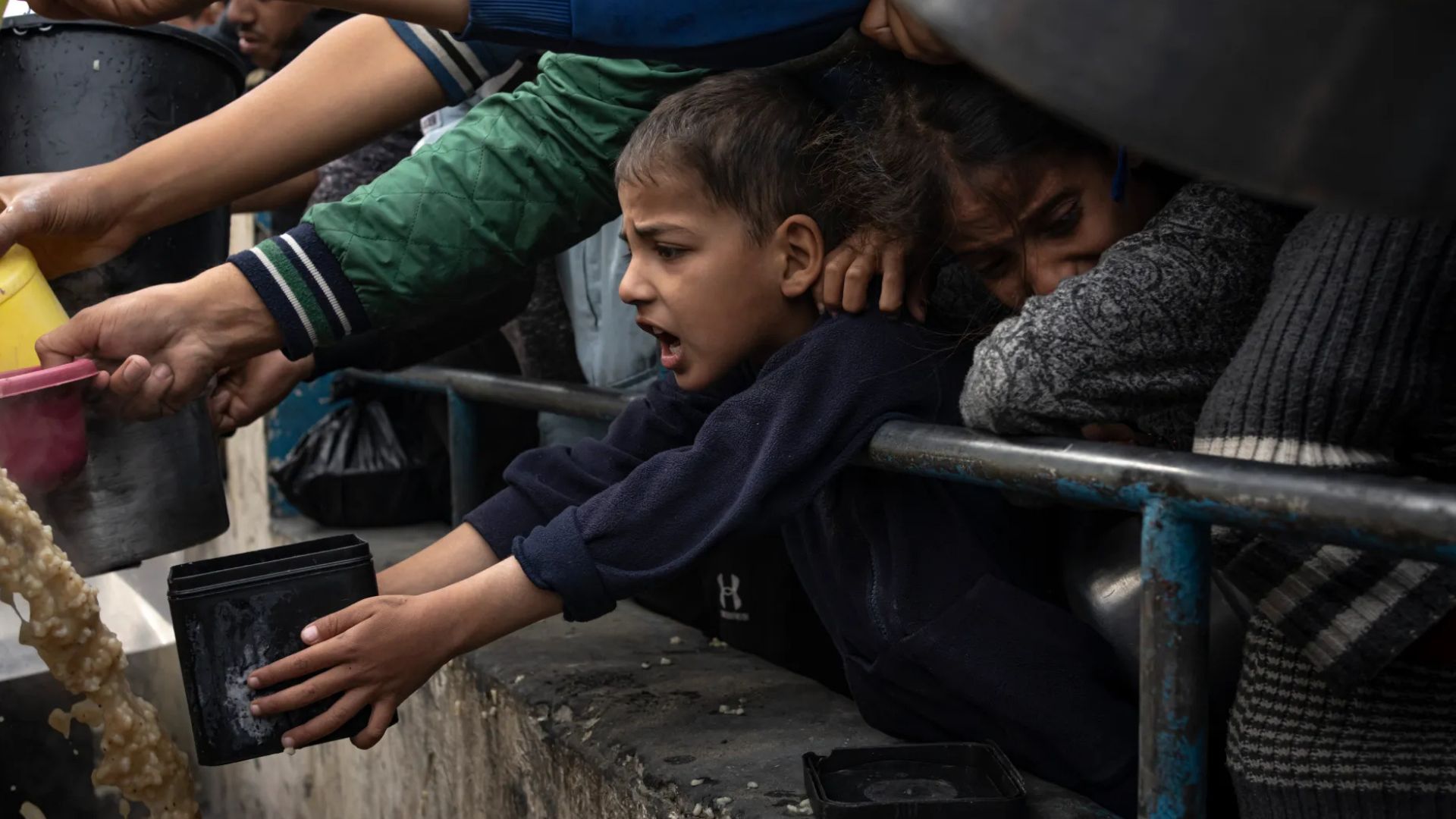

The head of the UN agency for Palestinian refugees, Philippe Lazzarini, said that starvation in Gaza had reached a critical level. He explained that even aid workers were fainting from hunger, showing how the humanitarian system was falling apart.
Lazzarini stated that the worsening crisis was affecting everyone, including the very people trying to save lives. He noted that one of his colleagues had described people in Gaza as “walking corpses.”
He also shared that UNRWA had 6,000 truckloads of food and medical aid waiting in Jordan and Egypt. He urged Israel to allow continuous and unrestricted aid into Gaza.
Hunger Deaths Continue to Rise
In the last four days, at least 45 people died due to starvation. The UN and aid organizations blamed Israel’s blockade for preventing food and essential supplies from reaching people.
Recent images from civil defense teams showed skeletal bodies of victims. Medical sources in Gaza confirmed that two more individuals died of hunger on Thursday. They had been ill and had not eaten for several days.
France Promises to Recognize Palestinian State
French President Emmanuel Macron announced a significant diplomatic step. He said France would recognize a Palestinian state during the UN General Assembly in September.
Macron explained that this decision aligned with France’s long-standing support for a just and lasting peace in the Middle East.
Peace Talks Collapse as Delegations Exit
Meanwhile, hopes for a ceasefire quickly faded. Both Israel and the United States withdrew their negotiating teams from Doha.
US envoy Steve Witkoff said Hamas had shown no real intention to reach an agreement. He noted that the latest Hamas response lacked seriousness and led the US to bring its team home for further consultation.
Witkoff mentioned that the US would now explore other options to secure the release of hostages and improve stability in Gaza. However, he did not provide further details.
Hamas Proposes New Conditions
Before the talks collapsed, there had been some optimism. An Israeli official told the Associated Press that Hamas's latest proposal had seemed workable. But that changed after Hamas submitted its full response to mediators.
According to Israeli media, Hamas requested a permanent end to the war, a new system for delivering aid, and a detailed plan for a prisoner exchange.
A Palestinian official told Reuters that Hamas had responded positively and took into account the growing suffering in Gaza. A Hamas source added that the group had outlined a new roadmap for prisoner release, which was now a top priority.
Hostage Families Call for Urgent Deal
The families of hostages in Gaza expressed concern over the withdrawal of negotiators. In a statement, they warned that every day without progress reduced the chances of recovering the hostages. They also feared losing vital intelligence on the missing individuals.
The deal under discussion would have included a 60-day ceasefire. During that time, Hamas would release 10 hostages and return the bodies of 18 others. In return, Israel would release Palestinian prisoners and allow more aid into Gaza. The two sides would also work on a lasting ceasefire during the truce.
Israeli Strikes Intensify
While diplomacy failed, violence surged again. Israeli airstrikes hit central Gaza and killed at least 89 people in 24 hours, according to Gaza health officials.
Israel claimed that the global media had exaggerated the hunger crisis. However, photos, aid group reports, and testimonies from doctors treating starving children suggested otherwise.
Aid System Overwhelmed
Israel continues to restrict most aid into Gaza. Currently, the Gaza Humanitarian Foundation (GHF), a private American company, handles distribution. It runs just four food centers with armed guards.
This system has received harsh criticism. Aid workers say it is unfit to handle the crisis and violates key humanitarian principles.
Since GHF started its operations, more than 1,000 people have died while trying to reach aid points.
Previously, the UN had managed over 400 aid centers. But since March, Israel has almost completely stopped UN aid from entering Gaza. Israeli officials claimed Hamas had stolen aid, although humanitarian workers said there was no solid evidence for this.
Hamas Insists on UN Role
Hamas has demanded that UN-led aid distribution be restored as part of any ceasefire. Under growing pressure, Israeli negotiators have become more open to this demand.
International criticism has been mounting. WHO director-general Tedros Adhanom Ghebreyesus recently described the starvation in Gaza as "man-made."
On Wednesday, thousands of Israelis marched in Tel Aviv with sacks of flour and images of starving Palestinian children. They called on the government to lift the blockade on Gaza.
Deep Divide in Israeli Government
Hamas also wants a permanent end to the war, not just a temporary pause. But members of Prime Minister Benjamin Netanyahu’s far-right cabinet oppose that idea.
As a result, even if a truce happens, Israel may resume military action once it ends.