
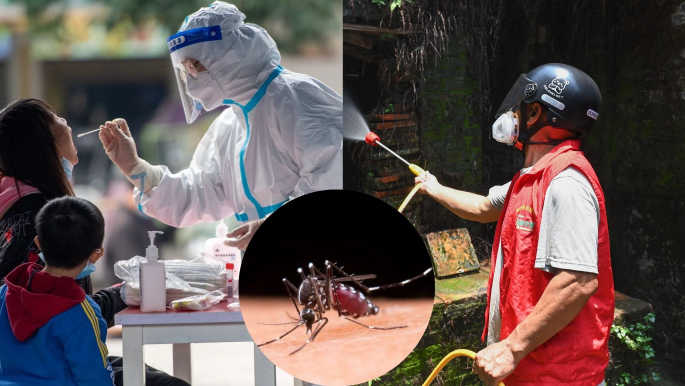

Chinese officials are working aggressively to stop the spread of chikungunya, a virus carried by mosquitoes. They are using insecticide sprays, nets, and even drones to fight the outbreak, which has already infected more than 7,000 people.
Most cases have been reported in Foshan, a major manufacturing city in southern China, located about 170 kilometers (105 miles) from Hong Kong. Authorities said the number of new infections is slowly decreasing.
A First for Mainland China
Experts believe this is the largest chikungunya outbreak ever recorded in China. Dr. Cesar Lopez-Camacho from the University of Oxford explained, “What makes this event notable is that chikungunya has never been established in mainland China before.”
He said this means most people in the area “had no preexisting immunity, making it easier for the virus to spread quickly.”
Chikungunya spreads through the bites of infected mosquitoes. It often causes fever, joint pain, and weakness, though it rarely leads to death.
Massive Insect Control Measures Underway
To stop the spread, Chinese state TV showed workers spraying insecticides in streets, homes, construction sites, and other public areas. In some places, workers sprayed the entrances before anyone could enter office buildings.
Heavy rains and high temperatures have made the problem worse. So, the government is now using drones to spot standing water, where mosquitoes breed. Officials are also warning residents to drain outdoor containers or face fines of up to 10,000 yuan (about $1,400). In some cases, they might even cut off electricity to force compliance.
Unusual Tactics and International Response
In addition to chemicals and fines, officials are trying unconventional methods. They have released fish that eat mosquito larvae and even larger mosquitoes to prey on the virus-carrying ones.
Because of the outbreak, the United States has issued a travel advisory. It warns Americans to take extra precautions when visiting Guangdong province (where Foshan is located), as well as parts of Bolivia and some Indian Ocean islands.
Strict Measures in Place
After facing past virus outbreaks like SARS in 2003 and COVID-19, China continues to use strict control tactics. In Foshan, patients infected with chikungunya must stay in the hospital for at least one week. Earlier, authorities also enforced a two-week home quarantine, but later ended it after confirming that chikungunya does not spread between people.
National-Level Response to Control Damage
To stop the virus quickly and avoid criticism, Chinese officials are holding national meetings and applying protocols across regions. These steps show the country’s strong determination to end the outbreak fast and protect its global image.