
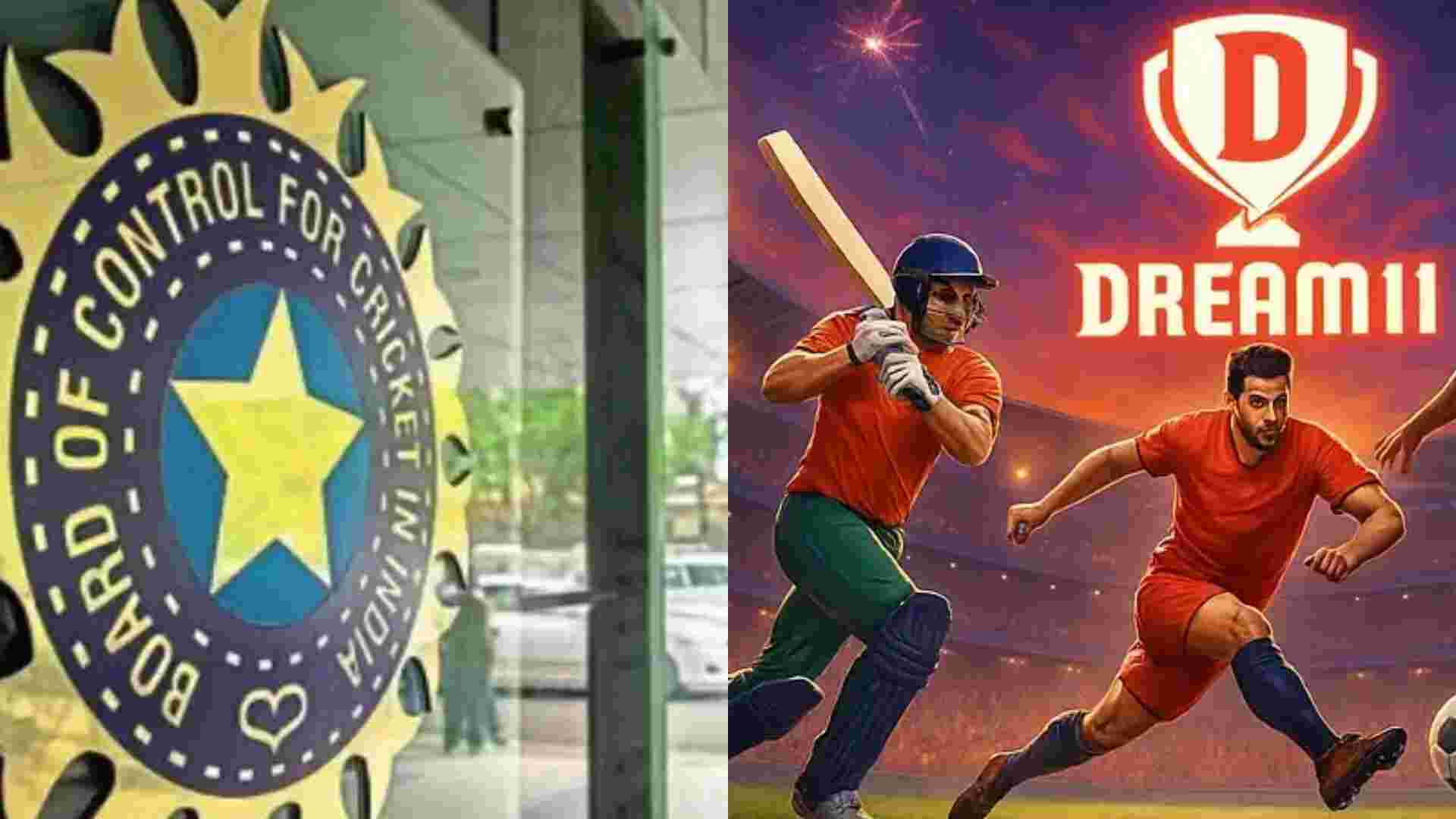

Days after Parliament passed a law banning real-money online games, Dream11 has stepped away from sponsoring the Indian cricket team. The decision has left the BCCI scrambling to find a new sponsor, with just two weeks left before the Asia Cup in Dubai.
Dream11 Pulls Out of Deal
According to a BCCI official, representatives from Dream11 met CEO Hemang Amin and confirmed they could not continue as sponsors.
“(Representatives of) Dream11 visited the BCCI office and informed CEO Hemang Amin that they won’t be able to continue… As a result, they won’t be the team’s sponsors for the Asia Cup. The BCCI will float a new tender soon,” the official told The Indian Express.
Another board member clarified that the pullout will not lead to any penalty. The sponsorship contract includes a clause that protects Dream11 if a new law directly impacts its core business.
Rise of Dream11
Founded 18 years ago, Dream11 grew into India’s largest fantasy gaming platform, valued at nearly $8 billion, according to Bloomberg. In July 2023, it signed a three-year sponsorship deal worth Rs 358 crore with BCCI, replacing Byju’s.
Dream11 also has deep links with the IPL, sponsoring multiple franchises and working with top players such as Mahendra Singh Dhoni, Rohit Sharma, Hardik Pandya, Rishabh Pant, and Jasprit Bumrah. It even became IPL’s title sponsor in 2020 when Vivo exited.
Globally, the company partnered with cricket leagues like the Caribbean Premier League, New Zealand’s Super Smash, Australia’s Big Bash League, and Women’s Big Bash League. In 2018, it also tied up with the International Cricket Council.
Dream11 extended beyond cricket into football, basketball, kabaddi, and hockey. It worked with the Indian Super League, launched NBA’s official fantasy game in India, and partnered with the Pro Kabaddi League and the International Hockey Federation.
Impact of the Online Gaming Bill
The new Online Gaming Bill changed everything. Soon after its passage, Dream11 suspended all paid contests on its platform, shifting to free-to-play formats.
Dream11’s core model relied on real-money fantasy sports, where users paid a fee to create a virtual team. Winnings or losses depended on real-life performances of players, with users required to submit PAN cards, bank details, and personal data.
The government argued that such games caused financial distress, addiction, and risks of fraud. The Bill stated:
“Unchecked expansion of online money gaming services has been linked to unlawful activities including financial fraud, money-laundering, tax evasion and in some cases, the financing of terrorism, thereby posing threats to national security, public order and the integrity of the State.”
What Lies Ahead
With Dream11 stepping away, BCCI now needs to secure a fresh sponsor before the Asia Cup. The board is expected to invite new bids soon to ensure Team India does not play without a jersey sponsor in the upcoming tournament.