
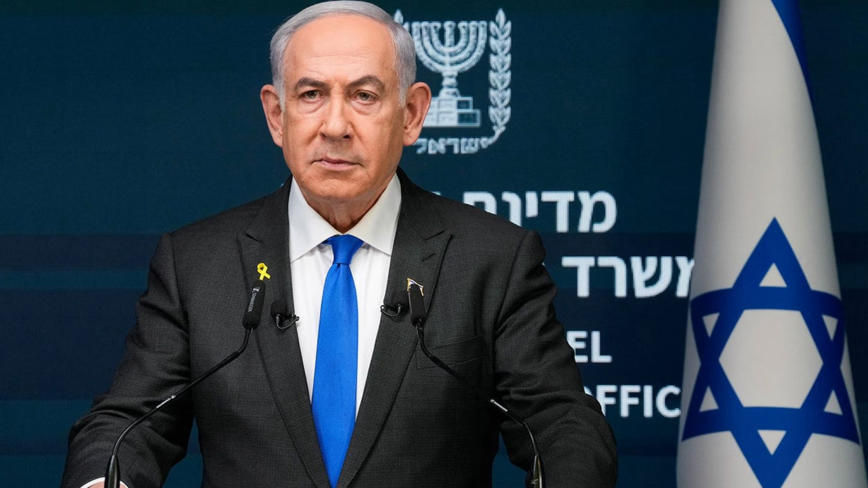

Israeli Prime Minister Benjamin Netanyahu has firmly denied that he agreed to a Palestinian state during his recent talks in Washington with US President Donald Trump. At first, he described Trump’s 20-point Gaza peace plan as a “historic breakthrough.” However, only hours later, he issued a video message stressing that there was “absolutely not” any mention of statehood in the agreement.
“It’s not written in the agreement,” Netanyahu said. He added that granting statehood would be a “massive prize for terror” and insisted that Trump shared this position. Yet, the White House’s official text clearly mentioned a “credible pathway to Palestinian self-determination and statehood” under strict conditions, creating a sharp contrast between the two sides.
Finance Minister Smotrich Criticises the Plan
Israel’s Finance Minister Bezalel Smotrich strongly criticised the US-backed peace proposal. He warned that it risked throwing away “real achievements on the ground for political illusions.” Writing on X, the leader of the Religious Zionism party rejected the idea of a Palestinian security force in Gaza and opposed Qatar’s larger role. He described the deal as a “historic missed opportunity” and “a resounding diplomatic failure.”
Smotrich stopped short of pledging to block the deal but called the celebrations “absurd” and predicted that the plan would “end in tears.” He also confirmed that he had already presented his party’s “red lines” to Netanyahu before the Washington meeting.
What Trump’s Gaza Peace Plan Proposes
Trump announced his Gaza peace plan at the White House. The proposal calls for an immediate ceasefire and the release of all remaining Israeli hostages within 72 hours. In return, Israel would free Palestinian detainees and return the remains of those who have died.
The plan also sets out a phased Israeli withdrawal from Gaza, to be replaced by an international stabilisation force. Governance of Gaza would be handed to a technocratic Palestinian committee, supervised by a “Board of Peace” chaired by Trump and joined by international figures, including former UK Prime Minister Tony Blair.
Hamas would be required to fully disarm, dismantle tunnels, and destroy weapons stockpiles. At the same time, large-scale humanitarian and economic aid would be directed toward Gaza to support reconstruction and create jobs. Importantly, the plan assures that Palestinians will not be forcibly displaced. It also leaves open the possibility of future statehood, but only if governance reforms succeed.
Mixed Reactions Around the World
Reactions from the international community have been mixed. Several Arab and European governments cautiously welcomed the plan, especially its conditional pathway to Palestinian statehood. The Palestinian Authority also said it could be considered a step forward.
Hamas, however, voiced scepticism. Negotiators said they would “study it in good faith” but opposed the demand for disarmament without a full Israeli withdrawal. On the ground in Gaza, displaced residents expressed doubt about the proposal’s success. One resident dismissed it as “a farce,” questioning whether it would truly end the violence or restore stability.
Netanyahu Faces Growing Pressure
Inside Israel, the plan has widened political divisions. Netanyahu praised it as proof that Hamas had been isolated and that Arab nations were “pressuring Hamas to accept terms we created together with Trump.” However, his coalition partners, including Smotrich, continue to oppose any concessions toward Palestinian statehood or any role for the Palestinian Authority in Gaza’s governance.
Trump called the initiative “one of the great days ever in civilisation.” Yet its success looks far from certain. Netanyahu’s refusal to support statehood, Hamas’s reluctance to disarm, and resistance from members of Israel’s ruling coalition all threaten to derail the peace proposal.