
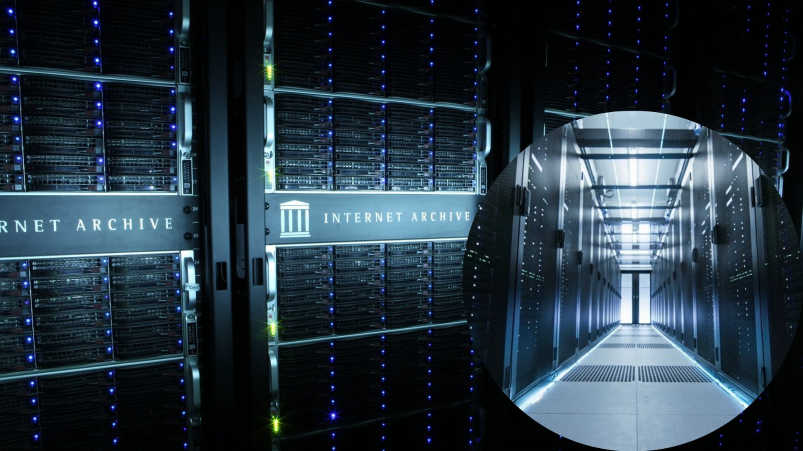

Last month, the Internet Archive’s Wayback Machine reached a historic milestone — it captured its trillionth webpage. The achievement reflected nearly three decades of work preserving digital history. To mark the moment, the city of San Francisco declared October 22 as “Internet Archive Day.”
The organization now serves over 800,000 users daily and collaborates with more than 1,200 libraries worldwide. It also earned new federal recognition when Senator Alex Padilla (D-Calif.) designated it as a federal depository library, calling it a “perfect fit” for improving public access to government records in a digital age.
Surviving Years of Legal Turmoil
Despite these celebrations, the Internet Archive (IA) is still recovering from years of legal challenges. Prolonged copyright battles nearly bankrupted the nonprofit and forced it to remove over 500,000 books from its “Open Library.”
Founder Brewster Kahle admitted, “We survived, but it wiped out the Library.” An IA spokesperson confirmed that there are now no active lawsuits or threats to its collections. Still, Kahle lamented that the world “became stupider” after losing so much digital access. Now, he is focused on rebuilding with fresh ideas and new projects.
A Vision to Preserve Knowledge Forever
Kahle founded the Internet Archive in 1996, aiming to create a digital Library of Alexandria—but, as copyright lawyer Kyle Courtney joked, “with a better fire protection plan.”
In 2001, the organization launched the Wayback Machine, a tool that captures web snapshots for researchers, journalists, and historians. Legal scholar Lawrence Lessig had predicted that copyright issues would arise, yet he believed the project helped highlight the importance of preserving the digital public domain.
Copyright Disputes and the Battle Over Access
Kahle maintains that the Archive’s legal fights were never against writers or publishers but rather big media companies trying to exert tighter control than copyright law allows. He pointed out that expiring e-book licenses have become a major problem, preventing libraries from truly owning their digital collections.
Initially, the Archive lent e-books one reader at a time without controversy. However, when the COVID-19 pandemic closed physical libraries, IA launched the “National Emergency Library.” It temporarily lifted borrowing limits, giving public access to 1.4 million titles.
Publishers soon sued the Archive, accusing it of bypassing licensing fees. By 2024, IA had lost its final appeal, facing damages exceeding $400 million. A confidential settlement saved the organization but left lasting financial scars.
Around the same time, IA also settled another lawsuit involving its Great 78 Project, which aimed to preserve old recordings. Music publishers had sought $700 million in damages, but experts argued their claims were greatly exaggerated.
For many supporters — including academics, librarians, and even government agencies — the end of these lawsuits brought relief, though IA’s operations have permanently changed.
How Legal Setbacks Reshaped Its Mission
The lawsuits deeply impacted IA’s mission to make knowledge accessible. Publishers argued that the Open Library hurt the e-book market. In response, IA said its lending practices helped research and citation, especially when Wikipedia linked to scanned book pages.
Kahle explained that libraries are more than lenders — they exist to compare, verify, and preserve knowledge. Similarly, Meredith Rose of Public Knowledge said that linking Wikipedia to book content could have unlocked valuable information hidden within texts.
However, Kahle believes large media firms have succeeded in restricting access to digital knowledge, blocking users from reaching full-text information online.
The Broader Debate on E-Book Control
At the heart of the issue lies the e-book licensing model, which many libraries call costly and temporary. Some US states are now drafting laws to restore libraries’ rights to own digital books outright.
Kyle Courtney warned that libraries could soon resemble streaming services, where access ends when a license expires. He and Kahle worry that such models threaten the cultural and educational mission of libraries, especially for rural readers, seniors, and military personnel who depend on remote access.
Brandon Butler, executive director of Re:Create, explained that the IA’s case did not undo previous legal protections for libraries but instead tested new legal boundaries. He compared it to the Google Books ruling, which allowed searchable excerpts as fair use. However, in IA’s case, the courts ruled that its model extended beyond fair use limits.
Continuing the Fight for Digital Freedom
Kahle believes today’s legal and political climate increasingly favors corporate control over information. Yet, he remains determined to defend open access. “We’re just trying to be a library,” Kahle said. “A library in a traditional sense. And it’s getting hard.”
Despite challenges, the Internet Archive continues to serve as a vital hub for free digital knowledge, proving that the mission of open libraries still endures — even in the face of powerful opposition.