
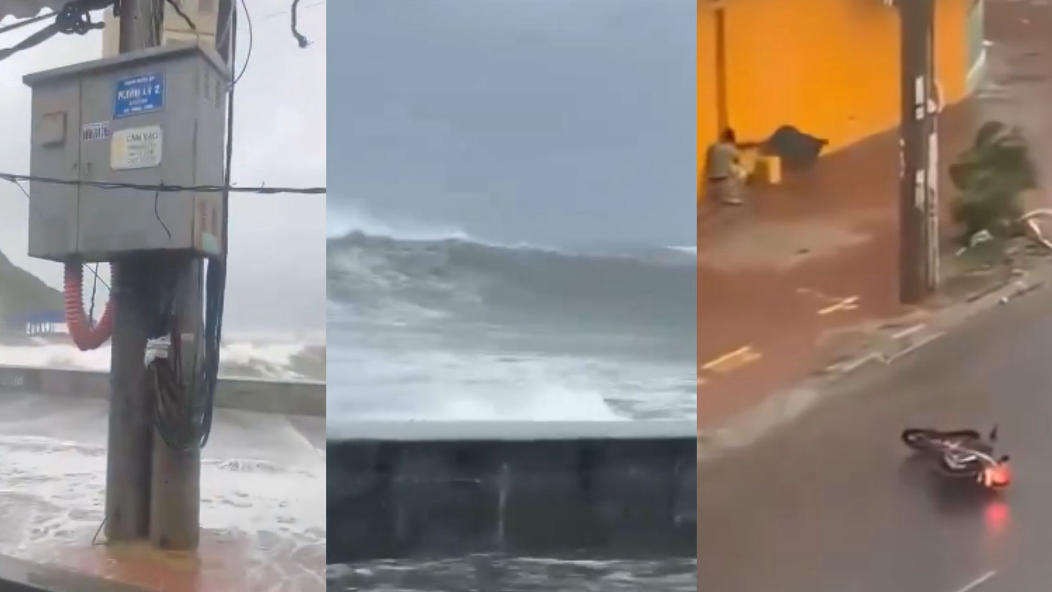

Typhoon Kalmaegi made landfall in central Vietnam late Thursday, unleashing destructive winds and heavy rain across coastal regions. Authorities immediately began evacuating thousands of residents from vulnerable areas as the storm, one of the most powerful this year, swept inland.
The storm entered Vietnam after causing widespread devastation in the Philippines earlier in the week. Officials described it as one of the deadliest tropical systems to hit Asia this year.
Currently, powerful waves are crashing along the coast of Hòa Hiệp Ward in Đông Hòa Town, Phú Yên Province, Vietnam, as Typhoon Kalmaegi approaches landfall.
— #كابتن_غازي_عبداللطيف (@CaptainGhazi) November 6, 2025
pic.twitter.com/O12kvAJFa5
Deadly Impact in the Philippines
Before reaching Vietnam, Kalmaegi had already caused severe damage in the Philippines. Officials confirmed that at least 140 people died, while 127 others remain missing after flash floods and landslides struck several regions.
The typhoon left behind destroyed homes, blocked roads, and widespread power outages, forcing rescue teams to work around the clock.
Powerful Winds Hit Vietnam
When Kalmaegi struck central Vietnam on Thursday night, it brought sustained winds of up to 149 kilometres per hour (92 mph), with even stronger gusts recorded along the coast, according to the environment ministry.
The storm tore through homes, shattered windows, and uprooted trees across several provinces, including Gia Lai.
Vu Van Hao, a 48-year-old hotel worker in Gia Lai, described the terrifying experience. “The wind is so so strong, nothing can resist,” he told AFP. “We here have never experienced such strong wind like this. It’s a natural disaster, what can we do?”
Climate Experts Sound Alarm
Vietnam faces frequent tropical storms, but Kalmaegi stands out for its intensity. The country typically experiences around 10 typhoons each year, yet Kalmaegi is already the 13th storm of 2025 — a record-breaking number that experts link to climate change.
Meteorologists warn that warmer sea temperatures and changing weather patterns are fueling stronger and more frequent storms across Southeast Asia. They also note that densely populated coastal regions remain especially at risk.