
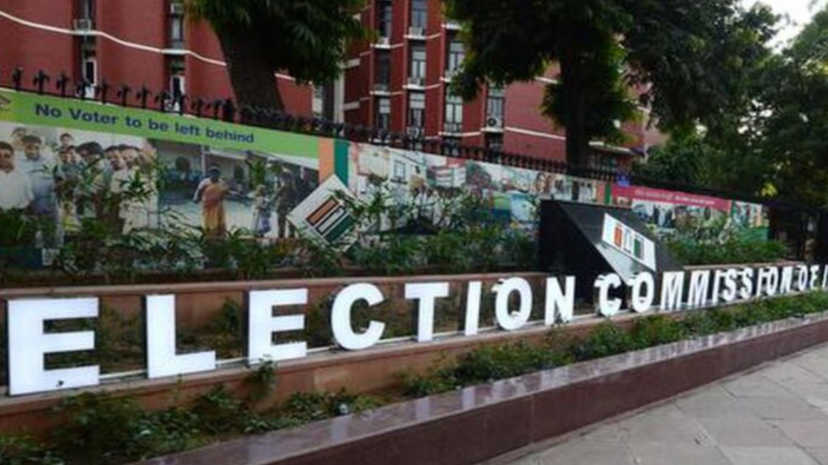

The Election Commission of India (ECI) has ordered a Special Revision of Assam’s electoral rolls. The pre-revision work began on Tuesday. A key part of the order is the treatment of D-Voters, whose citizenship status is under legal review. The ECI will carry forward their names into the draft rolls without fresh verification. Their status will change only if a Foreigners’ Tribunal or a court issues a new order. The qualifying date for the revision is 1 January 2026. The final electoral roll will be published on 10 February.
Government Welcomes the Move
Assam chief minister Himanta Biswa Sarma welcomed the decision. He wrote on X, “This will help ensure clean, updated and accurate electoral rolls for all eligible citizens.” He said the state will “extend full cooperation” to the ECI to complete the process in a “transparent and time-bound manner.”
Why a Special Revision?
The Commission opted for a Special Revision after several discussions with the state government and stakeholders. It considered Assam’s unique situation, including issues linked to the National Register of Citizens (NRC) and the category of D-Voters.
Officials explained why the Commission chose SR instead of a Special Intensive Revision (SIR). They said, “There are special provisions for citizenship in the State of Assam. The verification of citizenship is already being done under the supervision of Hon’ble Supreme Court and is at the final stages. Therefore, special revision (SR) is being ordered in place of Special Intensive Revision (SIR).”
Pre-Revision Work Begins
The pre-revision work will run from Tuesday to Friday. Officials will print documents, train personnel, and prepare materials for field teams. Booth Level Officers (BLOs) will conduct house-to-house verification from 22 November to 20 December. They will update entries, spot new voters, and distribute and collect forms for addition and deletion.
BLOs must visit locked or closed houses at least three times. They will also check photographs in the voter database and replace unclear or non-human images using Form 8.
Rules for Deletions
The Commission has set strict rules for deleting names. Families must provide valid documents in cases of death. For deletions due to a shift of residence, Form 8 and field verification are mandatory.
Electoral Registration Officers (EROs) must randomly check at least 10% of the deleted entries. If deletions at a polling station exceed 2% of total voters, or if one person files more than five objections, the ERO must personally review the cases. Citizens can appeal deletion decisions first to the District Magistrate and then to the Chief Electoral Officer.
Checking Data Quality
EROs will prepare eight statistical formats before and after the revision. These include gender ratio, the number of new voters aged 18–19, EPIC coverage, and photo quality. Before final approval, the CEO must confirm that duplicate entries are removed and that cases involving deceased or relocated voters are settled.
How SR Differs from SIR and SSR
Under SIR, officials distribute printed forms to every elector and seek detailed documents, including those related to identity and citizenship. Under SR and the usual Special Summary Revision (SSR), BLOs rely on pre-filled registers and use Forms 6, 7, and 8 for additions, deletions, and corrections.
In the Special Revision, the focus is on fixing photographs. System reports will help identify missing, unclear, or black-and-white images.
Rules for D-Voters
The Commission states that D-Voter entries will remain in the draft roll without new verification. Their status will change only after a tribunal or court ruling. They will not undergo fresh photographic checks unless their legal status shifts.
Additional Safeguards
The Commission has added multiple layers of scrutiny. AEROs will conduct random checks, while field officers must keep detailed records of every change. The CEO must certify photographic coverage and submit statistical analyses before publication.
Revisions in Other States
Last month, the ECI ordered Special Intensive Revisions in several states and Union Territories, including Gujarat, Kerala, Madhya Pradesh, Rajasthan, Uttar Pradesh, and West Bengal. Assam, Tamil Nadu, Kerala, Puducherry, and West Bengal are scheduled to hold Assembly elections in 2026.