
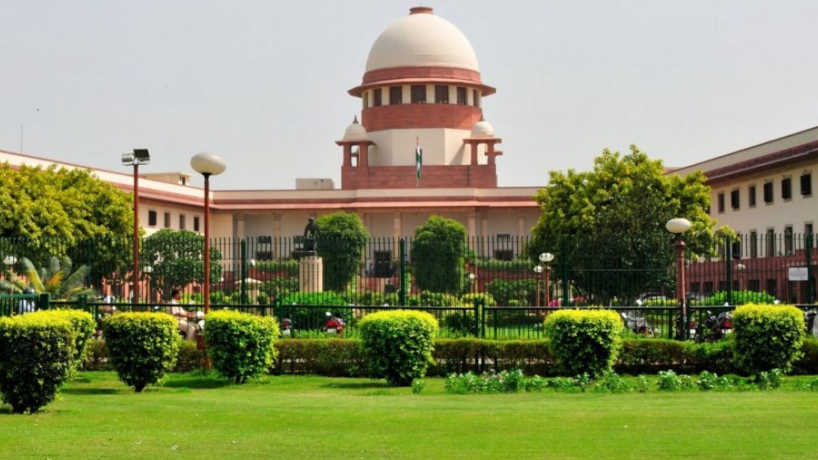

A constitution bench of the Supreme Court ruled on Thursday that courts cannot impose deadlines on governors or the President when they act on state bills. The judges said such timelines violate the separation of powers and disturb the constitutional structure.
However, the court added one limit. If a governor deliberately delays action for too long, courts may step in. They can only direct the governor to choose one of the constitutional options. They cannot examine the bill or force a specific choice.
Court Explains Constitutional Limits
Chief Justice of India Bhushan R. Gavai wrote the opinion for the five-judge bench. He said governors usually act on the advice of the cabinet. But the Constitution also gives them some discretion.
The court said it is “unfathomable” to treat Article 200 as forcing governors to follow ministerial advice when they return a bill or send it to the President. These actions require independent judgment.
The bench also included justices Surya Kant, Vikram Nath, PS Narasimha, and Atul S. Chandurkar. This was the first presidential reference in years. Advisory opinions are not binding, but they strongly influence government actions.
The court also repeated that it does not expand the President’s questions, reopen settled law, or interfere with issues already before other courts.
Court Rejects Timelines and Deemed Assent
The judges first examined Articles 200 and 201. They said the Constitution expects a “constitutional dialogue” between the governor and the state government.
When deciding on timelines, the court was clear. CJI Gavai said, “Imposition of timelines will be antithetical to constitutional boundaries and will trample upon separation of powers.” The bench said courts cannot fill gaps in the Constitution by creating deadlines.
The court also dismissed the idea of “deemed assent.” It said this would go against the Constitution, which gives governors and the President specific responsibilities.
Courts Can Act Only in Cases of Extreme Delay
The bench said decisions under Articles 200 and 201 cannot be reviewed by courts. Courts also cannot examine a bill before it becomes law.
The judges said the President does not need to seek judicial advice each time a bill is sent to her. But they agreed that indefinite delays are different. They said the “will of the people expressed through the legislature cannot be completely defeated.” In such cases, courts may order the governor to act, but cannot tell them what to decide.
The bench stressed that governors are not “rubber stamps.” At the same time, courts cannot replace constitutional discretion with judicial orders.
How the Case Reached the Court
The court gave its opinion two months after hearings ended on September 11. President Droupadi Murmu sought clarity under Article 143. She asked the court to examine an April 8 ruling in State of Tamil Nadu vs Governor of Tamil Nadu. That ruling had set strict deadlines and even used Article 142 to “deem” ten Tamil Nadu bills as approved.
The President asked 14 constitutional questions. These included whether deadlines are legal, whether decisions under Articles 200 and 201 can be reviewed, and whether Article 142 can override clear constitutional rules.
Several states—including West Bengal, Tamil Nadu, Punjab, Telangana, and Karnataka—opposed reopening the April ruling. They said Article 143 cannot be used to review judicial decisions.
Court Says April Ruling Was Wrong
The constitution bench said the April 8 decision did not state the correct law. They said it cannot be treated as a precedent.
During the hearings, Solicitor General Tushar Mehta also argued that the April ruling “does not lay down the correct law.” The Attorney General said the court cannot redesign Article 200 to make it “look better,” and that gubernatorial discretion is vital.
Lawyers for the states said governors often delay bills for political reasons. They said courts must prevent this to protect democracy.
The bench agreed only in part. It said courts can ask governors to act within reasonable time. But they cannot tell them how to act. Today’s ruling clearly reflects that distinction.