
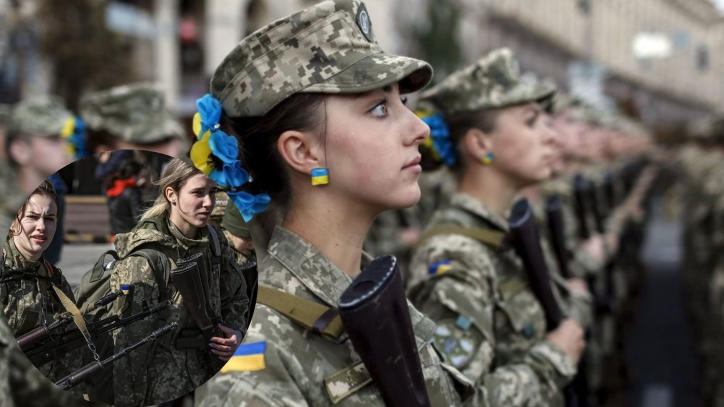

Ukrainian women are stepping into drone warfare and tech-driven military roles, reshaping the battlefield while facing both new opportunities and old resistance.
More Women Are Joining Ukraine’s Military
The number of women in Ukraine’s military continues to grow. Officials say modern warfare now depends more on intelligence, technology, and precision rather than only on brute physical strength. Because of this, women can take on many new combat and technical roles.
In 2025, over 70,000 women were serving in the Ukrainian military. This marked a 20% increase compared to 2022. Out of this total, more than 5,500 women were on the front line. Ukraine’s Defence Ministry shared these figures.
Several military units actively recruit women. Even though peace talks suggest there may be limits on troop numbers in the future, Ukraine still aims to build a more skilled and advanced armed force.
Leaders in Kyiv believe the military is one of the strongest lines of defense against Russia. Monka fully agrees with this idea.
“We need everyone — engineers, pilots, IT specialists, programmers, we simply need brains. It’s not about men or women. We need people who are ready to work hard,” she said.
Technology Opens New Paths for Women in War
When Russia began its full-scale invasion almost four years ago, Monka did not see herself as a fighter. At that time, she could not imagine a clear role for herself on the battlefield. However, the nature of war changed quickly. Technology, especially drones, created new possibilities. As a result, Monka found her place in the fight.
Last year, she left her restaurant management job abroad and returned to Ukraine. Soon after coming home, she joined the military as a First-Person View (FPV) drone pilot. Today, she serves with the Unmanned Systems Battalion of the Third Army Corps.
“The fact that technology lets us deliver ammunition without carrying it in our hands or running it to the front line that’s incredible,” Monka said.
Drone Warfare Draws More Women into Combat Roles
Drone operations have become especially popular among women in the armed forces. In fact, becoming a drone pilot is now one of the most sought-after combat positions.
Imla, a 27-year-old, left her professional hockey career and joined the Kraken 1654 unit. At first, she wanted to work as a combat medic. She served as a platoon medic for six months. During that time, she also began learning to fly drones.
She first trained with small drones. Later, she moved on to larger drones that carry explosives. Eventually, she became a full-time drone operator.
She clearly remembers her first mission. “To be honest, I even wanted to cry in some moments,” she recalled. “But then, over time, you build up experience on the job and start feeling confident.”
Military Units Expand Roles for Women
The Khartiia Corps also increased the number of women in its ranks. Since 2024, the unit has seen a 20% rise in female members. About six months ago, it launched a special recruitment campaign aimed at women. The focus was on combat and technology-based roles. The Dignitas Foundation supported the campaign.
“In recent months, dozens of women have joined us in combat roles and are working successfully,” said Volodymyr Dehtyarov. “The more technology we have, like drones, the more historically male professions open up.”
The Corps now trains officers to handle mixed teams. These teams include people from different backgrounds, age groups, and genders. According to Dehtyarov, this approach helps officers become stronger leaders and more effective decision-makers.
Challenges and Resistance Still Exist
Despite progress, women still face resistance in certain parts of the army. Some commanders continue to hold traditional views and do not support women in frontline roles.
Yaha, a 25-year-old soldier, joined the military in 2023. At first, she worked as a clerk. Later, she asked for drone training. Instead, her commanders suggested she work in the kitchen.
“It was unpleasant for me, because I didn’t expect such uncomfortable conditions, such strict limitations,” Yaha said.
However, she did not give up. She read drone manuals during her free time. She practiced on simulators. She even bought her own drone controller to improve her skills.
“I liked that you could strike the enemy remotely,” she said. “So I thought this was our future.”
In the end, her persistence paid off. She became a bomber-drone pilot in the 9th Brigade.
“War is not cool or glamorous. It’s pain, suffering and loss. You just do it because you want to change the situation,” she said. “But you’re not invincible. You’re just a person like everyone else.”
Support Breaks Stereotypes
Chibi, a 20-year-old FPV technician with the Khartiia Brigade, works near the front line in eastern Ukraine. She prepares and repairs drones in a cold, damp basement before missions.
At first, some soldiers doubted her because she was a woman. They believed she was less capable. However, one male colleague supported her and helped her gain confidence and experience.
Now, she prefers working as a technician instead of a pilot.
“There needs to be more women in the army,” Chibi said. “The more women there are, the better the attitude toward them will be.”
Her journey shows how support and opportunity can challenge old beliefs.
Ukraine Encourages Women to Join Technical Forces
Olha Meloshyna, the spokesperson for Ukraine’s Unmanned Systems Forces, explained that many people think drone-related jobs are safer. In reality, Russian forces often target drone operators.
She confirmed that more women now work in drone operation, drone repair, and electronic warfare. Drones play an important role in both attacks and surveillance.
According to her, women make up 4.2% of the Unmanned Systems Forces. She called this a meaningful number because women are choosing to join these roles through volunteering.
“We are part of the new Ukrainian army that formed during the invasion. So in terms of gender-based acceptance into the Armed Forces, we have never had any division — what matters to us is desire and motivation,” she said.
Currently, the forces are running a large media campaign to recruit 15,000 new people, including women. Many applicants are interested in both combat and support positions.
“The Unmanned Systems Forces are a system, and it is made up of people — men and women,” Meloshyna said.
“No drone is autonomous. It needs human involvement. And the more personnel we have, the more drones will fly toward Russia.”