
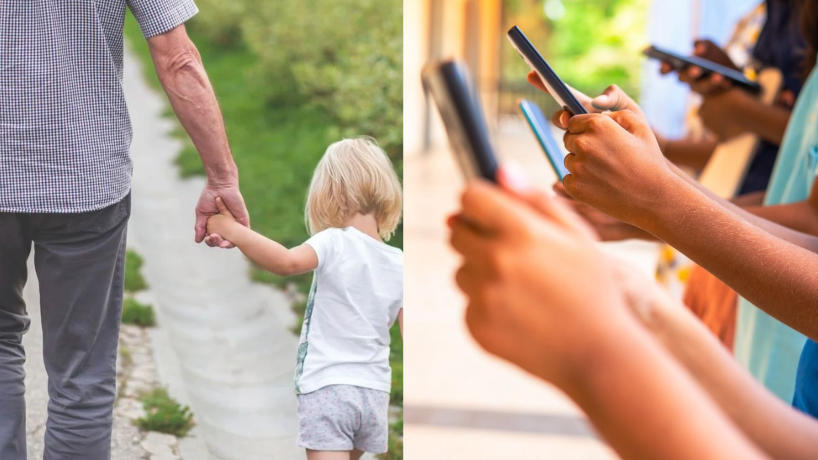

Australia’s ban on social media for anyone under 16 took effect on December 10, marking the start of a world-first policy targeting youth safety online. The law blocks children from having accounts on major platforms such as TikTok, Instagram, YouTube, Snapchat, Threads and Reddit.
Under the new rules, social media companies must remove accounts belonging to users under 16. If they fail to take “reasonable steps” to do so, they could face fines of up to A$49.5 million (Rs 295.17 crore). More than one million young users are expected to be affected as their accounts get deactivated.
The Australian government argues that the new system will reduce the impact of social media “design features that encourage [young people] to spend more time on screens, while also serving up content that can harm their health and wellbeing”.
This landmark decision follows the tragic deaths of two teenagers whose stories influenced the Albanese government’s approach.
A Mother’s Battle With Her Son’s Eating Disorder
The crisis hit the Bannister family in January, when 14-year-old Oliver “Ollie” Hughes was found dead in his bedroom. His mother, Mia Bannister, believes social media played a direct role in his battle with anorexia nervosa and the mental health decline that followed.
“There is no doubt in my mind that social media is responsible for taking Ollie down that path,” she told The Courier Mail. She explained that despite setting rules around phone use and occasionally confiscating his device, harmful content still reached him.
According to Bannister, her son became consumed by TikTok videos featuring young men “bulking up”. The obsession changed his relationship with food. By February last year, Ollie weighed 74 kg, but by December, his weight had dropped to below 50 kg. Doctors diagnosed him with anorexia nervosa and immediately hospitalised him.
Bannister told AFP that when Ollie first struggled with his health, he turned to social media for answers. Instead, platforms such as TikTok, Snapchat and YouTube amplified content that worsened his eating disorder. As a single mother working full time, she said she could not imagine how severely these platforms were shaping her son’s life. “I was a single parent, working full time, trying to keep a roof over our heads, not really understanding either what platforms he’s on and how they work,” she said.
Bullying and Isolation Intensify the Pain
Ollie’s challenges extended beyond eating disorder triggers. Bannister recalled an episode when her son burst into her room, crying after two boys urged him on Snapchat to kill himself. “Boys say stupid things sometimes, and one of them apologised, but that kind of stuff stays with a kid,” she said.
His struggles kept him out of school for 125 days, and his mother believes that prolonged absence led to more bullying. Remarks targeting his weight and appearance deeply affected him.
The hospital did not consider him a “suicide risk”, and neither did Bannister. But after returning home, Ollie began harming himself “to punish himself for eating”. A week later, he ended his life.
On the morning of his death, he shared breakfast with his mother. “He said he’d check in with me later in the day; he never did,” she said. Bannister, who describes Ollie as her “best friend”, now carries tattoos in his memory. “He was my world.”
Another Family’s Loss Fuels the Push for Reform
Emma Mason also faced the unimaginable loss of her daughter Matilda “Tilly” Rosewarne, who died by suicide at 15 after being bullied online. Fake nude images circulated among peers, further tormenting her. “It destroyed my child,” Mason told 7news.
Both Mason and Bannister later became central voices pushing for the new age restrictions. Prime Minister Anthony Albanese consulted them extensively and stood alongside them as he announced the law.
Government studies revealed how widespread the problem had become. About 96 percent of children aged 10–15 use social media, and seven in ten of them have viewed harmful content—including violent material, misogyny, and posts encouraging self-harm or eating disorders. Another survey indicated that 57 percent of Australian teens aged 13–15 suffered online bullying last year.
For Mason, the new law is meant to protect childhood—not ban technology entirely. “The whole point of the legislation isn’t to ban social media — it’s to delay it,” she said. “Allowing children time to grow up.”
Calls for Even Stricter Measures
Bannister supports the new law but wants it extended further. “Children’s brains are not yet formed but social media is destroying them,” she told The Courier Mail. Both mothers say their advocacy is driven by guilt and grief, especially over giving phones to their children in the first place.
The global community is now watching Australia closely. The ban marks a historic moment, but whether it can deliver long-term results remains uncertain.