
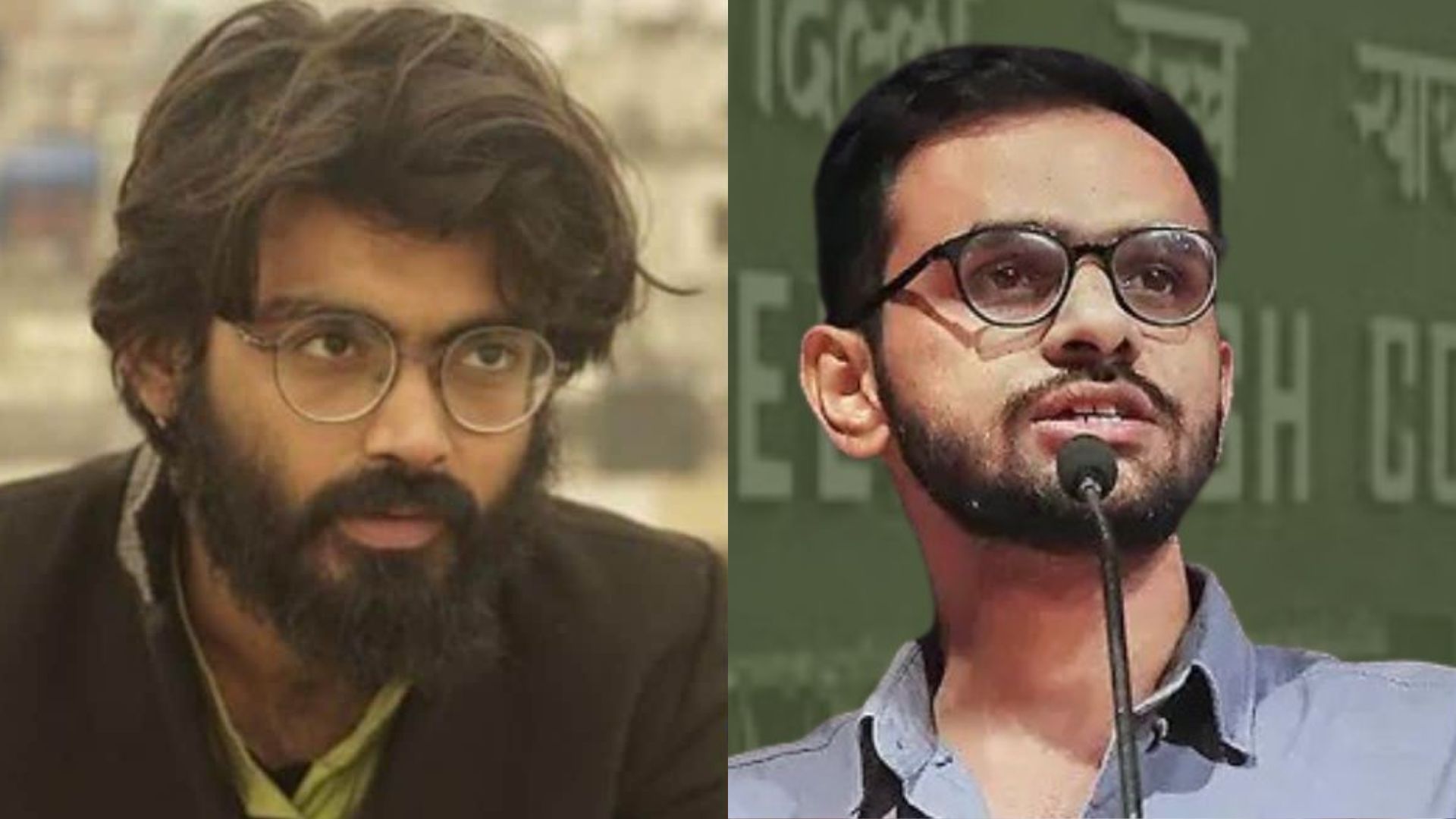

The Supreme Court on Monday refused bail to activists Umar Khalid and Sharjeel Imam in the 2020 Delhi riots conspiracy case. However, it granted bail to five other accused, stating that all of them did not share the same level of responsibility.
As a result, Khalid and Imam will remain in jail. Meanwhile, Gulfisha Fatima, Meeran Haider, Shifa Ur Rehman, Mohd. Saleem Khan, and Shadab Ahmad will be released on bail.
The court relied on what it called a “hierarchy of participation” to assess each bail plea separately.
Court Says Delay in Trial Is Not Enough
A bench of Justices Aravind Kumar and N V Anjaria said there was a prima facie case against Khalid and Imam under the Unlawful Activities (Prevention) Act (UAPA).
The bench made it clear that delay in trial alone cannot override strict legal safeguards. It said, “All the appellants do not stand on equal footing as regards culpability. The hierarchy of participation emerging from the prosecutions case requires the court to examine each application individually.”
The judges also clarified that granting bail to some accused does not weaken the charges. “The grant of bail to these accused persons is not a dilution of the allegations.”
Why Five Accused Got Bail
According to the court, the five activists who received bail played lesser roles in the alleged conspiracy. Therefore, the court examined their cases separately and found that they did not cross the strict legal threshold required to deny bail under UAPA.
In contrast, the court said the roles attributed to Khalid and Imam were more central and serious.
Charges Against Umar Khalid and Sharjeel Imam
Sharjeel Imam was arrested on January 28, 2020, from Jehanabad in Bihar. Delhi Police first arrested him in a sedition case for alleged inflammatory speeches against the CAA and NRC. Later, police named him in the Delhi riots conspiracy FIR.
Umar Khalid was arrested in September 2020. Police linked him to what they described as a “larger conspiracy” behind the riots.
Both men, along with other accused, face charges under UAPA and IPC. Police have alleged that they were among the “masterminds” of the violence.
The riots left 53 people dead and more than 700 injured.
UAPA Charges in the Conspiracy Case
In the larger conspiracy case, Khalid and Imam face serious allegations, including:
-
Involvement in organised unlawful activity
-
Conspiracy to commit terrorist acts
-
Actions allegedly directed against the State
Why SC Refused Bail to Khalid and Imam
The Supreme Court said the prosecution material showed prima facie involvement of both men.
The bench said, “This court is satisfied that the prosecution material disclosed a prima facie allegation against the appellants Umar Khalid and Sharjeel Imam. The statutory threshold stands attracted qua these appellants. This stage of proceedings does not justify their enlargement on bail.”
The court added that terrorist acts do not always involve direct violence. It noted that disruption of essential services can also threaten society. It stressed that destabilisation can happen without immediate physical force.
Court Explains UAPA Bail Standards
While interpreting Section 43(D)(5) of UAPA, the court said the provision does not block judicial review. However, it requires courts to apply a stricter test.
The bench said courts must check whether prosecution material, taken at face value, shows unlawful activity and crosses the legal threshold under UAPA.
It observed, “Offences regarding security of the nation require a different bail regime under the Act.” The judges added that if allegations appear prima facie true, “incarceration prevails”. Otherwise, bail should follow.
NYC Mayor’s Letter Sparks Debate
Meanwhile, New York City Mayor Zohran Mamdani wrote a letter to Umar Khalid, expressing solidarity. He recalled Khalid’s reflections on resisting bitterness during long imprisonment.
A photograph of the note appeared on X, shared by Khalid’s friend Banojyotsna Lahiri, on the day Mamdani took oath as mayor.
However, the Vishva Hindu Parishad criticised the letter.
Delhi High Court’s Earlier Observations
On December 11, the Delhi High Court noted that neither the accused nor the victims had challenged the chargesheets filed by Delhi Police. Instead, outsiders were seeking relief.
Earlier, on September 2, the High Court had denied bail to Khalid, Imam, and several others. It said their alleged role in the conspiracy was “grave” and involved inflammatory speeches aimed at mass mobilisation.
Earlier Bail Relief for Khalid
Umar Khalid received temporary bail on December 11 to attend his sister’s wedding from December 16 to December 29. He had earlier received interim bail for another sister’s wedding two years ago.
What Happened During Previous SC Hearing
On December 10, the Supreme Court reserved its verdict after hearing arguments from both sides.
Senior lawyers, including Kapil Sibal, Abhishek Singhvi, Siddhartha Dave, Salman Khurshid, and Sidharth Luthra, appeared for the accused. Solicitor General Tushar Mehta and Additional Solicitor General S V Raju represented Delhi Police.
Police argued that the riots were “orchestrated, pre-planned and well-designed”. They also claimed that in a conspiracy, acts of one accused apply to others.m“Acts of one conspirator can be attributed to others,” Raju said.
Why the Accused Approached the Supreme Court
The accused challenged the Delhi High Court’s refusal to grant bail. They argued that speeches alone cannot amount to criminal conspiracy.
Sharjeel Imam told the court he was being labelled a “dangerous intellectual terrorist” without a full trial or conviction.
Background of the 2020 Delhi Riots
The Northeast Delhi riots began on February 24, 2020, during protests against the CAA and NRC. Violence continued for several days.
Delhi Police registered 757 FIRs related to the riots. Investigation remains pending in many cases, while trials continue in others.
Police have denied any role of political leaders or police officers in instigating the violence.
Recent Acquittals in Riots-Related Cases
On December 17, a Delhi court acquitted five men accused of rioting and arson in a Chand Bagh case.
The judge said, “I find that the prosecution has failed to prove its case beyond all reasonable doubts and all the accused are entitled to the benefit of the doubt.”
The court flagged gaps in evidence and unclear origins of photographs used by police.