
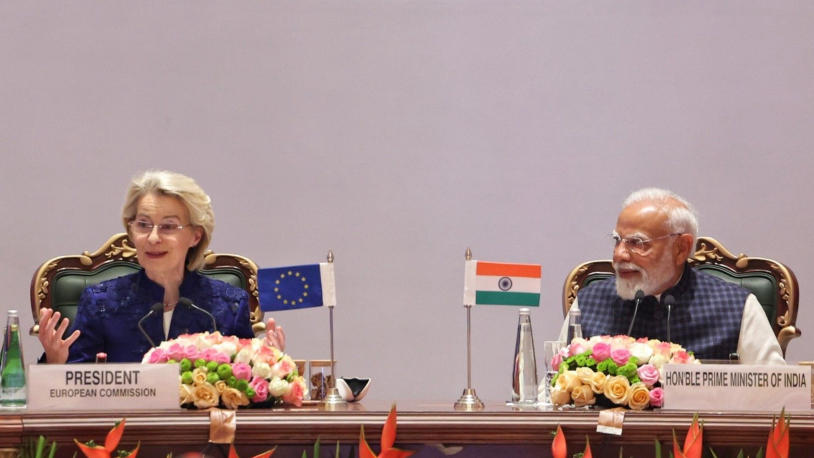

Prime Minister Narendra Modi on Tuesday called the India-European Union free trade agreement a roadmap for shared prosperity. He said the deal will help bring stability at a time of global uncertainty.
“This is not just a trade agreement. This is a new blueprint for shared prosperity," Modi said. He described it as the largest free trade agreement India has ever concluded.
Modi spoke at a joint press conference with European Council President Antonio Costa and European Commission President Ursula von der Leyen after the talks ended.
The Prime Minister said the global order is under strain. He added that closer India-EU ties can offer balance. “India-EU will provide stability to the world order…India-EU cooperation is a partnership for global good", he said. He also said the deal will expand cooperation in maritime security and cybersecurity.
Sharing my remarks during the India-EU Business Forum. https://t.co/MXJIaE7eE4
— Narendra Modi (@narendramodi) January 27, 2026
Luxury European cars to cost less in India
The agreement will reduce import duties on premium European cars. Brands such as BMW, Mercedes, Lamborghini, Porsche and Audi will become more affordable in India.
India will cut duties in a controlled way to protect its growing auto industry. Cars priced above 15,000 euros, or about Rs 16 lakh, will first face a 40 per cent duty. The rate will later drop to 10 per cent.
The two sides agreed to apply “quota" based duty concessions. The EU will gradually remove duties on Indian automobiles. India will lower tariffs only for a limited number of European vehicles. Luxury carmaker Lamborghini, which imports all its models into India, is likely to gain from the deal.
European wines to enter at lower prices
The trade pact will reduce duties on European wines. At present, India charges up to 150 per cent import duty. Under the agreement, India will cut duties on expensive EU wines to 20 per cent. Wines priced below 2.5 euros will not get any concession.
Indian wines will also benefit. The EU will remove duties on Indian wine. This move will help Indian producers reach European buyers.
“Like auto, wine is one of the biggest exportable items for the Indian industry. So for them, it is very important. And we have given duty concessions in a calibrated way. The duties will be reduced in seven years," an official said.
Medicines and medical equipment to get cheaper
The agreement will lower prices of imported medicines in India. This includes drugs for cancer and other serious illnesses. Indian-made medicines will gain access to all 27 EU markets. This will boost India’s pharmaceutical exports.
Electronics and spare parts to become affordable
The deal will remove tariffs on aircraft spare parts, mobile phones and high-end electronic items from Europe. Lower import costs will reduce manufacturing expenses in India. Consumers may see cheaper gadgets.
Steel, chemicals and Indian exports to benefit
The pact proposes zero tariffs on iron, steel and chemical products. This can lower input costs for construction and industry. Indian garments, leather goods and jewellery will gain better access to European markets. This will support exporters and jobs.
A key step in India-EU ties
The India-EU free trade agreement marks a major step in economic cooperation. It aims to support growth, trade and stability during a period of global uncertainty.