
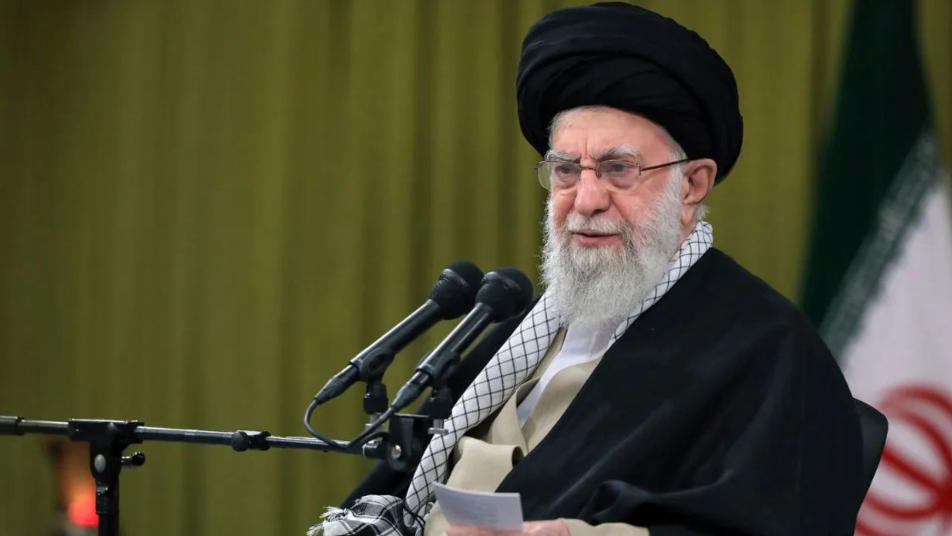

After the death of Ali Khamenei, Iran’s powerful Assembly of Experts is expected to choose the country’s next supreme leader. Several religious and political figures have emerged as possible successors.
One of the leading names is Khamenei’s son, Mojtaba Khamenei. Many analysts see him as the most likely candidate. Although Iran’s system does not support hereditary leadership, Mojtaba has strong backing from powerful institutions, particularly the Islamic Revolutionary Guard Corps. He also benefits from the continuing influence of his father’s political network. Reports say his wife died during the first wave of military strikes earlier in the conflict.
Another possible successor is Hassan Khomeini, the grandson of the Islamic Republic’s founder Ruhollah Khomeini. Hassan Khomeini is closely linked with Iran’s reformist faction. Supporters believe he could help reduce tensions with Western countries and ease public anger inside Iran.
Other Potential Candidates in Iran’s Leadership Race
Other figures are also being discussed, although they appear less prominent. These include clerics such as Alireza Arafi and Gholam-Hossein Mohseni-Ejei. Both are known for supporting the strict policies followed by Khamenei. Mohseni-Ejei previously served as intelligence minister and played a major role in suppressing protests after Iran’s disputed 2009 election.
Senior clerics like Ahmad Alamolhoda and Mohsen Araki are also possible candidates because of their political influence. Former president Hassan Rouhani is another senior cleric who could theoretically be considered. However, some powerful hardliners distrust him, which may limit his chances.
The Assembly of Experts could also select a lesser-known ayatollah. However, ongoing military strikes and political instability have weakened the country’s leadership structure, making it difficult for an unfamiliar figure to gain authority quickly.
Role of Islamic Revolutionary Guard Corps in Iran Leadership Transition
The Islamic Revolutionary Guard Corps (IRGC) has long been expected to influence the decision on Iran’s next supreme leader. Unlike Iran’s regular military, which reports to the elected president, the IRGC answers directly to the supreme leader.
However, recent U.S. and Israeli strikes have significantly weakened the group’s leadership. Several top commanders have been killed in recent years, raising questions about how much influence the organization still holds.
One of the most powerful commanders in recent history was Qassem Soleimani, the leader of the elite Quds Force. He played a central role in expanding Iran’s regional influence through allied militias before being killed in a U.S. airstrike in 2020.
Israeli attacks last year also killed several senior IRGC commanders. According to reports, the latest strikes have now killed another top commander, Mohammed Pakpour.
The Guards also control the powerful paramilitary force known as the Basij, which is often used to control protests inside the country. This gives the organization significant influence over domestic security.
In addition to military power, the IRGC has gained strong economic influence. Its construction and engineering company, Khatam al-Anbiya, has secured multi-billion-dollar contracts in Iran’s oil and gas industry. Protecting these economic interests could affect which candidate the Guards support.
Will Iranian People Influence the Supreme Leader Selection?
Iran holds elections for its president and parliament every four years. The president forms the government and manages day-to-day policies. However, the supreme leader remains the country’s most powerful authority and sets the overall direction of the state.
Public participation in elections was high in the early years of the Islamic Republic, but many Iranians have gradually lost trust in the system.
Current president Masoud Pezeshkian is part of a three-member interim leadership committee. Still, it is unclear how much influence he has over the leadership transition. He recently faced criticism after stepping back from earlier comments about the war.
Although the Assembly of Experts is technically elected by the public, all candidates must first be approved by the powerful Guardian Council. This system ensures that only individuals who support the existing political structure can run for office, limiting broader public involvement in choosing Iran’s next supreme leader.