
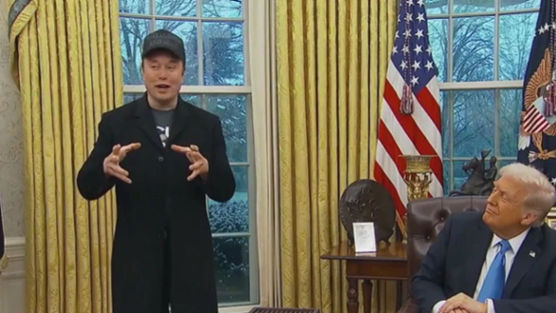

Several US agencies have warned employees not to respond immediately to Elon Musk’s demand. The order required federal workers to submit a list of their weekly accomplishments or risk termination. As part of the Trump administration’s plan to cut government jobs, this move has sparked significant backlash.
Rising Tensions Between Agencies and Musk
As expected, federal agencies did not accept this directive without resistance. Officials at the FBI and State Department instructed employees to follow their usual reporting chains. This response underscored growing tensions between Musk and Republican officials.
FBI Director Kash Patel reassured employees. He stated, “The FBI, through the office of the director, is in charge of all our review processes.” His statement made it clear that Musk’s demand would not override existing protocols.
Job Cuts and Their Widespread Impact
Meanwhile, Musk continues to lead the Department of Government Efficiency, which has already laid off 20,000 workers. Additionally, another 75,000 employees have been offered buyouts. These job cuts have affected multiple agencies, from the Defense Department to the Consumer Financial Protection Bureau, which has halted operations entirely.
As a result, the federal government is struggling to manage critical tasks. Departments responsible for nuclear security and disease control are particularly overwhelmed. For instance, the ongoing bird flu outbreak has caused egg prices to rise, yet government efforts to contain it remain understaffed.
Musk’s Email Sparks Backlash
On Saturday, federal workers received an email titled “What did you do last week?” The Office of Personnel Management (OPM) sent the message, yet it did not mention Musk’s termination warning.
Shortly afterward, Musk posted on X that failing to respond would be considered a resignation. However, several major agencies, including Defense, Homeland Security, and Commerce, instructed employees not to reply. Likewise, intelligence agencies also planned to ignore the request.
Mixed Reactions and Growing Legal Concerns
Not surprisingly, reactions to Musk’s directive have been mixed. Some officials welcomed the move. For example, Ed Martin, Trump’s nominee for U.S. Attorney in Washington, D.C., praised Musk and his efficiency team.
On the other hand, others strongly opposed the approach. The American Federation of Government Employees, the largest federal workers’ union, questioned Musk’s authority. The union argued that he could not fire employees simply for failing to respond. Furthermore, it urged workers to seek direct guidance from supervisors.
As the situation escalates, employees feel increasingly anxious and frustrated. An IRS worker expressed concern, saying, “I really wonder when someone is going to say, ‘Enough.’”
Political and Legal Fallout
Meanwhile, Musk continued to defend his decision on X. He called the email a “very basic pulse check” and criticized agencies resisting the directive. Frustrated, he asked, “What is wrong with them??”
At the same time, some politicians pushed back. Republican Senator John Curtis agreed with reducing government spending, yet he urged Musk to act with compassion. He stated, “These are real people. These are real lives. These are mortgages.”
Additionally, confusion spread to the federal judiciary. Some judges also received the email, despite not being under executive branch control. As a result, the U.S. Courts advised them to ignore it.
In contrast, former New Jersey Governor Chris Christie outright condemned Musk’s approach. He called it a “complete overstep” that would fail in court. He added, “From a management perspective, you can see what a clown car this is right now.”
Ultimately, Musk’s workforce reduction plan has caused widespread uncertainty. While federal agencies resist, legal challenges loom, and thousands of employees remain in limbo. For now, the battle over government job cuts is far from over.