
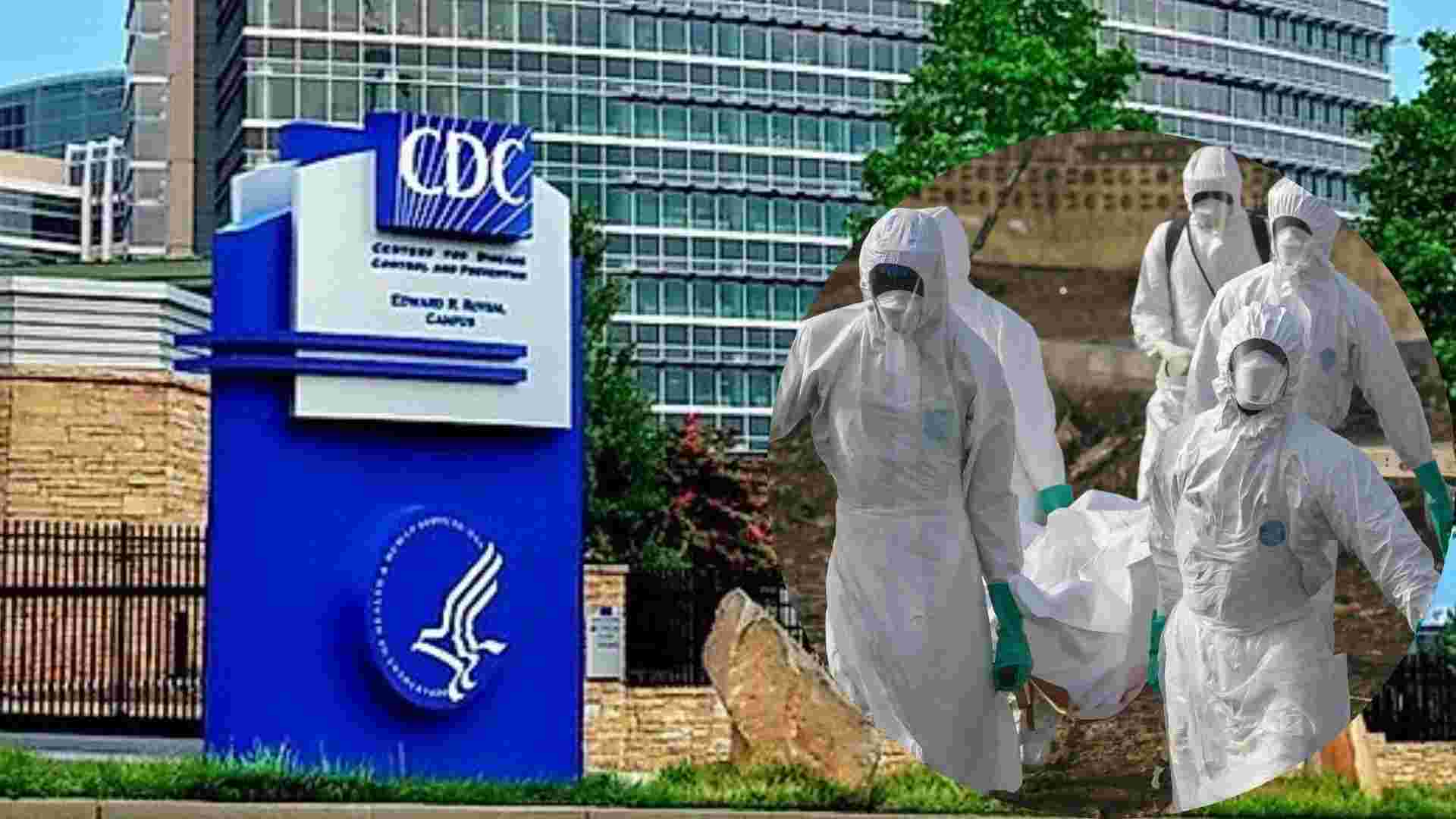

The US Centers for Disease Control and Prevention (CDC) has warned that the current Ebola outbreak could grow into a crisis similar to the deadly West Africa epidemic of 2014.
The agency said stronger public health measures are needed immediately. Without quick action, the outbreak could spread rapidly and infect thousands more people.
“That scale is possible,” said Jason Asher, director of the CDC’s Center for Forecasting and Outbreak Analytics.
CDC Compares Outbreak to West Africa Epidemic
The CDC compared the current situation to the 2014-2016 Ebola outbreak in West Africa. That epidemic infected more than 28,000 people and killed over 11,000. The agency released its assessment in documents published Friday through its Morbidity and Mortality Weekly Report.
Health officials said they can still prevent the worst-case scenario. However, they must quickly identify infected people, isolate them, and provide treatment.
Strong Response Can Slow the Spread
The CDC said public health teams need to expand their efforts on the ground. The agency believes a larger number of patients must be identified and isolated to stop transmission. Officials also need to ensure that infected people receive proper medical care.
According to the CDC, authorities may need a response on the same scale as the international effort that helped contain the West Africa outbreak.
Models Aim to Guide Action
Asher stressed that the CDC's projections are not predictions. Instead, the agency created the models to help governments and health organizations plan their response.
“They’re designed to support action, not to generate alarm.”
The CDC built four scenarios. These range from poor intervention levels, where only 20 percent of patients are isolated and treated, to highly effective responses that reach 95 percent.
Cases Could Exceed 20,000
The CDC warned that weak containment efforts could allow the virus to spread quickly. Under its poorest-response scenario, the agency sees a 65 percent chance that the outbreak will surpass 20,000 cases within three months.
The findings highlight the urgent need for stronger disease-control measures.
Officials Say Situation Remains Unclear
Satish Pillai, who manages the CDC's Ebola response, said officials still do not know how many infected people need isolation. “The total individuals that are infected and requiring isolation remains unclear.”
Pillai added that current conditions suggest isolation rates remain low in affected areas. That raises concerns about the outbreak's future course.
WHO and Africa CDC Seek Emergency Funding
Meanwhile, the World Health Organization (WHO) and the African Union's public health agency have appealed for additional funding.
The organizations said they need $518 million over the next six months to fight the outbreak in the Democratic Republic of Congo (DRC) and neighboring countries.
The money will support surveillance, treatment, isolation, and other emergency measures.
Rare Ebola Strain Spreads in DR Congo
Health authorities officially declared the outbreak on May 15 in northeastern DRC. However, experts believe the virus had circulated for some time before officials detected it.
The outbreak involves the rare Bundibugyo strain of Ebola. According to the latest WHO data, the DRC has recorded 381 confirmed cases and 64 deaths. The virus has spread across three provinces.
Ituri Emerges as the Epicenter
Ituri province remains the hardest-hit area. The Africa Centres for Disease Control and Prevention said Ituri accounts for 90 percent of confirmed cases and 76 percent of confirmed deaths.
Health teams continue to focus most of their response efforts in the province.
Uganda Also Reports Infections
The outbreak has crossed into neighboring Uganda. Ugandan authorities have confirmed 16 cases and one death. Despite the rising numbers, some patients have recovered. Seven people in the DRC and two in Uganda have successfully recovered from Ebola.
Their recovery offers a small sign of hope as health workers continue efforts to contain the outbreak.