
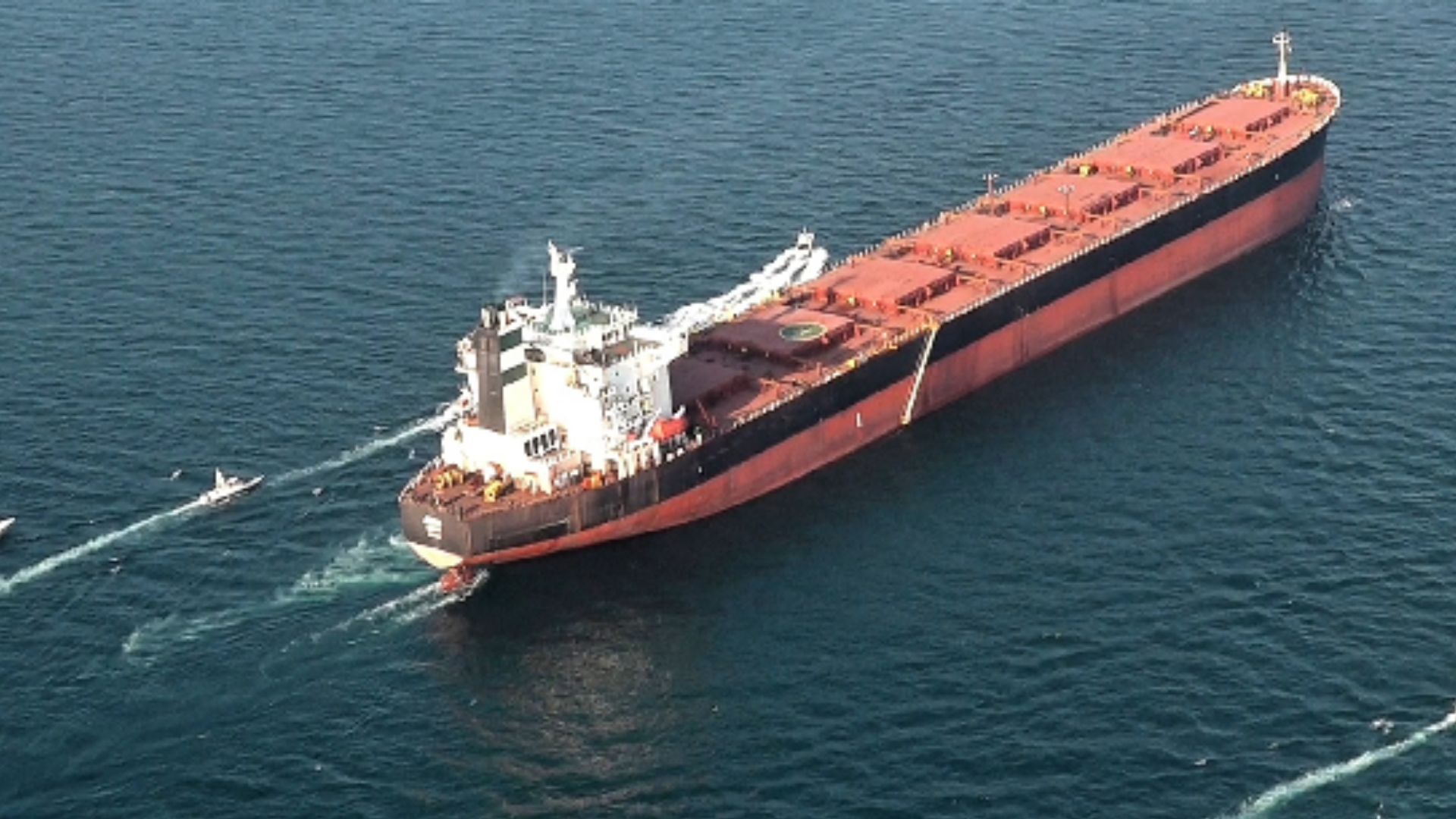

Another oil tanker carrying an all-Indian crew came under attack near the Strait of Hormuz on the night of June 12-13, raising fresh concerns about the safety of commercial vessels operating in the conflict-hit region. According to sources, the Hong Kong-flagged tanker Bockem Marengo was struck by drones while passing through the strategically important waterway. The vessel suffered damage during the attack, but all 21 crew members on board were evacuated safely and escaped without injuries.
Drone Attack Hits Tanker Despite Security Protection
Reports said the tanker was sailing through the Strait of Hormuz under the protection of the US Navy’s Naval Cooperation and Guidance for Shipping (NCAGS) security arrangement when it came under attack. Despite being covered by the security framework, an unmanned drone reportedly targeted the vessel during the intervening night of June 12 and 13.
The attack damaged three sections of the ship. The No. 1 and No. 2 port water ballast tanks were among the areas affected. However, the damage was not severe enough to sink the vessel, and the tanker managed to continue its journey after the incident.
Entire Crew Consisted of Indian Sailors
The tanker is managed by Anglo-Eastern Ship Management (India) Pvt Ltd, and all crew members aboard were Indian nationals. Sources confirmed that every sailor on the vessel escaped unharmed despite the attack, preventing what could have become another tragic maritime incident in the region.
Series of Attacks on Ships With Indian Crews
The latest attack adds to a growing list of incidents involving ships carrying Indian sailors near the Strait of Hormuz. Before the attack on Bockem Marengo, three other vessels with Indian crew members — MT Marivex, Settebello and Jalveer — were also targeted near the crucial shipping route.
The attack on MT Settebello proved particularly deadly, resulting in the deaths of three Indian crew members. These repeated incidents have highlighted the dangers faced by seafarers operating in one of the world's most important maritime corridors.
India Monitoring the Situation
India's Shipping Ministry said it is closely monitoring developments and looking into the latest attack. The ministry also provided an update regarding an Indian sailor who died aboard MT Celestial. Officials said the vessel had reached shore and the sailor's mortal remains had been transported to Oman for further repatriation to India.
According to the ministry, around 10 Indian-flagged vessels and five foreign-flagged ships have successfully crossed the Strait of Hormuz despite the ongoing tensions. The government also stated that more than 3,500 seafarers have been safely repatriated to India since the conflict began.
Strait of Hormuz Remains a Global Flashpoint
The Strait of Hormuz is one of the world's most critical shipping routes, handling nearly 20 percent of global crude oil and liquefied natural gas (LNG) trade before the conflict escalated. The waterway has faced severe disruption since the outbreak of the US-Iran conflict in West Asia on February 28. Reports indicate that Iran's Islamic Revolutionary Guard Corps (IRGC) has effectively restricted movement through the strait since the fighting began.
The situation became more complicated on April 13 when the United States imposed a naval blockade that prevented ships from entering and leaving Iranian ports. With commercial vessels continuing to face threats, concerns remain high over maritime security, global energy supplies and the safety of thousands of sailors operating in the region.