
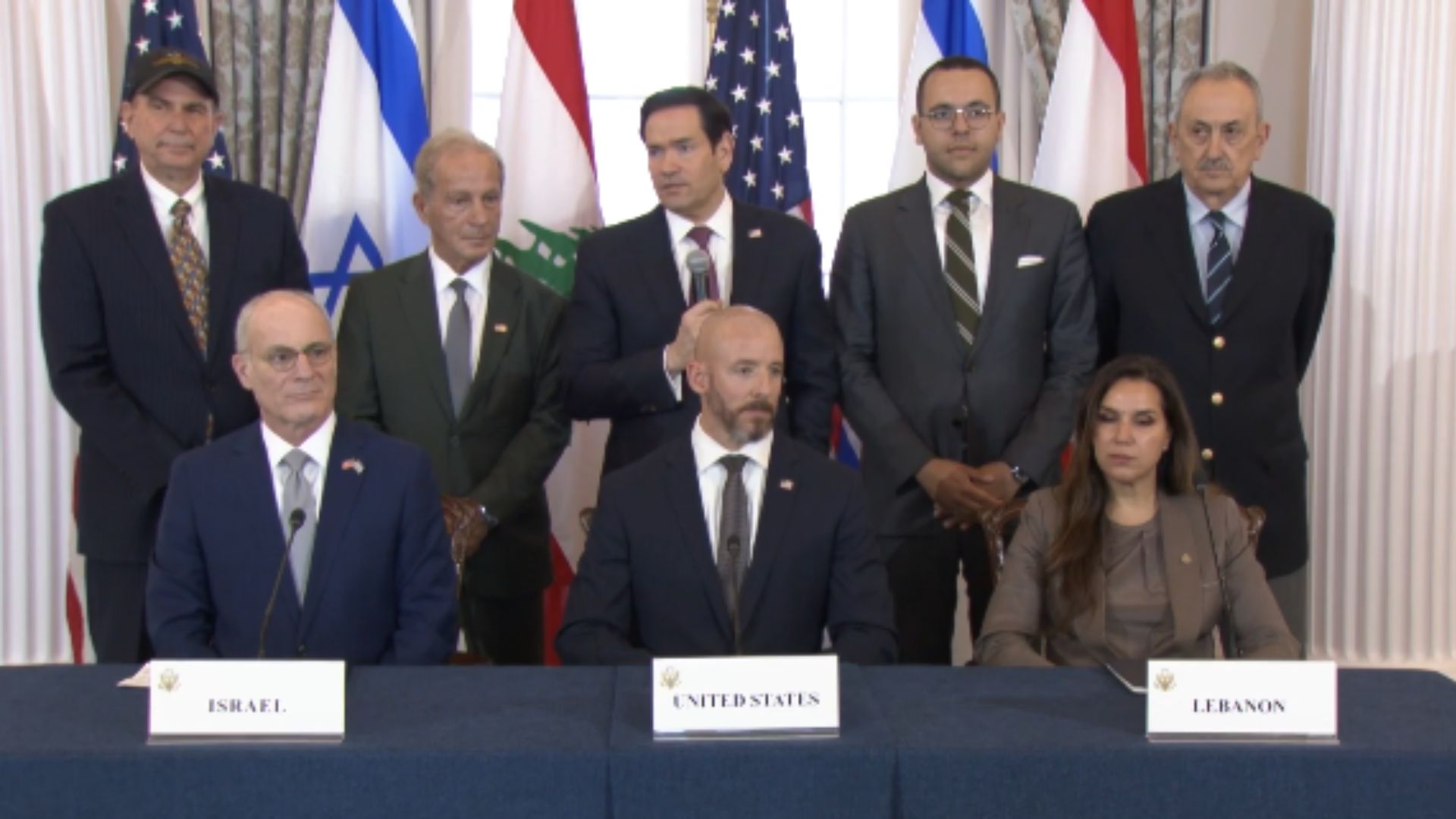

Israel and Lebanon signed a US-backed framework agreement in Washington on Friday, taking an important step toward ending months of fighting between Israel and the Iran-backed Hezbollah group. Although both governments described the deal as only the beginning of a longer process, they said it could strengthen the ceasefire and lay the foundation for lasting stability along the border.
Lebanese Ambassador Nada Moawad and Israeli Ambassador Yechiel Leiter signed the trilateral agreement alongside US officials at the State Department after several days of negotiations.
US Backs Ceasefire Implementation
US Secretary of State Marco Rubio called the agreement an important milestone but acknowledged that significant work still lies ahead. "Today we've taken the first step in what will be a difficult journey, without a doubt, but an important and an essential and a necessary one," Rubio said before the agreement was signed.
Following the ceremony, Rubio announced that the United States would oversee the agreement through a new Military Coordination Group for Lebanon. Meanwhile, Washington pledged $100 million in immediate humanitarian assistance, which it will provide in coordination with the United Nations. In addition, the United States committed more than $30 million to strengthen the Lebanese Armed Forces and help them establish state authority across Lebanese territory.
Israel Ties Troop Withdrawal to Hezbollah Disarmament
Israeli Prime Minister Benjamin Netanyahu said Israeli forces would remain in parts of southern Lebanon until Hezbollah lays down its weapons. He explained that the agreement allows the Lebanese Army to gradually take control of selected areas, beginning with two "pilot zones" from which Israeli troops would eventually withdraw.
Israel considers those areas a security buffer designed to prevent future Hezbollah attacks on northern Israel. Israeli Ambassador Yechiel Leiter welcomed the agreement and declared, "Iran is out, Hezbollah is out, and the road to peace between Israel and Lebanon is in."
He also made it clear that additional Israeli withdrawals depend on the Lebanese Army's ability to dismantle Hezbollah's military infrastructure.
"To the degree that the Lebanese army performs in dismantling and disarming Hezbollah, we will proceed with additional pilot zones and the ultimate determination of an internationally recognized, secure, and agreed upon border," Leiter said.
Lebanon Pushes to Restore Sovereignty
Lebanese President Joseph Aoun said the agreement should eventually allow displaced families to return home and help Lebanon regain full sovereignty over its territory. He also expressed hope that Lebanon would rebuild communities without outside interference. Likewise, Lebanese Ambassador Nada Moawad described the agreement as a "first step" toward restoring the country's sovereignty after months of conflict.
Fighting Has Taken a Heavy Toll
The latest conflict began after Hezbollah launched attacks against Israel on March 2, shortly after US and Israeli forces carried out strikes on Iran. Israel responded with extensive air and ground operations across Lebanon.
As a result, the conflict has reportedly killed more than 4,000 people in Lebanon and displaced over one million residents. Meanwhile, Israel has lost at least 32 soldiers and four civilians during the fighting.
Reuters previously reported that several thousand Hezbollah fighters were also killed during the conflict, although Hezbollah has not released official casualty figures.
Ceasefire Faces Fresh Challenges
Despite the agreement, tensions remain high. Israel said its military killed seven Hezbollah members operating near territory currently occupied by Israeli forces. Reuters could not independently verify the claim. Meanwhile, Israeli forces dropped leaflets over the southern Lebanese town of Mansouri, ordering residents to leave the area.
Lebanese state media reported that this marked the first evacuation order issued since the latest ceasefire took effect. Furthermore, a senior Lebanese military official said Israel had recently added Mansouri to its security zone. Although farmers continued entering the area, permanent residents had largely stayed away.
An Israeli military spokesperson said the leaflets served as a safety warning. "The area is within the security zone in which (Israeli) soldiers operate. It's a reminder not to be in the area so they won't be harmed," the spokesperson said.
Hezbollah Rejects the Agreement
Hezbollah firmly rejected the agreement's disarmament provisions. Hezbollah lawmaker Hassan Fadlallah argued that Lebanese authorities could not enforce the agreement unless, with US backing, "they go to civil war."
He also warned that Hezbollah would resist any effort to surrender its weapons and remained strongly opposed to the agreement's security commitments. His comments highlight the serious obstacles that remain despite renewed international efforts to preserve the ceasefire.
Nevertheless, the agreement marks an important diplomatic breakthrough. Even so, Israel, Lebanon and international mediators still face major challenges before they can achieve lasting peace along the shared border.