
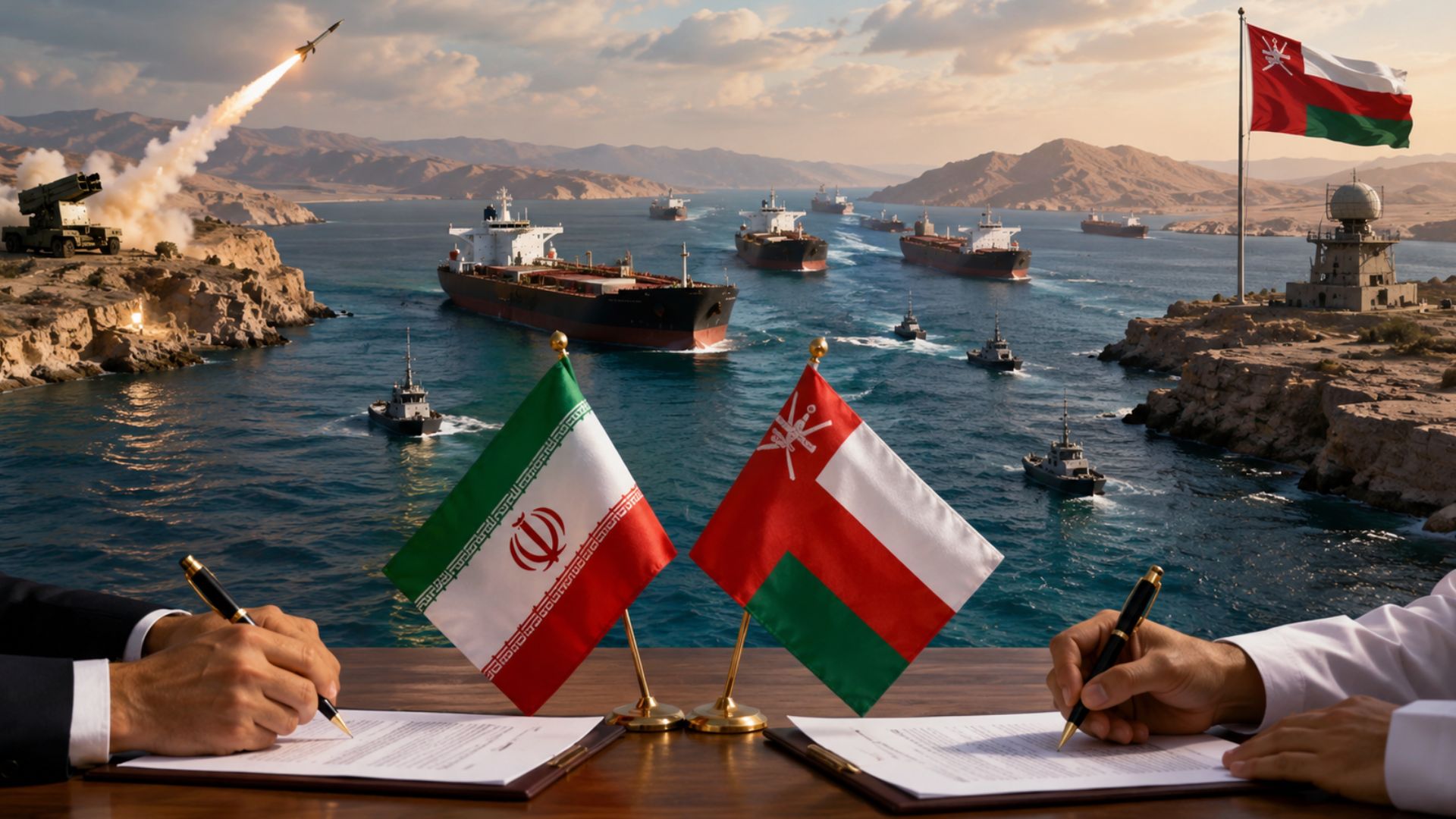

Iran said on Saturday that it was close to reaching an agreement with Oman on a new arrangement for shipping through the Strait of Hormuz. However, Tehran made it clear that the agreement alone would not reopen the key waterway.
The Strait of Hormuz has remained at the centre of the conflict between Iran and the United States and Israel. The route separates Iran and Oman and is one of the world's most important passages for global energy supplies. Iran has restricted shipping through the strait since the war began, putting pressure on international oil and gas markets.
Iran Oman Talks On Strait Of Hormuz Near Deal
Iranian Foreign Minister Abbas Araqchi said Tehran and Muscat were "very close" to an agreement on a new temporary shipping route through the Strait of Hormuz.
However, Araqchi said reopening the waterway would depend on several other conditions. These include compensation from the United States to Iran.
The proposed arrangement is being closely watched because Washington has been pushing for the restoration of normal commercial shipping through the strait.
A US official said on Friday that Washington expected an agreement between Iran and Oman soon. The official said such a deal could allow regular oil traffic to resume.
However, Iran has indicated that it wants broader guarantees before fully reopening the route.
Iran Sets Conditions For Reopening Strait Of Hormuz
Mohammad Baqer Zolqadr, secretary of Iran's top national security body, listed several demands from Tehran.
Iran wants the United States to end its threats and stop what Tehran describes as aggression against Iran and its regional allies. It has also demanded an end to the blockade and sanctions imposed on Iran.
Zolqadr further called for the release of Iranian assets.
Iran's Revolutionary Guards also said on Saturday that reopening the Strait of Hormuz would depend on Washington accepting Tehran's conditions. The Guards said the issue was separate from the negotiations with Oman.
"Whenever the United States accepts Iran’s conditions, the Strait of Hormuz will certainly be reopened," Guards spokesperson Hossein Mohebbi said, according to Iran's Tasnim news agency.
Oman Calls Iran Negotiations Positive
Oman has described its negotiations with Iran as "positive and constructive". The Omani government also condemned repeated attacks on ships passing through the Strait of Hormuz. However, it did not directly blame Iran for the incidents.
Oman's Foreign Ministry urged all sides to avoid actions that could damage the ongoing negotiations. "Oman stresses the importance of avoiding any actions that could affect these negotiations and the progress achieved in a manner that takes into account the interests of all parties," the ministry said.
Araqchi said Iran no longer accepted the previous traffic separation system used by ships passing through the strait. He said Tehran was working with Oman on a temporary route while both sides addressed the technical and legal issues needed for a permanent arrangement.
UAE Reports Another Ship Attack In Strait Of Hormuz
The diplomatic discussions continued as tensions remained high in the waterway. The United Arab Emirates said Iran had attacked a carrier linked to the UAE's state-owned oil company while it was sailing through the Strait of Hormuz. The vessel was reportedly hit by a missile. No injuries were reported.
The UK Maritime Trade Operations agency, known as UKMTO, separately reported that a vessel caught fire after being struck by an unidentified projectile. The fire was later extinguished, and authorities reported no environmental damage. Iranian authorities did not immediately comment on the reported attacks.
Strait Of Hormuz Disruption Hits Global Energy Supplies
The Strait of Hormuz is a critical route for global energy shipments. Before the conflict, around one-fifth of the world's oil and gas shipments passed through the narrow waterway. Iran has used the conflict to justify restricting shipping and imposing tolls on oil tankers.
Ships attempting to pass through the strait without Iranian permission have also faced attacks. The disruption has significantly affected global energy shipments. The uncertainty has pushed energy prices higher and added to inflationary pressures in several economies.
Pezeshkian Says Iran Is In Strong Position
Iranian President Masoud Pezeshkian said he believed the current situation offered a good opportunity to reach an agreement. "There is cohesion, strength, and unity in the country, and as far as I know, Iran is considered victorious and powerful in this war," Iranian news agencies quoted him as saying.
Pezeshkian also blamed the United States for difficulties in importing basic goods into Iran. Food and other essential products have reportedly become much more expensive in Iran since the conflict began. He did not refer to any exemptions for humanitarian shipments during his comments.
US Says Strait Deal Could End Blockade
The Trump administration has repeatedly indicated that an agreement to reopen the Strait of Hormuz could be close. However, previous expectations of a deal have not resulted in a lasting agreement. Iran has repeatedly denied that formal negotiations were taking place during earlier rounds of US statements.
A US official said Washington would remove its blockade of Iranian ports once a deal was announced and commercial shipping could move through the waterway without restrictions.
"Once the deal is announced to restore commercial shipping without impediments, the United States will lift the blockade of Iranian ports," the official told Reuters. The official added that US actions would depend on Iran fulfilling its commitments under any agreement.
US Central Command Reports Ship Movements
US Central Command said on Saturday that more than 30 ships had been allowed to pass through the area carrying humanitarian aid since the blockade began.
The command also said US forces had turned away 53 ships. It reported that two vessels had been disabled and two others had been boarded. The figures highlight the extent of the disruption around the strategically important waterway.
Iran Oman Deal Could Give Tehran Greater Control
Earlier reports suggested that the proposed agreement between Iran and Oman could give Tehran greater control over ships entering the Gulf through the Strait of Hormuz.
A senior Iranian source and two regional officials told Reuters that the proposal could allow Iran to control the movement of vessels entering the Gulf through the strait. The proposal would represent a major concession to Tehran if implemented.
However, US officials have repeatedly said Washington would not accept Iranian control over access to one of the world's most important energy trade routes. It remains unclear whether the United States has changed its position or whether negotiators have modified the proposed terms.
Strait Of Hormuz Deal Faces Major Challenges
The latest talks have created cautious hopes of restoring commercial shipping through the Strait of Hormuz. However, major differences remain between Iran and the United States.
Iran wants Washington to accept a series of political and economic conditions before fully reopening the waterway. The United States, meanwhile, has opposed any arrangement that would give Tehran control over access to the major international trade route.
Iran's decision to impose tolls and restrict tanker movement has already disrupted global energy supplies. The resulting increase in energy prices has also contributed to wider inflation.
The negotiations with Oman could therefore become an important step towards restoring shipping. However, a lasting agreement will depend on whether Iran and the United States can resolve their wider disagreements over sanctions, security guarantees, compensation and control of the Strait of Hormuz.