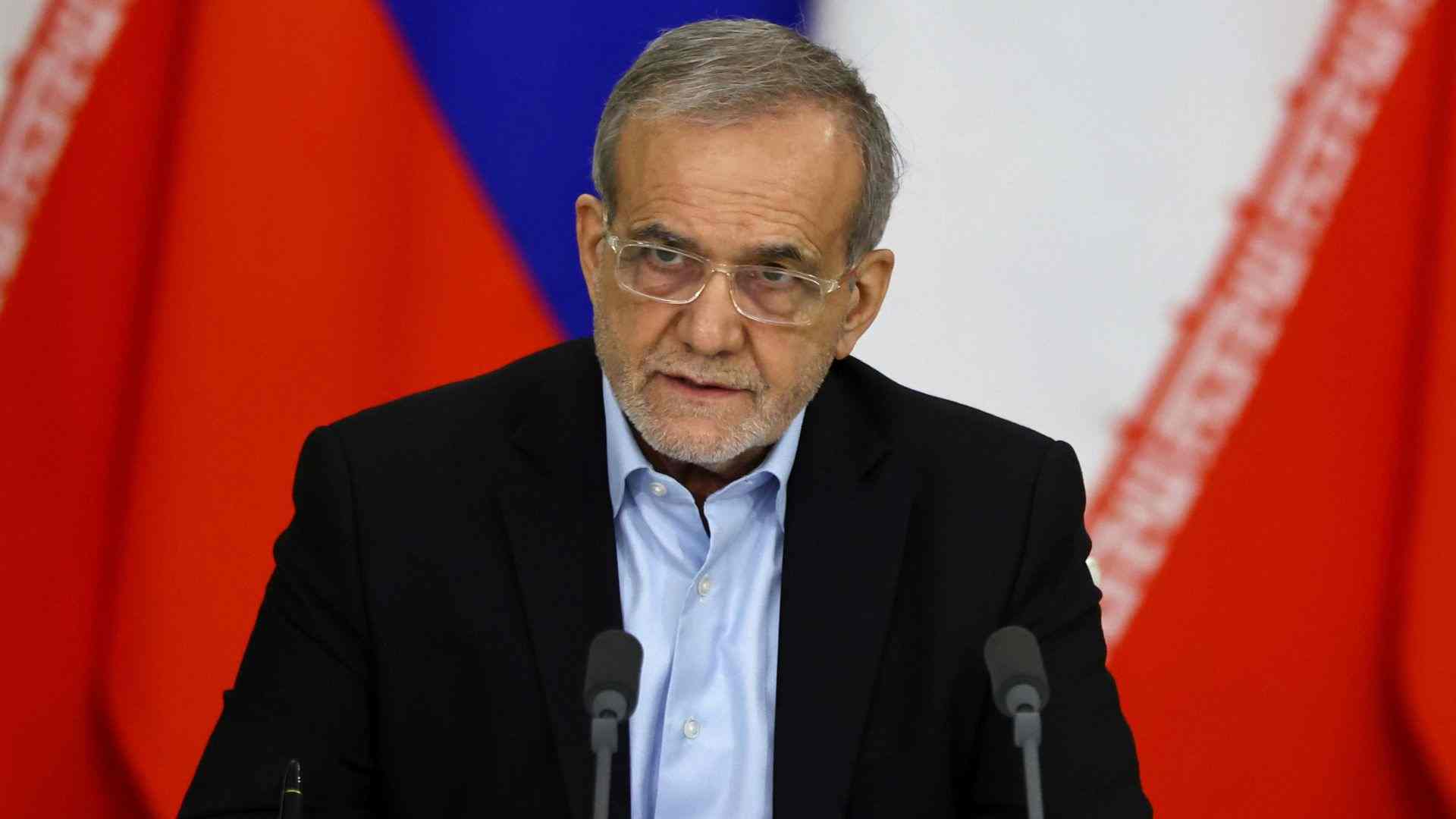
Iranian President Masoud Pezeshkian said on Monday that negotiations with the United States had become “meaningless”. He said previous talks had repeatedly been followed by fresh American attacks. Iranian state media reported his remarks.
Pezeshkian argued that the repeated attacks showed that Washington was not seriously interested in dialogue with Tehran. “So far, they have attacked us three times after talks, and this shows that they are not seeking dialogue; rather, their goal is to overthrow the Islamic Republic of Iran,” Pezeshkian was quoted as saying by the state news agency IRNA.
He also criticised the broader US pressure campaign against Iran. Pezeshkian pointed to what he described as assassination attempts, sanctions, political pressure and threats. He said these actions had further damaged the chances of meaningful negotiations.
"With an enemy that every day resorts to assassination, sanctions, pressure and threats, and that breaks its commitments, negotiations are meaningless.”
US-Iran Talks Remain Stalled
The latest dispute comes amid a prolonged conflict between Iran, the United States and Israel.
The West Asia war began in late February. The US and Israel launched surprise attacks on Iran while Washington and Tehran were negotiating over Iran’s nuclear programme.
The two sides later agreed to a memorandum of understanding in June. The agreement outlined a possible framework for a permanent settlement.
However, the situation deteriorated again after Iranian forces attacked vessels in the Strait of Hormuz. The development led the United States to resume military operations.
Since then, negotiations have largely remained stalled.
The US and Iran also held indirect discussions on the sidelines of the United Nations General Assembly. Those talks failed to produce a major breakthrough.
US Shifts Focus to Economic Pressure
Washington has reduced its military operations in recent weeks. Instead, the United States has increased its focus on economic pressure against Tehran. The US has not carried out a strike against Iran since September 1. Iranian Foreign Minister Abbas Araghchi also rejected the idea that military action could resolve the conflict.
Speaking on Sunday, Araghchi warned that Iran would strengthen its defence if attacks resumed. "There is no military solution, nor any solution based on new sanctions."
He said only negotiations conducted on fair terms could bring an end to the conflict. "Only negotiations based on justice and fairness" could end the conflict, he added.
Strait of Hormuz Remains Key Flashpoint
The United States and Israel have said their military campaign aims to stop Iran from developing nuclear weapons. Iran has repeatedly denied that it is seeking nuclear weapons. However, the conflict soon expanded beyond the nuclear issue. The reopening of the Strait of Hormuz became a major concern after its closure disrupted global energy markets.
Iran has tried to control traffic through the strategic waterway since the war began. Iranian forces have attacked vessels that attempted to pass through without Tehran’s approval. The United States has responded with its own counterblockade of Iranian ports. American forces have also attacked vessels that Washington accused of violating the blockade.
Tanker Incident Raises Fresh Concerns
Tensions around the waterway remained high on Sunday and Monday. The British maritime agency UKMTO reported that Iranian forces struck a tanker while it was attempting to pass through the Strait of Hormuz on Sunday.
Another tanker reportedly turned back on Monday after Iranian forces threatened to attack it. The incidents have added to concerns over the safety of commercial shipping through one of the world’s most important energy routes.