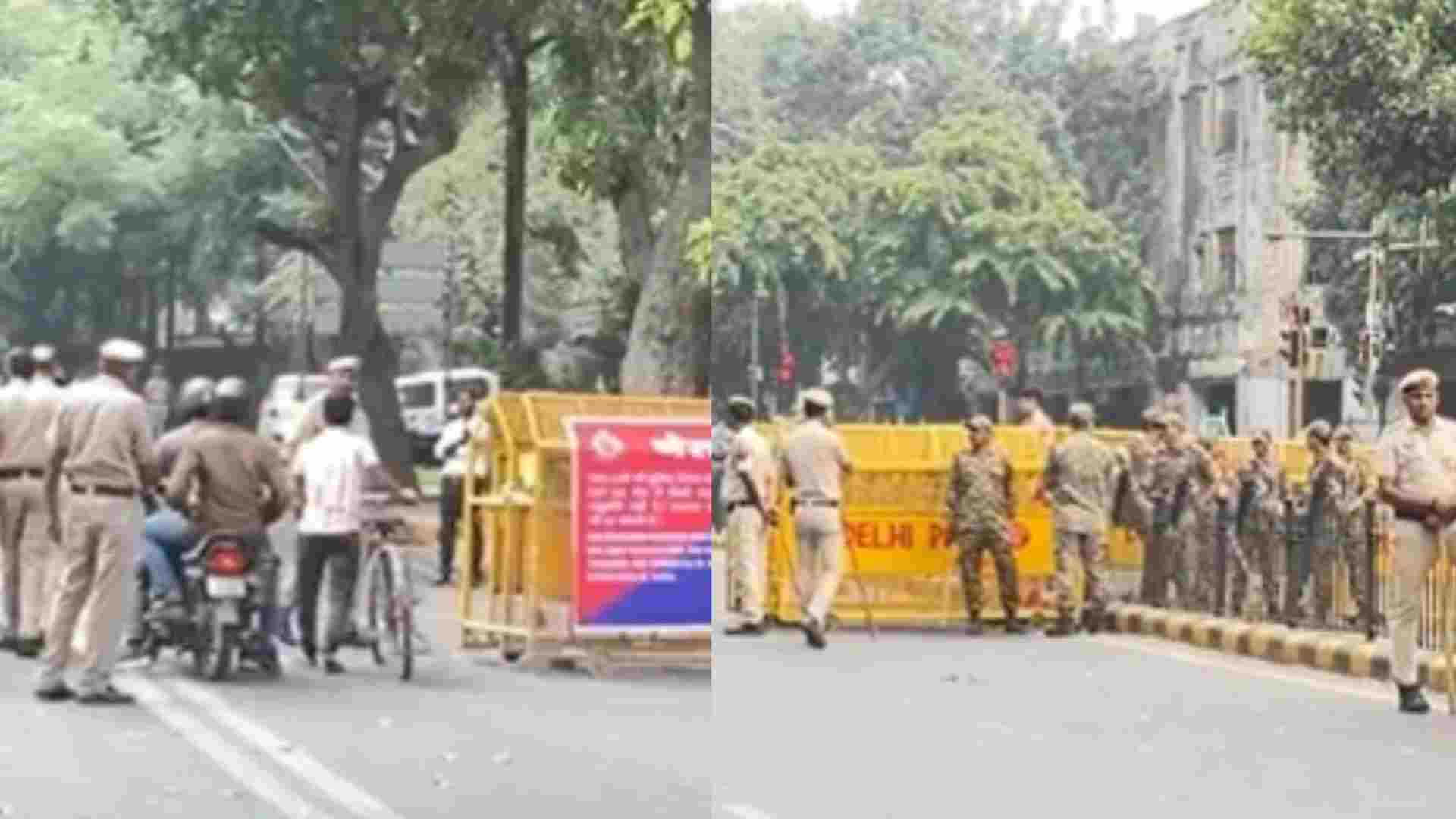
The Delhi Police has detained more than 500 people who travelled to the national capital from different states to participate in the
Cockroach Janta Party’s (CJP) planned protest at Jantar Mantar on Saturday.
The detentions come as authorities tighten security across Delhi ahead of the demonstration. The party has demanded Chief Election Commissioner Gyanesh Kumar’s resignation over allegations linked to the Special Intensive Revision (SIR) of electoral rolls.
Over 35,000 Police and Paramilitary Personnel Deployed
According to ANI, more than 35,000 Delhi Police and paramilitary personnel have been deployed across the capital to maintain law and order. Authorities have strengthened security to prevent unauthorised gatherings and control potential disturbances.
The deployment includes more than 120 companies of the Central Armed Police Forces (CAPF). Officials have stationed personnel at major intersections, transport hubs and other sensitive locations.
New Delhi District Divided into 20 Security Zones
Delhi Police has divided the New Delhi district into 20 zones to improve surveillance and coordinate security operations.
Joint commissioners, deputy commissioners and additional deputy commissioners are supervising these zones. Special commissioners heading different police units are also monitoring the arrangements.
Authorities have brought additional women police personnel from Uttar Pradesh and Haryana to strengthen the deployment. Police teams have also conducted mock drills to assess their preparedness for possible disturbances.
Police Ordered to Detain People Holding Unauthorised Protests
According to ANI, police teams have received instructions to detain anyone attempting to organise an unauthorised demonstration, regardless of the location.
Authorities have also issued specific guidelines on the equipment officers can carry during protest-related duties. CAPF personnel have been instructed not to carry weapons during these deployments. Delhi Police personnel, however, can carry lathis and batons.
Senior officers have advised police personnel to avoid verbal confrontations with protesters. The directive comes amid concerns that videos of interactions between officers and demonstrators could circulate widely on social media.
Body Cameras to Record Police-Protester Interactions
Delhi Police has introduced body cameras as part of its security arrangements. Officers assigned to protest duty are wearing the devices on their uniforms to record interactions with demonstrators.
The cameras can capture footage in low-light conditions. Police officials believe these recordings will help establish the facts if anyone accuses officers of manhandling protesters.
A police official explained how the devices could protect both officers and members of the public.
“These body cams are to protect us and others. In situations of manhandling, allegations are levelled against Delhi Police. So, these body cams will prove whether we did anything to anyone or not. This will record everything…" the personnel said.
Drones and CCTV Cameras Strengthen Surveillance
According to ANI, the security plan also includes facial recognition systems, additional CCTV cameras, drones and rooftop spotters across central Delhi.
These surveillance measures will help authorities monitor crowds, observe activity at sensitive locations and respond to potential security concerns.
Police have incorporated these technologies into their wider efforts to maintain order during the planned demonstration.
Delhi Police Monitors Social Media Activity
Authorities are also monitoring online activity linked to the proposed protest. More than 200 content creators are reportedly under scrutiny as police examine posts and messages that could relate to efforts to mobilise participants.
The monitoring forms part of the broader security operation ahead of the demonstration at Jantar Mantar.
With thousands of personnel deployed, police teams conducting mock drills and surveillance systems operating across central Delhi, authorities are preparing to manage the protest and prevent unauthorised gatherings.