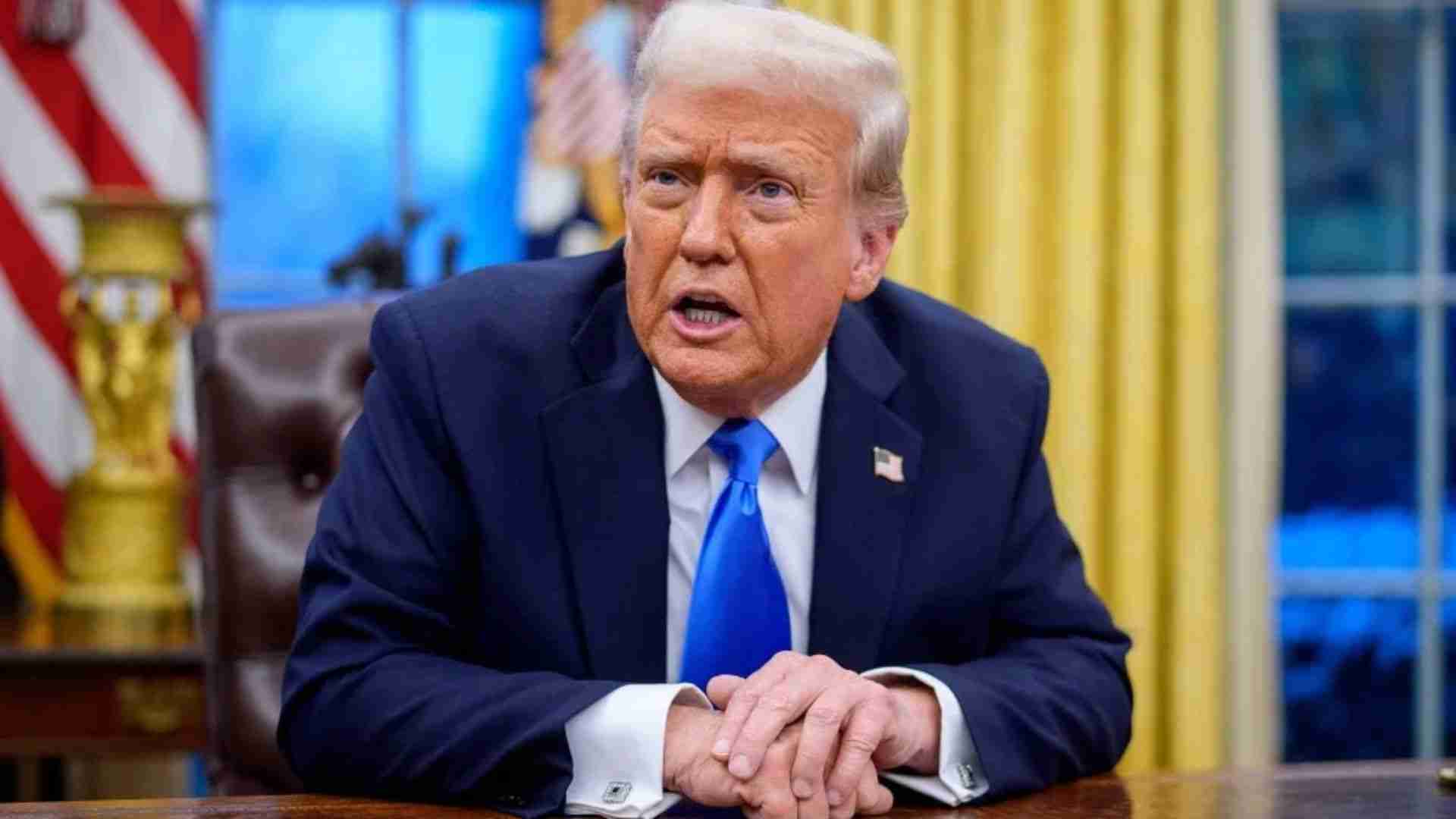
US President Donald Trump said on Saturday that Iran could intensify its actions against the United States ahead of the midterm elections scheduled for November 3. He claimed that Tehran believes escalating the confrontation before the polls could damage the Republicans' electoral prospects. However, Trump maintained that Washington could bring the conflict to an end quickly.
Trump made the remarks during a campaign rally in Tennessee, a southern state that has long supported the Republican Party. He was campaigning for fellow Republicans ahead of the crucial congressional elections.
“They'll probably do a little bit extra before the election, thinking it's going to hurt us,” Trump said.
“But we could end it really quick,” he added, claiming that he had exercised considerable restraint in dealing with Tehran despite what he described as the destruction of Iran's navy.
“They don't know how nice I've been to them,” Trump said. He also claimed that American forces had sunk 159 Iranian ships since late February, when the ongoing war began.
During his remarks, Trump floated another controversial idea involving the Strait of Hormuz, a strategically important waterway that has become a major point of tension in the conflict. “We're thinking about renaming it to the Trump Strait.” Trump had previously suggested that the war with Iran could end shortly after the November 3 midterm elections.
Iran War Becomes Major Issue Ahead of US Midterms
The conflict in West Asia has become a central issue in the upcoming US congressional elections. Although Trump is not personally contesting a seat, he is actively campaigning for Republican candidates who are trying to retain control of one or both chambers of Congress.
The outcome of the elections could have significant political implications for the president, as the Republicans seek to maintain their influence in the House of Representatives and the Senate.
The United States and Israel launched military operations against Iran on February 28. The strikes killed Iran's former Supreme Leader, Ayatollah Khamenei, and triggered retaliatory attacks by Tehran.
Iran responded with missile and drone strikes across the region. It also effectively shut down the Strait of Hormuz, a critical passage for international oil shipments.
Conflict Disrupts Oil Supplies and Peace Efforts
The war has continued for more than seven months, disrupting regional stability and pushing up global energy prices. Commercial oil traffic through the Strait of Hormuz has been largely halted, creating concerns over international energy supplies.
In June, the United States and Iran signed a framework agreement following mediation efforts by Pakistan and Qatar. The arrangement was intended to stop the fighting and create conditions for further negotiations.
However, efforts to implement the agreement have since stalled. Disagreements over security arrangements and navigation through the Strait of Hormuz have continued to complicate negotiations.
With the midterm elections approaching, Trump's latest remarks suggest that the conflict with Iran could remain a major issue in the US political debate. His prediction that Tehran may intensify its actions before the vote also underscores the uncertainty surrounding the war and the prospects for a lasting settlement.