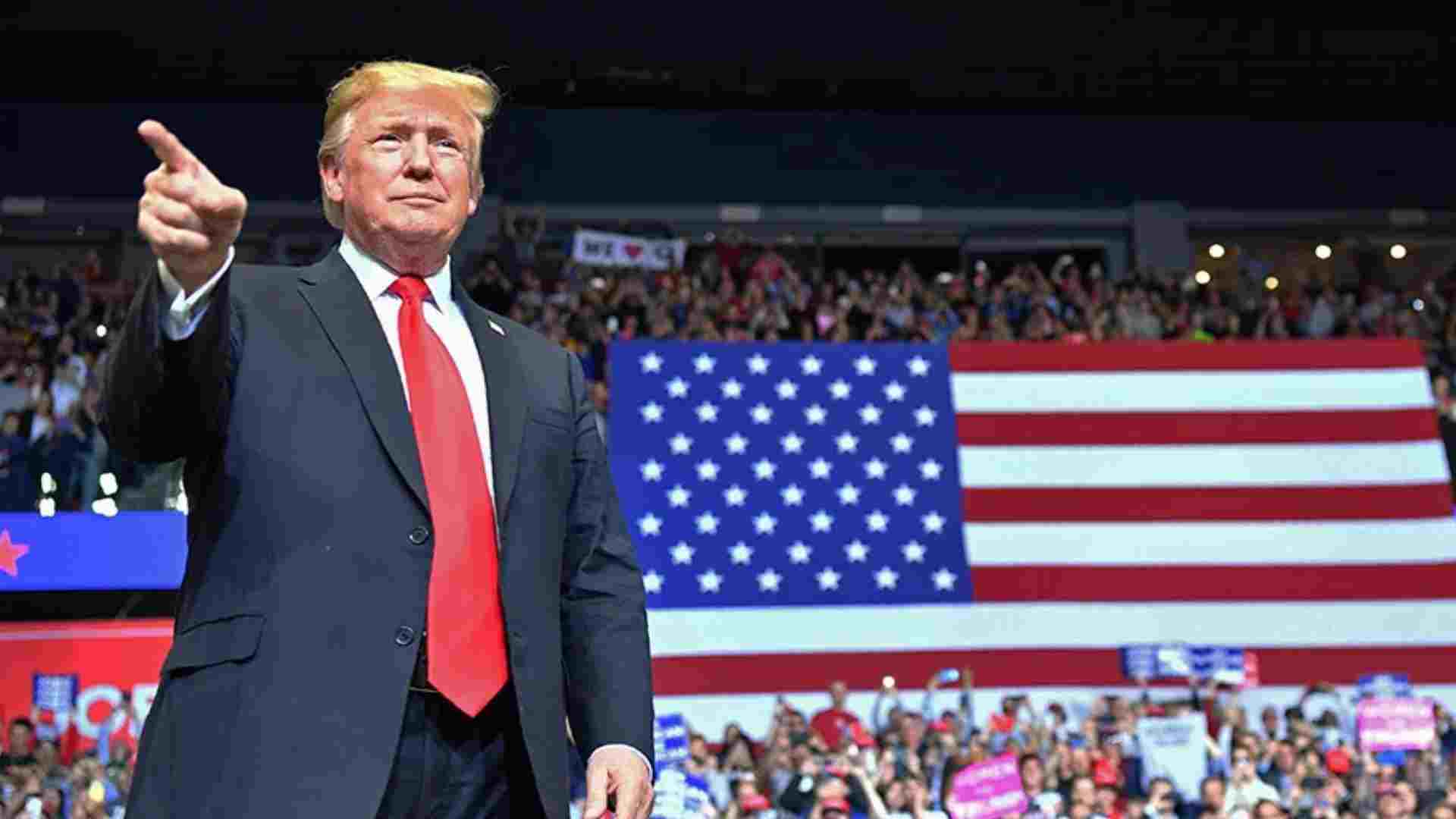
With only a few weeks remaining before the US midterm elections,
President Donald Trump's approval ratings are falling sharply, potentially creating serious challenges for the Republican Party. A new poll conducted by the
Financial Times and Focaldata suggests that growing dissatisfaction with the president's handling of the economy is influencing voters' opinions ahead of the November elections.
According to the survey, only one-quarter of registered voters approve of Trump's performance on jobs and the economy. His ratings on inflation are even lower, with roughly one-fifth of respondents expressing approval. The findings come as Trump has become increasingly involved in congressional election campaigns, while Republican lawmakers are urging him to address public concerns about the rising cost of living.
More than two-thirds of respondents said they believed the US economy was moving in the wrong direction. The latest employment figures have added to these concerns. The American economy created just 29,000 jobs in September, significantly below economists' expectations and raising fresh questions about the strength of the country's labour market.
Trump's overall approval rating has also remained low at 34 per cent. Meanwhile, 45 per cent of registered voters believe his involvement is making it more difficult for Republican candidates to win their races in November.
The findings are consistent with the assessment of the non-partisan Cook Political Report, which has identified a worsening electoral environment for Republicans. The organisation recently shifted its ratings for 18 House races in favour of Democrats. It also projected that Democrats could gain between nine and 19 seats in the House of Representatives in November.
Republicans Face a Tough Challenge in the Midterm Elections
The latest
Financial Times poll indicates that Democrats have an advantage over Republicans among registered voters, leading by more than five percentage points. The results also highlight widespread disagreement with Trump's policy positions on artificial intelligence and the conflict involving Iran.
Approximately two-thirds of respondents supported introducing binding federal regulations for AI companies and adopting a more cautious approach to the technology's development. These views contrast with Trump's efforts to accelerate AI development and reduce potential barriers to innovation.
The findings suggest that disagreements over the administration's broader policy priorities could further weaken Republican support as the midterm elections approach.
Trump's Iran Policy Faces Growing Opposition
Trump's approval rating on his handling of the Iran conflict has also declined significantly. According to the poll, his rating on the issue has dropped by seven percentage points since May, with fewer than one-quarter of registered voters approving of his approach.
Nearly two-thirds of respondents said the United States should prioritise reaching an agreement with Iran as soon as possible rather than continuing the conflict in pursuit of more favourable terms.
Last month, Trump rejected an Iranian proposal to reopen the Strait of Hormuz and maintained his threats as the conflict entered its eighth month. The continued confrontation has added to economic uncertainty and concerns about living costs, further affecting public perceptions of the president's leadership.
The poll suggests that voters are increasingly concerned about the economic consequences of the conflict and would prefer a diplomatic resolution over a prolonged military confrontation.
Republican Voters Continue to Support Their Party
Despite Trump's declining popularity, Republican voters have largely maintained their support for the party. This loyalty could prove crucial in November, as the election outcome may depend on whether dissatisfied Trump supporters and independent voters distinguish their views of the president from their willingness to vote for Republican candidates.
The survey found that fewer than 70 per cent of registered voters who supported Trump in the 2024 presidential election now approve of his performance. This represents a notable decline from the 80 per cent approval recorded in May, when the
Financial Times began conducting its polling.
However, the decline in Trump's personal approval ratings has not translated into a similar drop in support for Republican candidates. Around 80 per cent of registered voters who backed Trump in 2024 still intend to vote for the Republican candidate in their congressional district in November. That figure has remained largely unchanged during the polling period.
The difference between Trump's falling approval ratings and the continued loyalty of Republican voters presents a complicated picture for the upcoming elections. While dissatisfaction with the economy, inflation and foreign policy could hurt the president's party, the Republican voter base remains largely committed to its candidates.
Ultimately, the midterm results will depend on whether Democrats can turn growing dissatisfaction with the administration into electoral gains and whether Republicans can retain the support of voters who remain loyal to the party despite their concerns about Trump's performance.