

The Trump administration suspended journalists from Voice of America (VOA) and other US-funded broadcasters. As a result, decades-old media operations that counter Russian and Chinese propaganda came to an abrupt halt.
Over the weekend, officials sent emails to hundreds of employees from VOA, Radio Free Asia, and Radio Free Europe. Consequently, they lost access to their offices and had to return press credentials and equipment.
Trump Cuts Media Funding
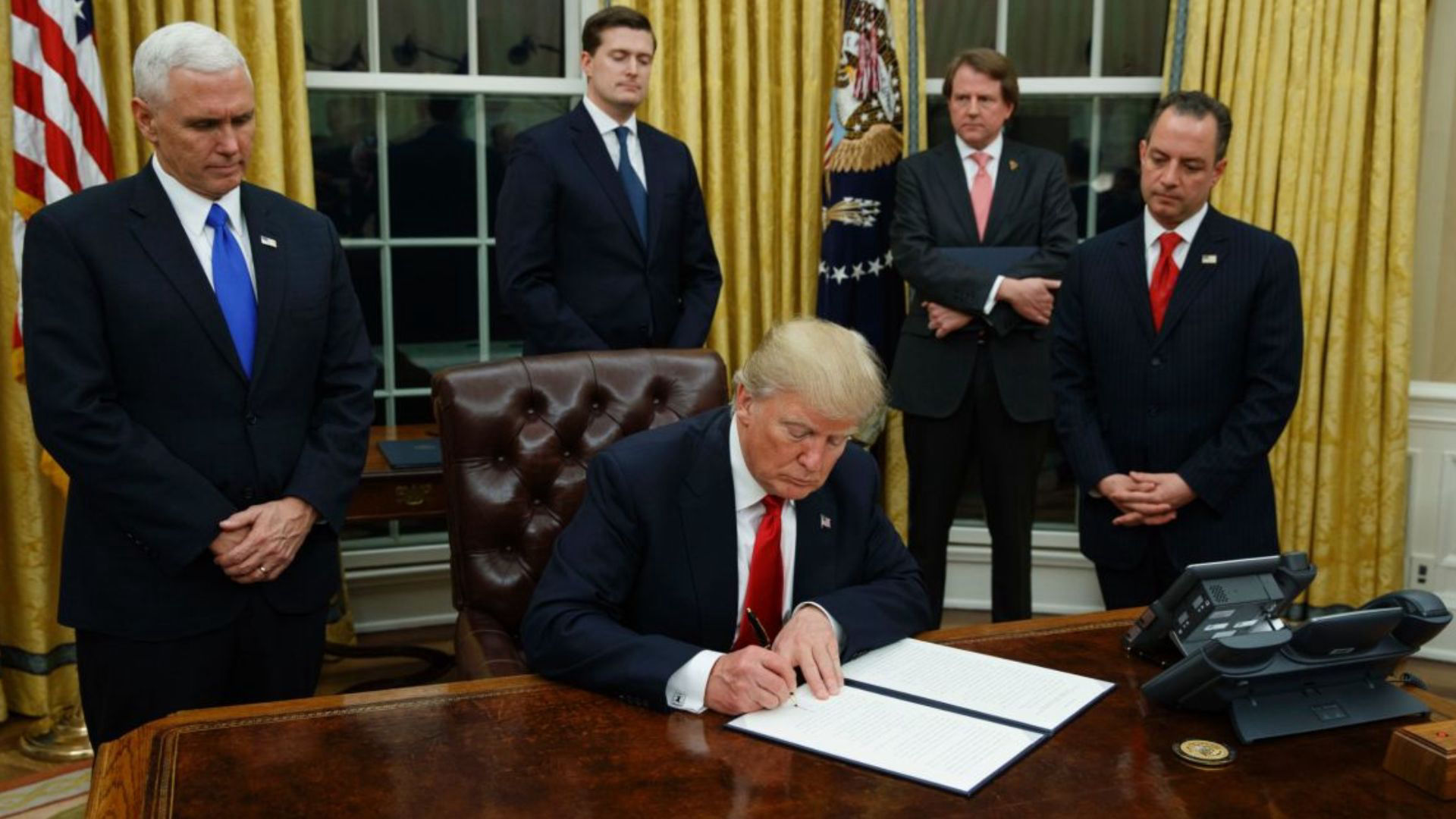
On Friday, US President Donald Trump signed an executive order. Specifically, he declared the US Agency for Foreign Media “unnecessary.” Previously, his administration had already cut funding for foreign aid and education programs.
Meanwhile, Kari Lake, a Trump supporter, took charge of the media agency after losing her Senate bid. In an email, she defended the decision, stating that federal grants “no longer effectuate agency priorities.”
At the same time, the White House justified the cuts. Officials argued that taxpayers should not fund “radical propaganda.” Thus, this decision marked a major shift in US foreign media policy.
Strong Reactions from Journalists and Officials
Shortly after the announcement, White House press official Harrison Fields mocked the decision. He posted “goodbye” in 20 languages on X, referring to the outlets’ multilingual coverage.
In response, VOA director Michael Abramowitz condemned the move. He was among 1,300 employees placed on leave. On Facebook, he wrote:
"VOA needs thoughtful reform, and we have made progress in that regard. But today’s action will leave Voice of America unable to carry out its vital mission."
Notably, VOA broadcasts in 48 languages and reaches 360 million people each week.
Similarly, Radio Free Europe/Radio Liberty criticized the cuts. Its president, Stephen Capus, called the decision a “massive gift to America’s enemies.”
"The Iranian ayatollahs, Chinese communist leaders, and autocrats in Moscow and Minsk would celebrate the demise of RFE/RL after 75 years," he stated.
Threat to Global Journalism
Since the Cold War ended, US-funded media outlets have shifted focus. Now, they primarily report on authoritarian regimes in Russia and China.
For instance, Radio Free Asia, founded in 1996, delivers independent news in restricted countries such as China, Myanmar, North Korea, and Vietnam.
Although these outlets receive government funding, they claim editorial independence. However, Trump and his supporters have accused them of working against his administration. Even so, the decision will likely face legal challenges. Because Congress controls federal spending, both parties have previously supported Radio Free Asia.
Press Freedom at Risk
Due to this decision, Reporters Without Borders expressed deep concern. The group stated that it “threatens press freedom worldwide and negates 80 years of American history in supporting the free flow of information.”
Likewise, Democratic lawmakers Gregory Meeks and Lois Frankel criticized the move. In a joint statement, they warned that shutting down these networks would “cause lasting damage to US efforts to counter propaganda around the world.”
Journalists Face Fear and Uncertainty
As a result of this sudden change, VOA employees are uncertain about their future. One staff member, speaking anonymously, described the decision as chaotic. He added that employees were unsure whether scheduled programming would continue.
Meanwhile, a Radio Free Asia journalist feared more than job loss. “We have reporters in authoritarian countries who fear for their safety. Some staff in the US may even face deportation if their work visas are canceled.”
Ultimately, another employee summed up the situation: “Wiping us out with the strike of a pen is just terrible.”