
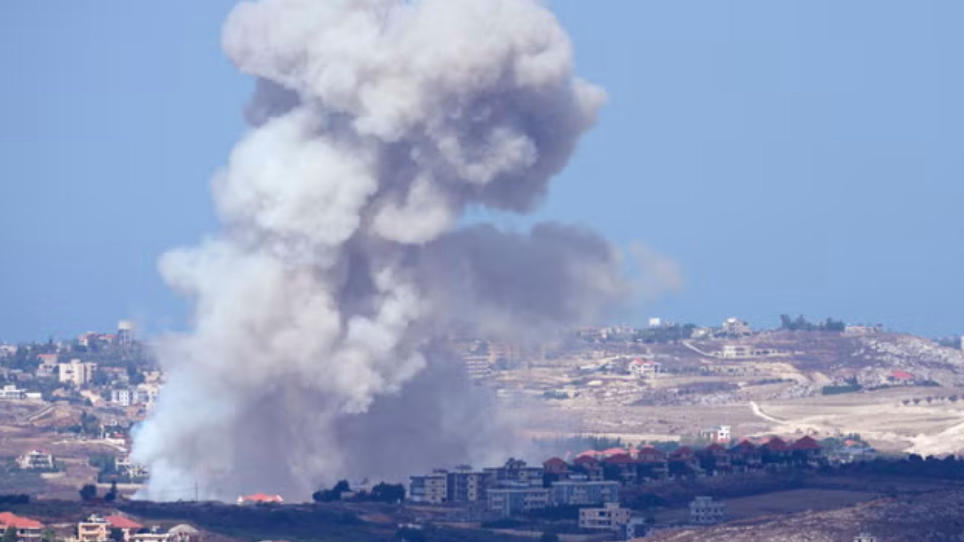

Israel launched airstrikes on Lebanon after rockets targeted its territory on Saturday. As a result, two people, including a child, lost their lives. This marked the most intense exchange of fire since Israel and Hezbollah agreed to a ceasefire nearly four months ago.
Israel Orders More Strikes
Later that night, Israeli Prime Minister Benjamin Netanyahu and Defence Minister Israel Katz ordered another round of attacks. According to the defence ministry, these strikes hit “dozens of Hezbollah locations in Lebanon.” Earlier in the day, Israel had already carried out airstrikes in response to rocket fire from southern Lebanon, where a ceasefire had been in place since November.
Casualties and Damage in Lebanon
Lebanon’s health ministry confirmed that the attack struck the southern village of Touline. Unfortunately, two people, including a child, were killed. In addition, eight others sustained injuries, including two children.
Lebanon’s Response
In reaction, Lebanese Prime Minister Nawaf Salam urged the army to take necessary steps to maintain security in the south. However, he made it clear that Lebanon does not want to return to war.
Hezbollah’s Continued Attacks
Since October 8, 2023, Hezbollah has been firing rockets, drones, and missiles into Israel. This began one day after Hamas’ attack on Israel on October 7. Consequently, the conflict escalated into full-scale war in September. Israel responded with massive airstrikes, killing many top Hezbollah leaders. As a result, more than 4,000 people died in Lebanon, and about 60,000 Israelis were forced to leave their homes.
Israel’s Delayed Withdrawal
As part of a ceasefire deal on November 27, Israel was supposed to leave Lebanese territory by late January. However, the deadline was extended to February 18. Despite this, Israel still occupies five locations in Lebanon near its northern border. Furthermore, it has continued air and drone strikes, killing several Hezbollah members.
Calls for Peace
Meanwhile, Lebanon has urged the United Nations to pressure Israel to withdraw completely. In response, the United Nations Interim Force in Lebanon (UNIFIL) expressed deep concern about rising tensions. It also urged all parties to protect the progress made in the ceasefire agreement.