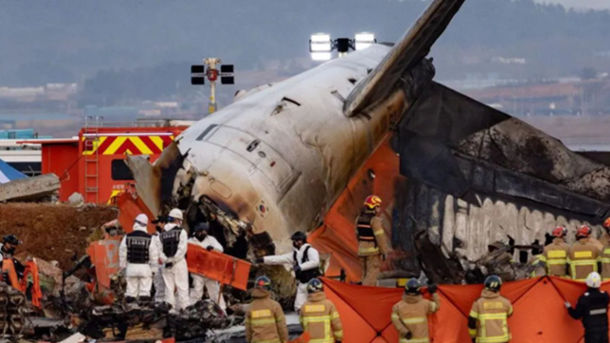
South Korea is taking decisive steps to enhance airport safety. Following December’s
tragic plane crash that claimed 179 lives, the government announced changes to navigation barriers and runway safety areas at several airports.
Muan Airport Crash Sparks Urgent Action
The Jeju Air flight was bringing passengers home from Thailand after Christmas. However, during an emergency landing at Muan Airport, the plane hit a concrete barrier at the end of the runway, leading to a devastating explosion. This incident became South Korea’s deadliest aviation disaster.
Experts pointed out that the concrete structure housing a navigation system, called a localiser, contributed to the high number of casualties. Consequently, authorities have identified similar systems at other airports that require modification.
Navigation Barriers to Be Replaced
In light of the crash, inspectors reviewed all airports in South Korea. They found nine concrete-based navigation systems that need to be changed, including those at Muan and Jeju International Airport. Moving forward, the government plans to replace these barriers with lightweight, breakable structures or bury them underground.
Specifically, Muan Airport will see the removal of its existing concrete mounds. Meanwhile, the localiser will be reinstalled using safer, breakable materials. These adjustments aim to reduce risks during emergencies.
Runway Safety Upgrades Announced
Moreover, seven airports will have their runway safety zones extended. Investigations revealed that several safety areas were shorter than the recommended 240 meters (787 feet). For instance, Muan Airport’s safety area measured only 200 meters. These zones are critical for minimizing damage when planes overshoot, undershoot, or veer off the runway.
Warnings Ignored Before the Crash
Notably, a manual from Muan Airport flagged the concrete barrier’s unsafe location before the crash. The document, published in early 2024, recommended relocating the structure during a planned airport expansion. However, these warnings went unaddressed.
Investigation Ongoing
The cause of the crash is still under investigation. The pilot had reported a bird strike during the first landing attempt. On the second attempt, the landing gear failed to deploy, resulting in the disaster.
Additionally, the plane’s black boxes stopped recording four minutes before the crash, complicating the investigation.
Tragic Losses
The Boeing B737-800 carried 179 passengers aged between three and 78 years old. Most passengers were in their 40s, 50s, and 60s. Tragically, only two crew members survived the crash.
Ensuring Safer Flights
In response to the tragedy, South Korea is prioritizing safety upgrades. These include replacing hazardous structures, enhancing runway safety areas, and implementing recommendations from the crash investigation. These changes aim to prevent such disasters in the future.