
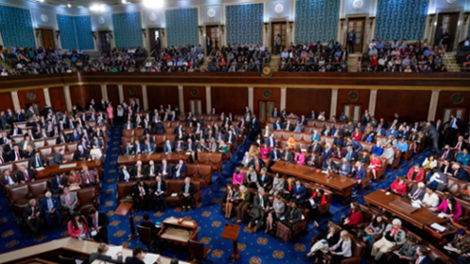

Republicans in the US House of Representatives passed a massive government spending bill on Tuesday. As a result, President Donald Trump gained a major boost for his 2025 agenda.
The House approved the bill with a 217-215 vote. Initially, Speaker Mike Johnson struggled to secure enough support. Therefore, he delayed the vote earlier in the day. However, after intense negotiations, Republicans finally rallied enough votes to push it through.
Debate Over Spending Cuts
Many Republicans demanded stricter spending controls. The bill includes $4.5 trillion in tax cuts. While it funds them partly through spending cuts, it also increases government debt. Consequently, some conservatives wanted deeper reductions in spending.
Representative Thomas Massie of Kentucky, a fiscal conservative, opposed the bill. In fact, he was the only Republican to vote against it. Meanwhile, all Democrats rejected the bill. However, one Democrat did not participate in the vote.
Key Budget Provisions
The budget proposes $2 trillion in spending cuts over the next decade. Additionally, it includes $100 billion for immigration enforcement and military expansion. Moreover, it extends Trump-era tax breaks set to expire this year.
However, the bill must clear several hurdles before becoming law. First, lawmakers must merge it with a Senate budget in a process called reconciliation. Then, even if both chambers agree, they must finalize details before sending it to Trump for approval.
Intense Negotiations Before the Vote
House Republican leaders faced difficulties in securing votes. Therefore, Speaker Johnson and Majority Leader Steve Scalise worked tirelessly to persuade undecided members. Furthermore, Trump personally called some holdouts, urging them to support the bill.
"Trump helped us with a number of members," Scalise told reporters. "Talking to anybody that we asked that really needed to clarify things."
Three representatives who initially opposed the bill—Tim Burchett, Victoria Spartz, and Warren Davidson—eventually changed their stance and voted in favor.
After the vote, Speaker Johnson remained optimistic. "We have a lot of hard work ahead, but we will deliver the America First agenda," he said. "We're celebrating tonight, and we’ll get back to work in the morning."
Democrats Strongly Oppose the Bill
On the other hand, Democrats criticized the bill, calling it a tax break for the wealthy. In addition, they argued it would harm low-income families relying on Medicaid, a government health program.
To ensure full participation, Democrats made extra efforts. For example, Representative Brittany Petterson arrived with her infant while on maternity leave to cast her vote.
What’s Next?
Now, the Senate faces pressure to consider the House’s plan. Since Trump supports it, the debate will likely intensify. However, the Senate has introduced a different budget, making further negotiations inevitable.