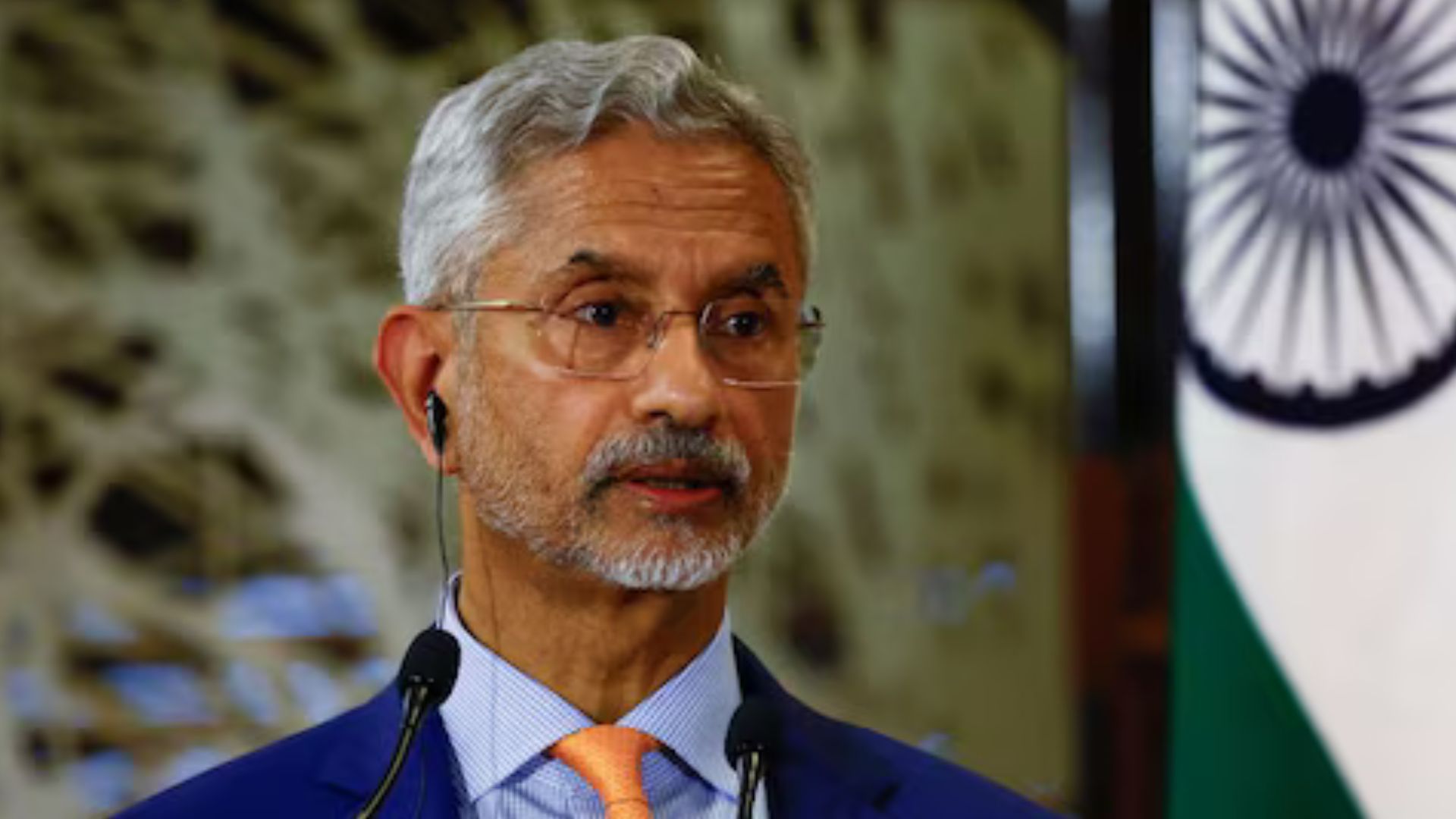
External Affairs Minister Dr. S.
Jaishankar is on an official six-day visit to the United Kingdom and Ireland from March 4 to 9, 2025. His trip includes high-level discussions and diplomatic engagements aimed at strengthening India's ties with both nations.
Strengthening India-UK Relations
Jaishankar’s visit to the UK comes at a crucial time. He will hold talks with British Foreign Secretary David Lammy, focusing on key issues, including the ongoing negotiations for the India-UK Free Trade Agreement (FTA). The trade deal aims to boost economic relations between the two countries.
India and the UK share a Comprehensive Strategic Partnership that covers various sectors such as defence, security, economy, health, education, and people-to-people exchanges. In addition to diplomatic discussions, Jaishankar will inaugurate new Indian consulates in Belfast and Manchester, expanding India's diplomatic presence in the UK. These new consulates were announced by Prime Minister Narendra Modi during the G20 summit in Brazil in November.
Jaishankar will also deliver a speech at Chatham House, a leading think tank in London, on March 5. His session, titled "India’s Rise and Role in the World," will highlight India’s growing global influence and its approach to international challenges.
India’s Position Amid Global Tensions
Jaishankar’s UK visit coincides with intense global discussions about the Russia-Ukraine war. His meeting with David Lammy follows a major diplomatic standoff between US President Donald Trump and Ukrainian President Volodymyr Zelenskyy, which has drawn worldwide attention.
Recently, UK Prime Minister Keir Starmer hosted a summit with European leaders in London, urging a unified approach to ending the war. "This is not a moment for more talk. It’s time to act. Time to step up and lead and to unite around a new plan for a just and enduring peace," Starmer said.
India has maintained a neutral stance on the war. New Delhi abstained from voting on two recent UN resolutions supported by Ukraine and the US. Furthermore, India has shifted its diplomatic language from referring to the warring nations as "two parties to the conflict" to "parties concerned." This broader term includes the US, Ukraine, Russia, and Europe, reflecting India's careful diplomatic balancing act.
Observers will closely watch whether Jaishankar and Lammy discuss India’s stance on the war and its potential role in peace efforts. However, given India’s strategic neutrality, Jaishankar is unlikely to align with any particular side in the conflict.
Progress on India-UK Free Trade Agreement
A key focus of Jaishankar’s visit is the India-UK Free Trade Agreement (FTA). Negotiations, which have been ongoing for years, recently gained momentum after British Trade Secretary Jonathan Reynolds visited New Delhi in February 2025.
The trade deal aims to reduce tariffs and increase investments in sectors such as pharmaceuticals, financial services, and technology. Although disagreements over market access and tariff reductions have caused delays, renewed discussions indicate progress toward finalizing the agreement.
Strengthening India-Ireland Relations
From March 6 to 7, Jaishankar will travel to Ireland to meet his Irish counterpart, Simon Harris, along with other officials and members of the Indian diaspora. India and Ireland share strong democratic values, cultural ties, and growing economic cooperation.
A significant outcome of the visit is expected to be the signing of a Memorandum of Understanding (MoU) for a diplomat exchange program. Additionally, the two nations plan to establish the India-Ireland Joint Economic Commission to promote deeper economic collaboration.
This visit marks the highest-level diplomatic engagement between India and Ireland since Prime Minister Narendra Modi’s trip to Dublin in 2015. It underscores India’s interest in strengthening ties with smaller European nations beyond its primary partnerships with the UK, France, and Germany.
India’s Global Balancing Act
Jaishankar’s UK and Ireland visit comes at a time of shifting global dynamics. As India rises as a major global player, it continues to navigate complex diplomatic landscapes involving the US, Europe, Russia, and Ukraine.
India has consistently advocated for peaceful negotiations to resolve conflicts. Prime Minister Modi recently reiterated this stance during talks with European Commission President Ursula von der Leyen, emphasizing the need for a "just and lasting peace" based on international law and territorial sovereignty.
Meanwhile, European leaders are debating new approaches to ending the Ukraine conflict. French President Emmanuel Macron and UK officials have proposed a partial one-month truce covering air, sea, and energy infrastructure attacks, but not ground combat. However, differences remain, with the UK distancing itself from France’s proposal and Ukraine seeking stronger security guarantees before agreeing to a ceasefire.
As Jaishankar engages with leaders in London and Dublin, he will need to balance these geopolitical challenges while focusing on strengthening India’s bilateral partnerships.