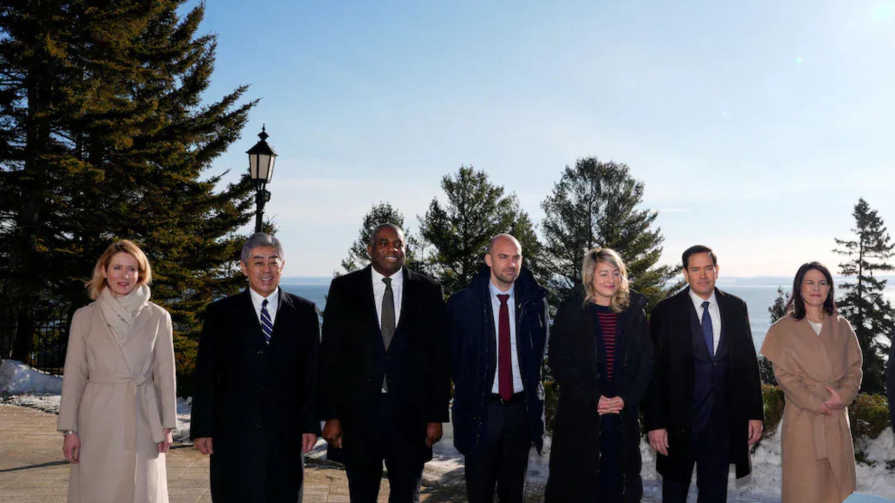
G7 nations are considering new sanctions on Russia and exploring ways to use frozen Russian assets to strengthen Ukraine’s defense. Meanwhile, US President Donald Trump continues pushing for a ceasefire with Moscow.
G7 Warns Russia of More Sanctions
During a meeting in Canada, G7 foreign ministers discussed penalizing Russia if it refuses to agree to a 30-day ceasefire. Ukraine has already accepted, but Russia has not yet committed.
As a result, the G7 may tighten restrictions on Russian oil exports. Moreover, leaders are considering redirecting revenues from €300 billion ($325 billion) in frozen Russian central bank assets. These funds were seized in 2022.
Previously, France and Germany opposed seizing Russian assets in the European Union. However, they are now reconsidering their stance. In addition, discussions with the United Kingdom and other allies are underway on how to use these funds for Ukraine.
Focus Shifts to Russia
Following the meeting, US Secretary of State Marco Rubio emphasized that Russia must also make compromises in the peace process.
“I’ve never heard President Trump say that Russia has a right to take all of Ukraine and do whatever they want there,” Rubio stated.
At first, Trump’s team pressured Ukraine to accept a quick resolution. However, since Russia has hesitated to agree, the focus has now shifted toward Moscow.
“The ball is now in Russia’s court when it comes to Ukraine,” said Canadian Foreign Minister Mélanie Joly.
Meanwhile, the push to hold Russia accountable follows a tense meeting last month between Trump and Ukrainian President Volodymyr Zelenskyy. Soon after, Ukraine accepted Trump’s ceasefire plan after Washington temporarily halted military aid and intelligence sharing. These have now resumed.
Territorial Disputes Stall Peace Talks
So far, Russian President Vladimir Putin has shown support for a ceasefire, but he insists that key issues remain unresolved. At the same time, Russian forces have advanced in the Kursk region, where Ukraine reclaimed 1,000 square kilometers (386 square miles) last year.
Meanwhile, Zelenskyy admitted that territorial disputes remain the biggest challenge in negotiations.
“Ceasefire and territories are the most difficult moments of a negotiation,” he said. “The first is difficult because it requires courage and political will, the second because it requires a difficult dialogue.”