
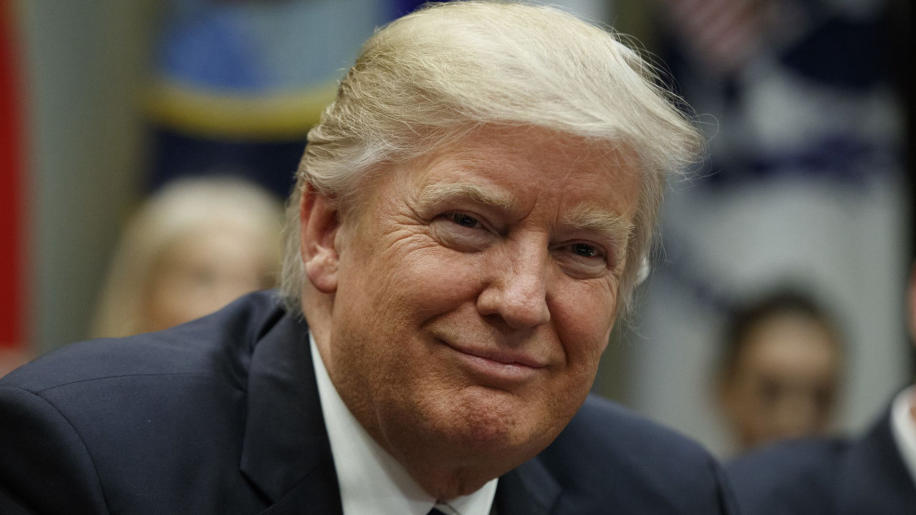

US President Donald Trump announced on Monday that he will introduce new tariffs this week, emphasizing that he would be “very kind” to trading partners. Although this risks causing global market disruptions, Trump believes that these tariffs are necessary to correct unfair trade imbalances. He suggested that the “reciprocal tariffs” might be announced as soon as Tuesday night or Wednesday.
Why Trump is Moving Forward with Tariffs
Trump argues that the US has been “ripped off by every country in the world” for years. He confidently predicted that these tariffs would result in a “Liberation Day” for the US, signaling a victory in the ongoing trade battle. Trump also indicated that some tariffs may focus on specific sectors, though he reassured the public, “We’re going to be very nice, relatively speaking, we’re going to be very kind.”
Global Trade Concerns and Reactions
Critics, however, are concerned that this approach could spark a global trade war. Countries like China, Canada, and the European Union may retaliate. In response, China, South Korea, and Japan have already agreed to strengthen their free trade agreements ahead of the expected tariff announcement. Despite these potential reactions, Trump dismissed the idea that his actions would push US allies closer to Beijing, also suggesting that a potential deal on TikTok could be tied to China tariffs.
White House Strategy and Market Impact
On Wednesday, the White House plans to announce country-based tariffs. However, Trump has made it clear that he could still impose additional sector-specific charges. His statements have already caused market instability, with European and Asian markets falling, although the Dow Jones and S&P 500 managed to show some gains. The uncertainty surrounding Trump’s move has intensified after his comment that the tariffs would apply to “all countries”.
Global Tariff Impact and Economic Concerns
Reports from the Wall Street Journal suggest that Trump’s advisers are considering global tariffs of up to 20 percent, affecting nearly all of the US’s trading partners. Trump mentioned that these new tariffs would be “far more generous” than the ones already levied against US products, signaling an even stronger stance.
Meanwhile, Trump’s focus on tariffs is raising concerns about a possible US recession. Goldman Sachs recently increased its recession probability forecast from 20 percent to 35 percent. The firm attributes this change to lower growth, diminished confidence, and indications from the White House that it may tolerate economic pain. This has also led to an adjustment in the inflation forecast for 2025.
Retaliatory Measures and Future Expectations
Countries like China and Canada have already imposed counter-tariffs on US goods, while the EU is preparing its own measures by mid-April. These retaliations could continue after Wednesday’s tariff announcements. Kristalina Georgieva, head of the IMF, expressed concerns about the anxiety caused by Trump’s tariffs, though she believes their global economic impact will not be significant. Ryan Sweet from Oxford Economics suggests that Trump may focus on the largest trade offenders when implementing these tariffs.
Sector-Specific Tariffs on the Horizon
In addition to reciprocal country tariffs, Trump is likely to introduce new tariffs on specific sectors, such as pharmaceuticals and semiconductors. He has already announced that automobile tariffs will go into effect on Thursday. Economists predict that the upcoming tariffs will focus on the 15 percent of US trade partners that have significant trade imbalances with the country. This group includes China, the EU, Mexico, Vietnam, Taiwan, Japan, South Korea, Canada, and India.
Global Trade Partners' Responses and Adjustments
In light of these developments, US trade partners are rushing to minimize their exposure to these tariffs. Reports suggest that India may reduce some duties on US imports. Christine Lagarde, President of the European Central Bank, emphasized that Europe must move toward economic independence, calling the current trade situation an “existential moment” for Europe.
Meanwhile, UK Prime Minister Keir Starmer held discussions with Trump on a potential UK-US trade deal, and German Chancellor Olaf Scholz stated that the EU would respond firmly but remain open to compromise.
Possible Reversals of Tariff Decisions
Experts, such as Greta Peisch, a partner at Wiley Rein, believe it is possible that new tariffs could be reduced or delayed. In fact, in February, the US delayed heavy tariffs on Mexican and Canadian imports as both countries worked toward negotiations.