
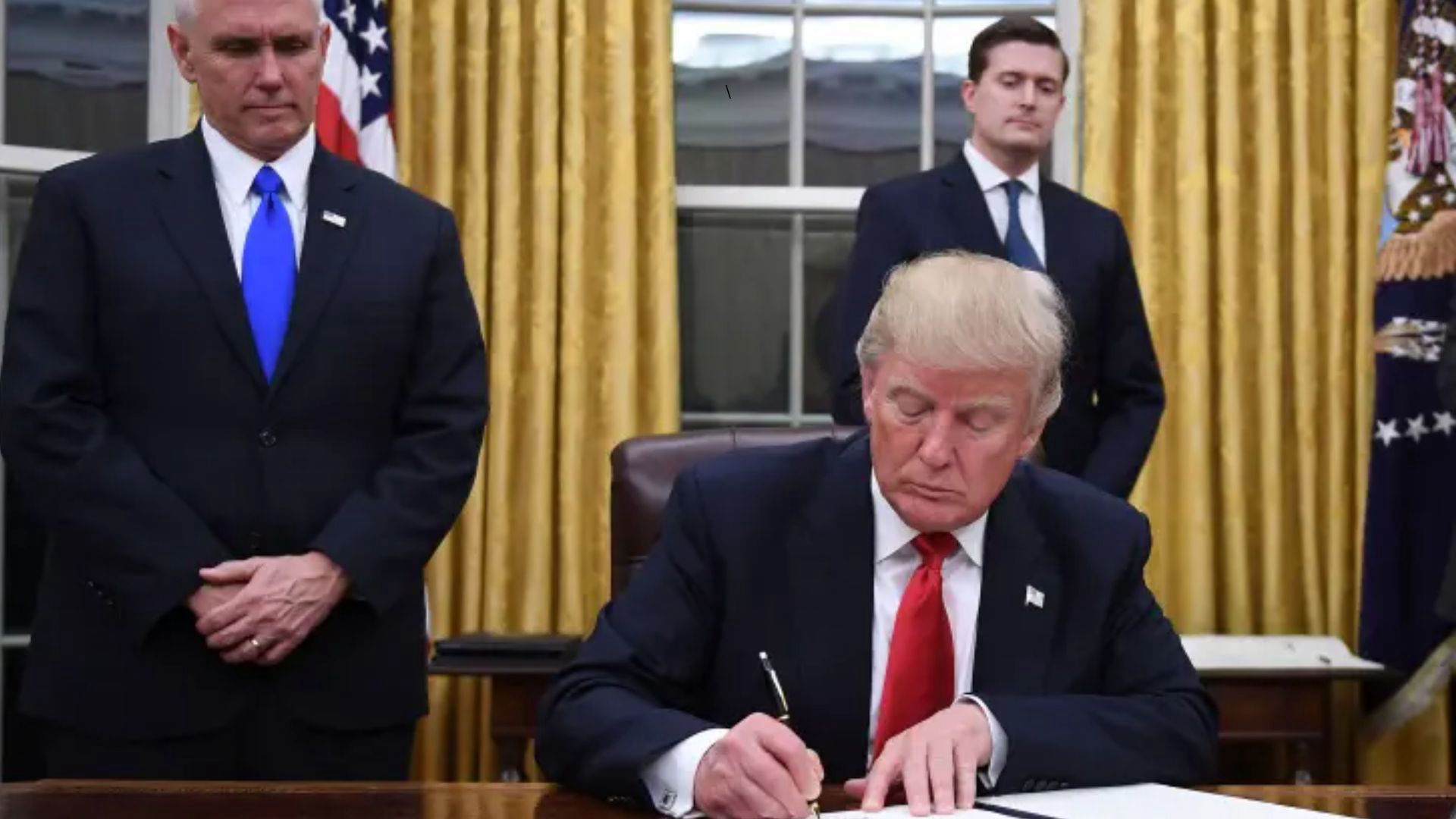

US President Donald Trump signed a new Executive Order on Tuesday that dramatically increases tariffs on imports from China. The new order boosts the tariff rate to 245%, marking a sharp escalation in the ongoing trade war between the two global powers.
Why the Tariffs Were Increased
According to a White House factsheet, this decision is a response to China’s countermeasures against earlier US tariffs. The document says that since the US imposed duties on what Trump calls “Liberation Day,” more than 75 countries have reached out to negotiate new trade deals. However, “except for China, which retaliated,” no progress was made with Beijing.
The Trump administration argues that this move will help protect the country’s economic and national security. But economists continue to disagree. Many experts warn that such high tariffs could hurt American consumers and businesses.
Trump Keeps It Low-Key
Unlike past announcements, this time there was no grand event or speech. Trump’s usual style of turning such moves into political theater was missing.
China Responds Firmly
The trade dispute between the US and China has now turned into a full-blown trade war. It all began when Trump slapped tariffs on Chinese imports, blaming Beijing for its alleged role in supplying fentanyl. Since then, tariffs have gone up multiple times as China refused to back down.
Earlier this year, Trump had already added a 145% tariff on several Chinese products. The new hike to 245% comes on top of those previous measures.
In response, on April 16, China said it was “not afraid” of fighting a trade war. The Chinese government also repeated its request for open talks.
Foreign Ministry spokesperson Lin Jian stated,“If the US really wants to resolve the issue through dialogue and negotiation, it should stop exerting extreme pressure, stop threatening and blackmailing, and talk to China on the basis of equality, respect and mutual benefit.”
These comments came just before the US confirmed the increased tariff rates.
What Happens Next?
As tensions rise, both countries appear unwilling to make concessions. Trump has made it clear that China must make the next move. Meanwhile, Beijing insists on fair treatment and mutual respect if dialogue is to happen.
The tariff war continues to fuel uncertainty in global markets, while industries and consumers brace for its long-term impact.