

When the Catholic Church selects a new pope, many ancient customs come into play. One of the most powerful is choosing a new name. This name carries deep spiritual and historical meaning. It often reveals the path the new pope plans to take.
Although not required by Church law, most popes change their names right after their election. This tradition started centuries ago and has become a vital part of the papal process. So, how did this begin? Why do popes pick certain names? Are any names avoided? And how does the world find out the new name?
The Tradition Begins in the Sixth Century
Jesus renamed Simon to Peter, but that happened before he led the Church. The first pope to change his name during election was Pope John II. He was born Mercurius, named after a Roman god. He felt that name didn’t suit a Christian leader. So, he chose a new one.
Later, in the 10th century, Peter Canepanova took the name John XIV. He avoided calling himself Peter II, out of respect for St. Peter.
Over time, this practice became standard. According to historian Liam Temple from Durham University, non-Italian popes often picked Italian-sounding names. This helped them fit in with their predecessors.
Still, a few popes kept their birth names. For instance, Marcellus II and Adrian VI did so in the 1500s.
Why Popes Choose Certain Names
Each name a pope chooses carries a message. It often honors a saint or previous pope. That choice reflects values, goals, or admired legacies.
Temple told CNN, “Linking to the names of previous popes who weathered crises, inspired reform, or were incredibly popular can often, although not always, play a role in the choosing of a name.”
For example, Pope Francis picked his name to honor St. Francis of Assisi. He admired the saint’s love for peace, nature, and the poor. Those became central themes in his leadership.
Similarly, Pope Benedict XVI honored both St. Benedict and Pope Benedict XV. He aimed to promote peace and unity, especially during challenging times.
Some Names Are Rarely Used
Some names are avoided due to tradition or controversy. “Peter” is the clearest example. Popes avoid using it to honor St. Peter. Many also believe a future pope named Peter II would be the last before the end of time.
Other names carry negative histories. Temple pointed out that “Urban” is unlikely. Urban VIII began the trial of Galileo, which still sparks debate on science and faith. Likewise, “Pius” remains controversial. Critics often question Pope Pius XII’s role during World War II. So, future popes may skip that name.
What Name Might the Next Pope Pick?
If the next pope wants to signal reform, he might choose a name tied to justice. For instance, “Leo” honors Pope Leo XIII, who supported workers' rights. “Innocent” could reflect efforts against Church corruption.
If the pope comes from the Global South, he might draw from early African popes like Gelasius, Miltiades, or Victor. These names highlight the Church’s diverse roots.
So far, 44 papal names have only been used once. One rare example is Pope Francis. When elected in 2013, he made history by choosing a brand-new name. Temple noted, “It had been around 1,100 years since the last uniquely named pope in the form of Pope Lando.”
The Most Popular Papal Names
Some names remain very common. “John” leads the list, used by 21 popes. However, an error in counting after John XIV caused confusion in numbering.
“Gregory” and “Benedict” follow, used 16 and 15 times. “Innocent” and “Leo” were chosen 13 times each. It’s worth noting that Benedict X was later removed from official records, which shifted the numbering of later Benedicts.
How the New Name Is Announced
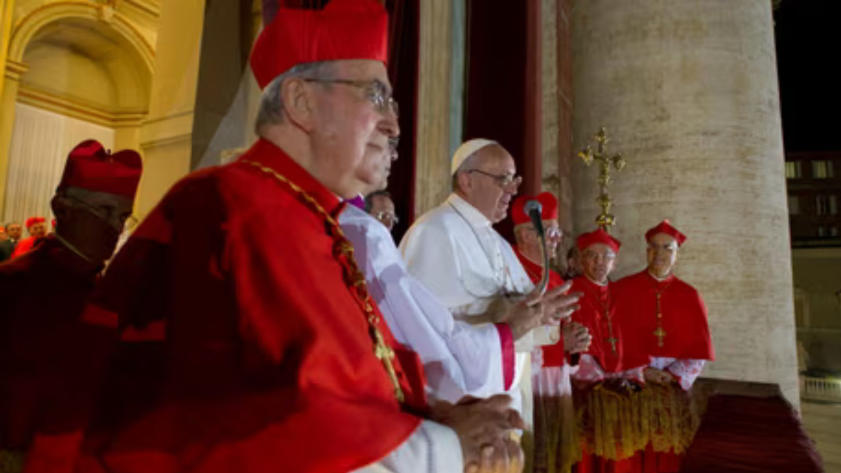
Once the cardinals elect a new pope, white smoke rises from the Sistine Chapel. Church bells ring across Vatican City. Then, a senior cardinal steps onto the balcony above St. Peter’s Square.
He speaks in Latin, starting with the words, “Habemus Papam,” meaning “We have a pope.”
He announces the new pope’s given names in Latin. However, the surname remains unchanged. For example, when Jorge Mario Bergoglio became pope in 2013, his names became “Giorgio Marium,” but “Bergoglio” stayed the same. His chosen name “Franciscum” came at the end.