
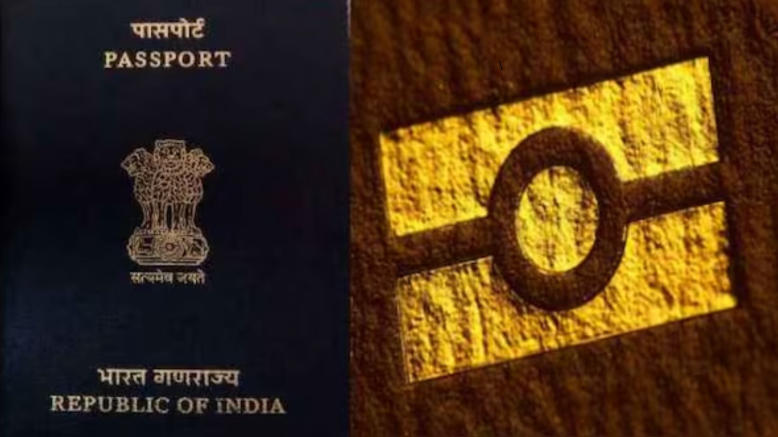

India has started updating its passport system with a high-tech version called the e-passport. The government launched this upgrade to improve identification and strengthen security. The new e-passports combine traditional paper passports with modern electronic technology.
The Ministry of External Affairs began issuing these passports under the Passport Seva Programme 2.0, which started on April 1, 2024. Currently, only a few cities offer e-passports, but the government plans to make them available across India in the coming months.
What Are E-Passports and How Do They Work?
India’s e-passports have an RFID chip and an antenna inside a special layer. This chip stores important biometric and personal details — such as the passport holder’s name, date of birth, photograph, fingerprints, and passport number.
To protect this data, the passports use strong encryption and global security methods like Basic Access Control (BAC), Passive Authentication (PA), and Extended Access Control (EAC). These features make it hard for anyone to tamper with the information.
You can recognize an e-passport easily. It has a gold-colored symbol on the front cover, which sets it apart from regular passports.
Why Are E-Passports Important?
E-passports are becoming the global standard for secure and smooth international travel. These passports help speed up immigration checks by allowing contactless and automated verification at e-gates.
Besides saving time, they also improve safety. The chip inside helps prevent identity theft, passport fraud, and other security issues at borders.
India’s move to adopt e-passports brings it in line with the standards set by the International Civil Aviation Organization (ICAO). This puts Indian travelers on par with citizens from countries already using advanced biometric passports.
So far, over 120 countries — including the United States, Canada, Brazil, France, Italy, and Japan — use chip-enabled passports. India now officially joins this global group.
Where Can You Get an E-Passport in India?
As of now, 13 cities are issuing e-passports. These include:
-
Nagpur
-
Bhubaneswar
-
Jammu
-
Goa
-
Shimla
-
Raipur
-
Amritsar
-
Jaipur
-
Chennai
-
Hyderabad
-
Surat
-
Ranchi
-
Delhi
The Ministry has said this is just the start. By mid-2025, all Passport Seva Kendras across India will provide e-passports.
In Tamil Nadu, the process began on March 3, 2025. The Regional Passport Office in Chennai started issuing e-passports, and by March 22, the state had issued 20,729 e-passports.
How Can You Apply for an E-Passport?
Applying for an e-passport is easy. The process is the same as applying for a regular passport:
-
Visit the Passport Seva Portal.
-
Fill out the application form.
-
Pay the required fee.
-
Book an appointment at a Passport Seva Kendra (PSK) or Post Office Passport Seva Kendra (POPSK).
-
During the appointment, your photo and fingerprints will be taken.
All e-passports are printed and chipped at the India Security Press in Nashik. This keeps the production process within the country, in line with the Make in India campaign. It also helps protect your personal data.
It’s important to know that getting an e-passport is not compulsory. Your current passport remains valid until it expires and can still be used for travel.