
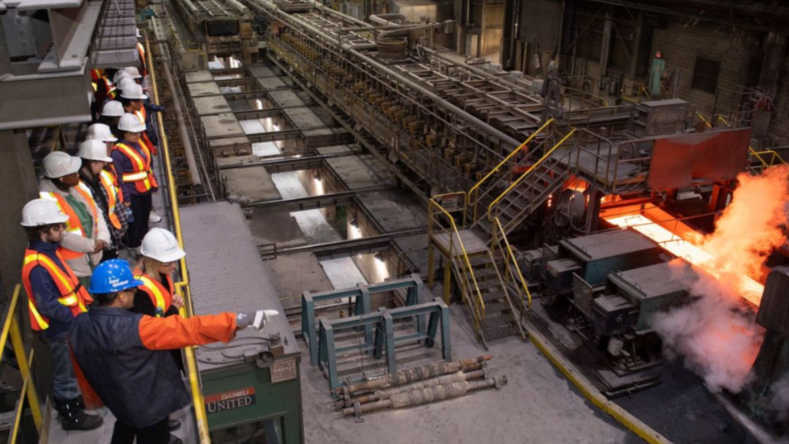

Canada’s steel industry has warned of severe consequences following a sharp increase in US tariffs on imported steel and aluminium. On May 30, US President Donald Trump announced during a rally in West Mifflin, Pennsylvania, that his administration would raise tariffs to 50 percent. These new rates will start from Wednesday.
Trump described the move as necessary to protect American manufacturing. He also promoted a $15 billion partnership between Nippon Steel and US Steel. He said the tariffs would serve as a “fence” to shield domestic production.
Tensions Rise Despite Diplomatic Visit
Just weeks earlier, Canadian Prime Minister Mark Carney visited the White House. He hoped to improve the strained ties between the two countries. During the visit, both leaders showed interest in renegotiating the United States-Mexico-Canada Agreement (USMCA), which replaced the earlier NAFTA deal. That agreement is due for review next year.
Canadian Leaders and Industry Slam the Decision
Canadian officials and business leaders strongly criticized the new tariffs. They argued that this move would damage a vital sector that already faces pressure from previous trade policies. Canada is the largest foreign supplier of steel and aluminium to the US. In 2023, it supplied nearly 25% of American steel imports and half of its aluminium imports.
Catherine Cobden, president of the Canadian Steel Producers Association, told the Financial Times, “A 25 per cent tariff is difficult, but a 50 per cent one is catastrophic.” She added, “Steel tariffs at this level will create mass disruption and negative consequences across our highly integrated steel supply chains and customers on both sides of the border.”
Cobden also said these tariffs would “essentially close the US market” to Canadian companies and lead to “unrecoverable consequences.”
The Aluminium Association of Canada said it was waiting for formal legal confirmation before responding fully.
Canadian Government Promises Firm Action
Dominic LeBlanc, Canada’s international trade minister, vowed to defend the country’s interests. He said, “As we negotiate a new economic and security relationship with the US, Canada’s new government will stand strong to get the best deal for Canadians.”
Trump’s Remarks Add Fuel to the Fire
Earlier in the week, Trump said Canada would need to pay $61 billion to join a proposed US “Golden Dome” missile defense system. However, he offered to waive the cost if Canada agreed to become America’s 51st state.
Carney’s spokesperson responded firmly. “The prime minister has been clear at every opportunity, including in his conversations with President Trump, that Canada is an independent, sovereign nation, and it will remain one,” the spokesperson said.
Canada Retaliates with Tariffs of Its Own
In response, Canada has introduced retaliatory tariffs. These include C$12.6 billion on US steel, C$3 billion on aluminium, and C$14.2 billion on other American goods. These are part of broader measures, including earlier tariffs on C$30 billion worth of US products.
In April, Canada eased some restrictions, especially for US carmakers and manufacturers. However, the latest US move could lead to fresh countermeasures. Canadian ministers and provincial leaders plan to meet Monday in Saskatoon to discuss how to diversify Canada’s economy and reduce dependence on US trade.
Workers and Business Groups Demand Action
Marty Warren, national director of the United Steelworkers in Canada, condemned the move. He said, “This isn’t trade policy, it’s a direct attack on Canadian industries and workers.” He urged immediate action to protect jobs.
Meanwhile, Goldy Hyder, president of the Business Council of Canada, advised a more cautious approach. He said Canada should avoid reacting emotionally. “These moving goalposts is just a strategy to try and get Canada to give more,” Hyder explained. Instead, he said Canada should focus on renewing the USMCA deal.