

A pro-Israel demonstration in the U.S. turned into a violent scene on Monday. A man threw Molotov cocktails and used a makeshift flamethrower to attack people at the event. Authorities identified the suspect as Mohamed Sabry Soliman, aged 45.
According to the Associated Press, six people suffered burn injuries in the attack. The suspect was also injured and taken to a hospital for treatment. Videos shared on social media showed him holding firebombs during the incident.
What Is a Molotov Cocktail?
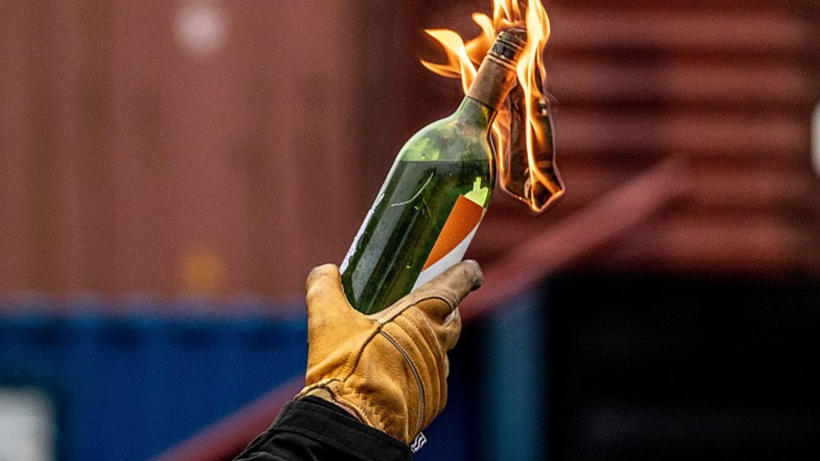
A Molotov cocktail is a simple homemade firebomb. It consists of:
-
A glass bottle filled with flammable liquid, usually gasoline
-
A wick (like a cloth or rag) placed in the bottle’s neck
Before throwing, the attacker lights the wick. When the bottle hits its target, it breaks and ignites, setting everything nearby on fire.
Where Does the Name Come From?
The term "Molotov cocktail" dates back to World War II. It is named after Vyacheslav Molotov, who was the Soviet Union’s foreign minister during that time.
In 1939, during the Winter War between the Soviet Union and Finland, Molotov falsely claimed that the USSR was dropping food aid, not bombs, over Finland. The Finnish people sarcastically called the bombs "Molotov bread baskets."
Later, when Finnish fighters made firebombs to fight Soviet tanks, they called them "Molotov cocktails"—a drink to go with the bread baskets.
Why Did Finland Use Them?
Finland had limited weapons during the war. So they invented the Molotov cocktail as a cheap but powerful way to stop Soviet tanks.
These tanks ran on gasoline, making them highly flammable. Finnish troops used the bottles to target fuel tanks, setting the vehicles on fire.
In 1939, the Alko liquor company (a state-owned business in Finland) produced 500,000 Molotov cocktails to help the war effort.
How Did They Work in Battle?
Molotov cocktails were especially useful in difficult terrains, like forests and snowy landscapes. Soviet tanks couldn’t move easily in these areas.
Finnish fighters used this to their advantage. They would isolate the tanks from their infantry troops and attack using firebombs. This helped Finland push back despite being outnumbered.
Why Are They Still Used Today?
Molotov cocktails are:
-
Cheap to make
-
Easy to carry
-
Effective at causing damage
Because of this, they’ve appeared in many protests, uprisings, and terror attacks around the world—just like the recent one in the U.S.
What Does This Attack Mean?
The attack at the pro-Israel rally shows how dangerous and easy to use these weapons are. It also highlights the risk of homemade weapons being used in crowded public events.
Authorities continue to investigate the incident. Meanwhile, the use of Molotov cocktails reminds us that even basic tools can cause major harm when used for violence.