
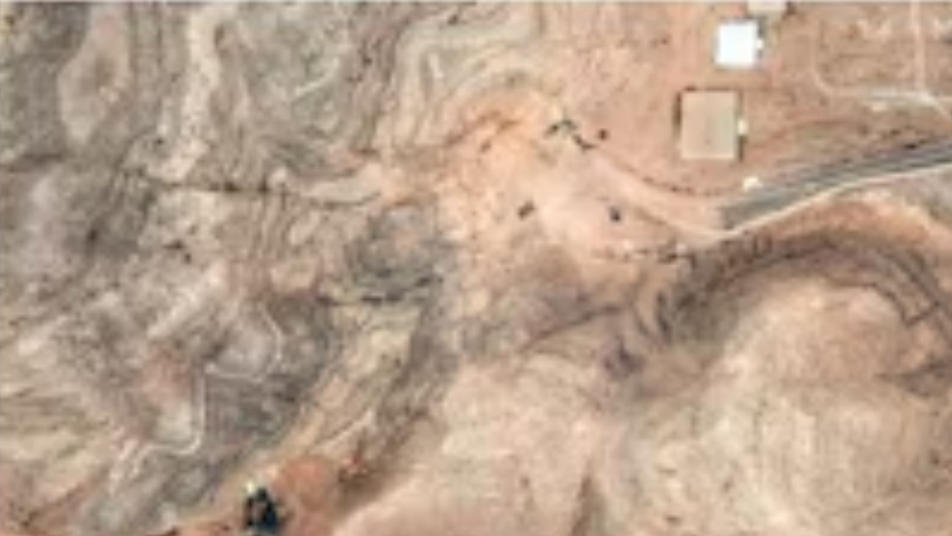

The United States has revealed new information about its recent military operation against Iran’s nuclear program. The Pentagon shared how the US military bombed three important nuclear sites in a highly secret and well-coordinated mission. The operation was part of rising tensions between the US, Iran, and Israel.
Here’s a breakdown of how the mission unfolded, who was involved, and how Iran tried to protect its facilities.
Why Did the US Strike Iran’s Nuclear Sites?
Over the weekend, the United States launched airstrikes on three Iranian nuclear locations: Natanz, Fordow, and Isfahan. These sites are central to Iran’s nuclear programme.
The US decided to join Israel’s efforts to weaken Iran’s nuclear capabilities, which have been a major source of tension in the region. President Donald Trump later claimed that the American forces had “obliterated” the sites. However, several media outlets reported that while the attacks caused damage, they may have only set back Iran’s program by a few years—not destroyed it completely.
What Makes This Operation Special?
US Defense Secretary Pete Hegseth described the mission as “the most secret and most complex military operation in history.” He did not go into detail, but General Dan Caine, Chairman of the Joint Chiefs of Staff, shared more specific insights.
According to Gen. Caine, the operation involved a very high level of planning, secrecy, and advanced technology. Everything had to go exactly as planned to avoid detection and ensure success.
Who Was Involved in the Mission?
The bombing team consisted of highly trained US Air Force members. The crew included both men and women with ranks from captain to colonel. Most were graduates of the elite Air Force Weapons School in Nevada, which prepares officers for the most complex military missions.
The operation lasted 37 hours, from takeoff to return. Gen. Caine explained the emotional cost, saying, “When the crews went to work on Friday, they kissed their loved ones goodbye, not knowing when or if they’d be home. Late on Saturday night, their families became aware of what was happening.”
How Did the US Prepare for the Mission?
Planning the airstrikes required deep technical work. Gen. Caine revealed that experts working on the mission used supercomputers extensively. In fact, he said the team became the “biggest users of supercomputer hours” in the US at one point.
The mission used B-2 Stealth bombers, which are specially designed to avoid radar detection and fly long distances undetected. These aircraft are often used for the most sensitive operations.
What Happened After the Bombing?
Once the mission ended, the B-2 bombers returned to their base in Missouri. Families of the crew members gathered at the base, waving flags and crying as they welcomed their loved ones back. Gen. Caine described the scene as emotional and full of pride.
How Did Iran Try to Protect Its Nuclear Sites?
In the days before the airstrike, Iran took urgent steps to shield its Fordow nuclear site, which is built deep inside a mountain. Iranian authorities sealed the ventilation shafts with concrete in an effort to block American bombs from reaching the core of the facility.
Gen. Caine said, “I won’t share the specific dimensions of the concrete cap. But you should know that we know what the dimensions of those concrete caps were. The planners had to account for this. They accounted for everything.”
Despite Iran’s efforts, the US bombs performed as expected. The 30,000-pound bunker-buster bombs hit their targets successfully and worked “as designed” on the very first try.
Did the US Expect a Retaliation?
Yes. The US military prepared for possible Iranian counterattacks. As a precaution, it deployed 44 soldiers and two Patriot missile batteries to protect a nearby base. These missile systems are designed to intercept any incoming threats.
What Does This Mean Going Forward?
The mission shows the US’s willingness to directly strike Iran’s nuclear infrastructure. It also demonstrates how advanced planning, elite forces, and modern technology can be used to carry out long-range attacks with high precision.
However, there is still debate about the long-term impact of the strikes. While the US calls the operation a success, experts say Iran’s nuclear programme may recover sooner than expected.