
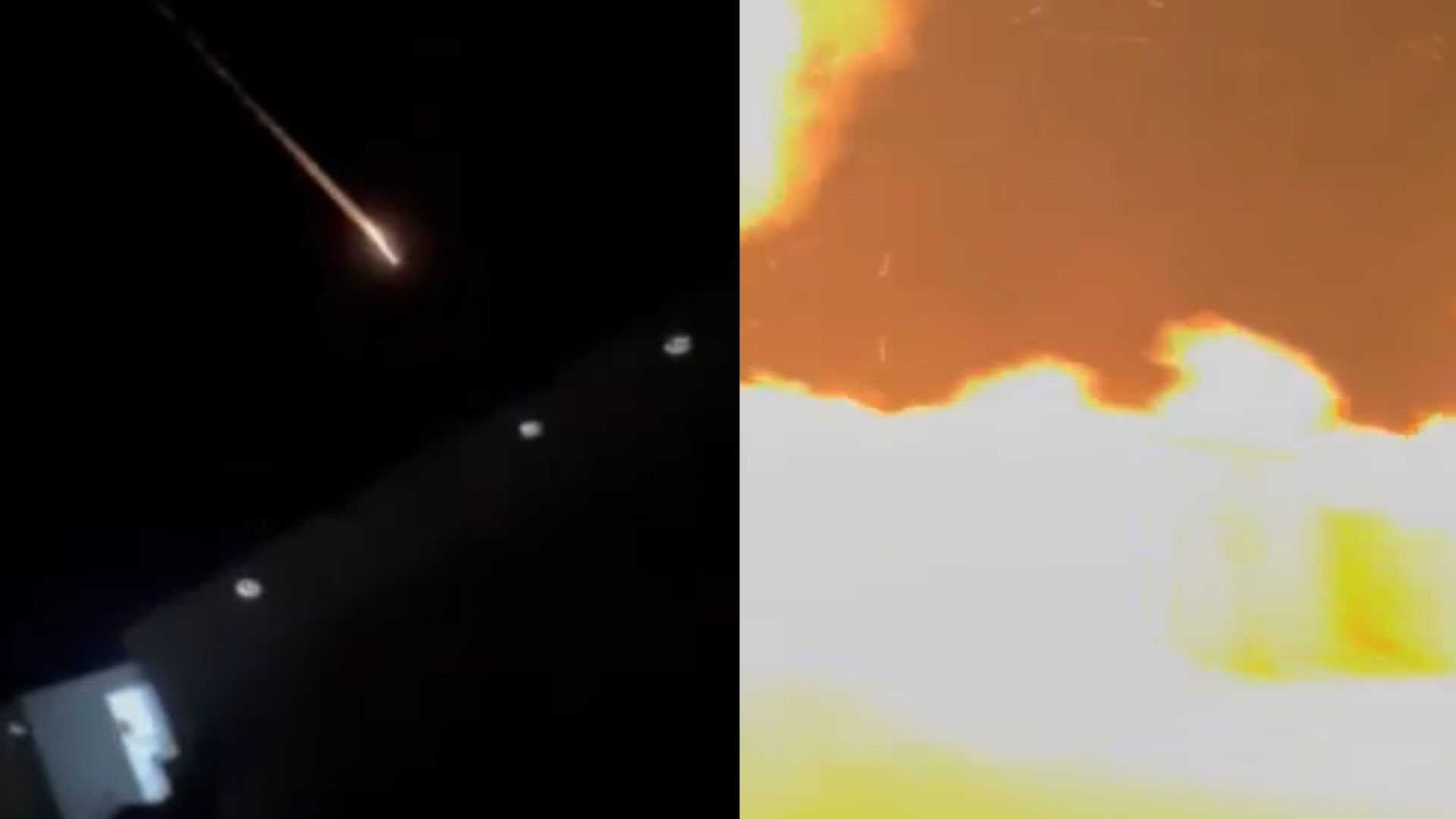

Several American service members were injured after Iranian attacks targeted two airbases in Jordan this week, according to multiple US officials. The strikes came as military tensions between the United States and Iran continued to intensify across West Asia.
US officials confirmed that no American or Jordanian personnel were killed. However, they did not disclose how seriously the injured service members were hurt.
US Officials Confirm Injuries
Multiple US officials, speaking anonymously to CBS News, said American troops suffered injuries during the attacks on two Jordanian airbases. While the exact number of injured personnel and the severity of their wounds remain unclear, officials confirmed that there were no fatalities among either US or Jordanian forces.
The attacks highlight the growing risks facing American military personnel stationed across the region.
US Forces Operate From Jordanian Airbases
The United States regularly uses military facilities in Jordan for its regional operations. American forces work alongside the Jordanian Armed Forces, with one of the key military installations being Muwaffaq Salti Air Base in eastern Jordan.
The base serves as an important location for US military operations in the Middle East.
US Carries Out Seventh Consecutive Night of Strikes
The attacks on Jordan came as the United States continued its military campaign against Iran. US Central Command (CENTCOM) announced on Friday that it had completed a seventh consecutive night of strikes targeting Iranian military infrastructure.
In an official statement, CENTCOM said, “U.S. Central Command (CENTCOM) hit surveillance sites, military logistics infrastructure, underground weapons storage, and maritime capabilities. U.S. forces employed fighter aircraft, aerial drones, and warships in addition to other assets”.
According to the US military, the operations are aimed at weakening Iran's military capabilities.
Iran Claims Attacks on US Bases Across the Region
Iran's Islamic Revolutionary Guard Corps (IRGC) said it launched a new wave of attacks targeting US military facilities across the Gulf. The IRGC claimed it struck American positions in Syria, Kuwait, Oman, Bahrain and Jordan.
However, the US military rejected those claims and denied that such attacks had taken place at the locations identified by Iran.
Iran Withdraws From Memorandum of Understanding
The latest escalation follows Iran's decision to withdraw from the Memorandum of Understanding (MoU) signed with the United States. Tehran accused Washington of repeatedly violating the agreement that had been intended to reduce hostilities between the two countries.
Iran's Foreign Ministry announced that it no longer considered itself bound by parts of the agreement. Officials also accused the United States of breaching the truce by reimposing a naval blockade on Iranian ports.
Iran Reasserts Control Over Strait of Hormuz
Iran also reaffirmed its position on the Strait of Hormuz, one of the world's most important energy shipping routes. Deputy Foreign Minister Kazem Gharibabadi said Tehran would maintain complete control over the strategic waterway regardless of the consequences.
According to the Tasnim news agency, Gharibabadi said Iran would exercise “full sovereignty over the Strait of Hormuz, no matter the costs,” including the section shared with Oman.
Regional Tensions Continue to Rise
The latest exchange of attacks reflects the rapidly worsening security situation across West Asia. As the United States continues nightly military operations and Iran responds with new threats and military claims, concerns are growing that the conflict could spread further across the region, putting military personnel, critical infrastructure and international shipping routes at greater risk.