
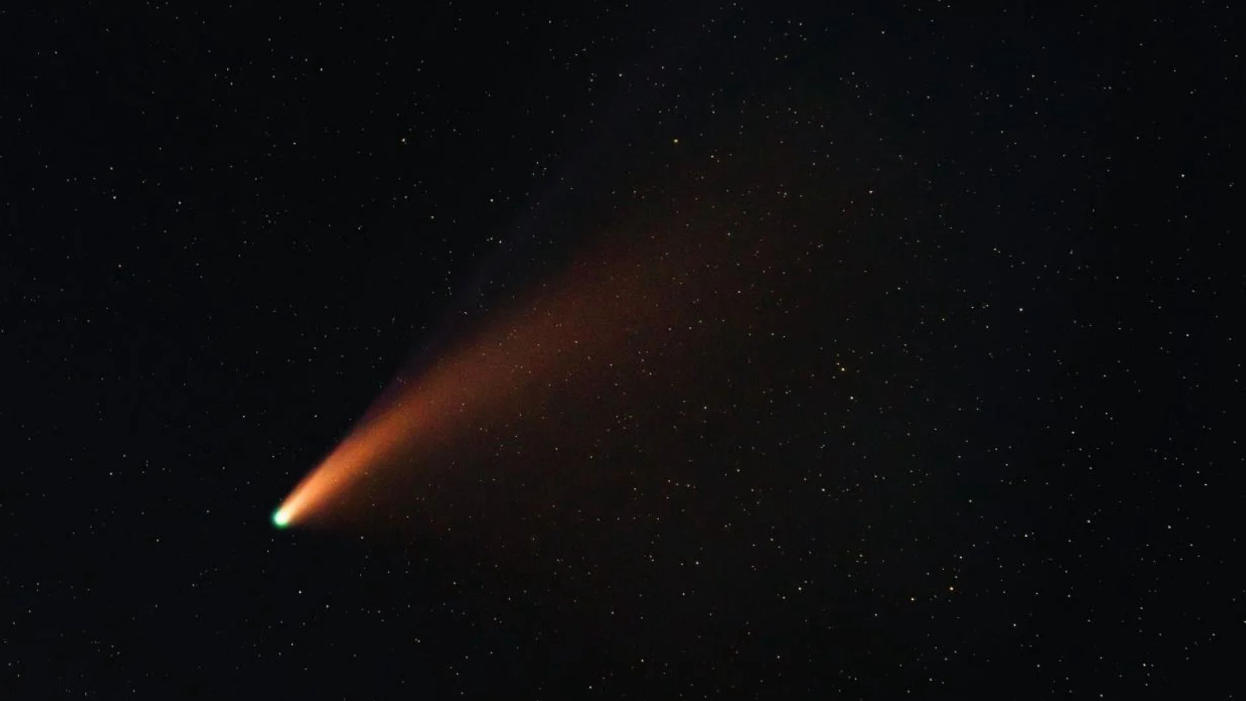

A NASA-funded telescope in Chile has detected a comet from outside our solar system, scientists confirmed this week. This object, now named 3I/ATLAS, is only the third known interstellar visitor ever observed passing through our solar neighborhood.
How the Comet Was First Spotted
The comet was first seen on July 1 by the ATLAS survey telescope in Río Hurtado, Chile. It appeared to be coming from the direction of the Sagittarius constellation and is currently about 420 million miles (670 million kilometers) from Earth.
Earlier Data Supports the Discovery
After spotting the object, astronomers searched past data and found earlier signs of it. They discovered pre-discovery images from June 14, taken by three other ATLAS telescopes located in different parts of the world. The Zwicky Transient Facility at Palomar Observatory in California also recorded the object. Several other telescopes have since confirmed the comet’s presence.
No Threat to Earth
NASA reassured that 3I/ATLAS poses no danger to our planet. It will stay at least 1.6 astronomical units away, which equals about 150 million miles (240 million kilometers) from Earth. At present, it’s around 4.5 astronomical units from the Sun, or 416 million miles (670 million kilometers).
Closest Approach Expected in October
Scientists expect the comet to reach its closest point to the Sun around October 30. At that time, it will come within 1.4 astronomical units, or about 130 million miles (210 million kilometers). This distance places it just inside Mars' orbit.
Limited Time to Observe the Comet
Astronomers are now closely studying the size and makeup of the comet. They believe it will remain visible to ground-based telescopes until September. After that, it will pass too close to the Sun for safe viewing. However, experts believe the comet will reappear on the Sun’s far side in early December, giving scientists another chance to observe it.
Only the Third Interstellar Visitor
This comet follows two other rare interstellar discoveries:
-
1I/‘Oumuamua, spotted in 2017
-
2I/Borisov, observed in 2019
Like 3I/ATLAS, both came from beyond our solar system and passed briefly through before continuing on their journeys through deep space.