
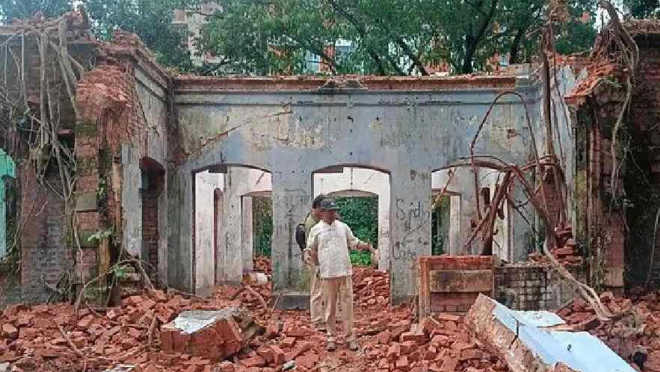

The ancestral home of famous filmmaker and Oscar winner Satyajit Ray in Mymensingh, Bangladesh, is now facing demolition. The Bangladeshi government is planning to replace it with a semi-concrete building. This move has triggered a response from the Indian government, which has requested Bangladesh to “reconsider” the decision. India has also offered to help restore and rebuild the house as a “museum of literature.”
History of the House
According to reports in Bangladesh’s Daily Star newspaper, the house originally belonged to Ray’s grandfather, Upendrakishore Ray Chowdhury, a respected writer and editor. The property, located about 120 kilometers north of Dhaka, was taken over by the government after the Partition of 1947. In 1989, the site was converted into the Mymensingh Shishu Academy.
India Appeals to Protect Cultural Heritage
India’s Ministry of External Affairs expressed sadness over the demolition. In a statement, the MEA said, “We note with profound regret that the ancestral property of noted filmmaker and litterateur Satyajit Ray in Mymensingh, Bangladesh, belonging to his grandfather and eminent litterateur, Upendra Kishor Ray Chowdhury, is being demolished. The property, presently owned by the Government of Bangladesh, is in a state of disrepair.”
The ministry further urged Dhaka to “reconsider the demolition and examine options for its repair and reconstruction as a museum of literature and a symbol of the shared culture of India and Bangladesh.” India assured that it was ready to offer cooperation in restoring the site.
Mamata Banerjee Voices Concern
West Bengal Chief Minister Mamata Banerjee also reacted emotionally to the demolition. Sharing her concern on social media, she said, “I learnt from media reports that the memory-entwined ancestral house of renowned writer-editor Upendrakishore Roychowdhury in Bangladesh’s Mymensingh city is being demolished. The reports say that the demolition process had already begun. This is heartbreaking news.” She appealed to both New Delhi and Dhaka to take immediate action to preserve the house.
Bangladesh Defends Demolition
Meanwhile, Bangladesh’s Department of Archaeology clarified that the demolition had received necessary approvals. A local official explained that the building had weakened over time and posed safety risks, especially for children visiting the Shishu Academy. Thus, officials decided to build a new semi-concrete structure to ensure safety and continue academy activities.
Despite protests from India and heritage lovers, authorities are proceeding with replacing the historic house, citing structural risks. The future of Ray’s ancestral home now depends on whether Bangladesh agrees to India’s request to preserve the cultural landmark.